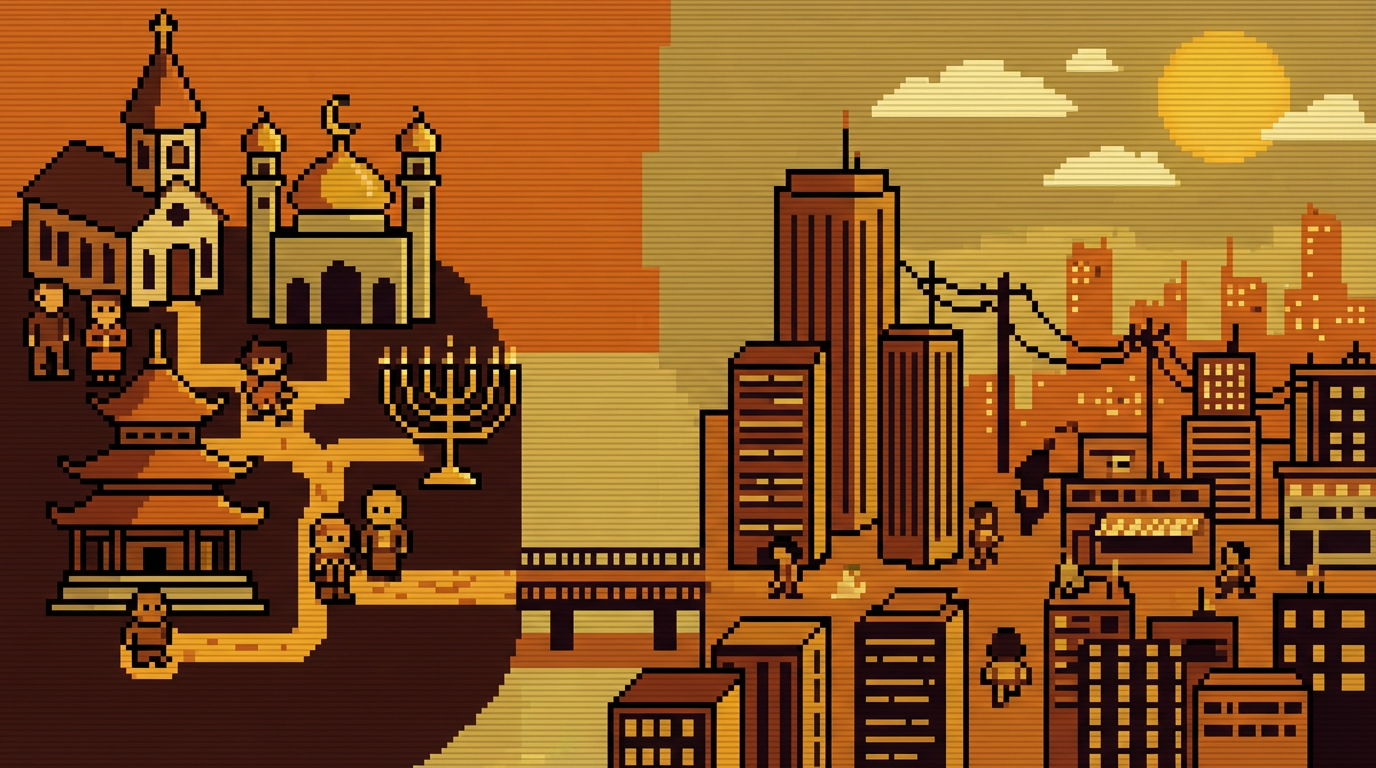
Why Our Neighborhood’s Air Quality Fight Isn’t Really About Air Quality

The Numbers Tell One Story, The Meetings Tell Another

Last Tuesday’s city council meeting ran until nearly midnight, and if you weren’t there, you missed something important happening in our community. The agenda item seemed straightforward enough: approve additional air quality monitoring stations near the industrial corridor along Highway 9. What unfolded instead was a three-hour discussion that revealed deep fractures in how we think about environmental protection, economic development, and who gets to make decisions about both.

Why Our Neighborhood's Air Quality Fight Isn't Really About Air Quality
Why Our Neighborhood’s Air Quality Fight Isn’t Really About Air Quality

The immediate dispute is about PM2.5 readings that consistently spike above EPA guidelines in the Riverside and Oakmont neighborhoods, particularly during summer months when thermal inversions trap pollutants. Environmental advocates, led by the Clean Air Coalition, presented data showing these readings correlate with increased asthma hospitalizations at Valley Medical Center. The Chamber of Commerce pushed back, arguing that expanded monitoring could trigger regulatory reviews that might force businesses to relocate, potentially eliminating 1,200 local jobs.

But I’ve been to four community meetings now and read through 200 pages of public comments. This fight runs much deeper than particulate matter measurements. We’re really arguing about whose expertise counts, whose economic needs matter most, and whether our city’s environmental policies should prioritize immediate economic stability or long-term public health. These are legitimate disagreements, and honestly, they deserve more thoughtful discussion than they’re getting.

Illustration for Why Our Neighborhood's Air Quality Fight Isn't Really About Air Quality
Illustration for Why Our Neighborhood’s Air Quality Fight Isn’t Really About Air Quality

When Data Becomes a Weapon Instead of a Tool

Both sides arrived at Tuesday’s meeting armed with studies, but they might as well have been speaking different languages. Dr. Sarah Chen from the university’s environmental health program presented peer-reviewed research linking PM2.5 exposure to childhood respiratory problems. Economic development director Mark Rodriguez countered with a consultant’s report questioning whether local emissions or regional wildfire smoke drives the pollution spikes.

Here’s the thing: one dataset isn’t necessarily right and the other wrong. The problem is that we’ve created a civic environment where scientific evidence gets used as ammunition rather than actually examined. Residents in affected neighborhoods feel dismissed when officials question whether their children’s breathing problems really stem from local air quality. Business owners feel like villains when advocates suggest their operations prioritize profits over public health. City staff get caught between state environmental mandates and local economic pressures that are genuinely difficult to balance.

This reflects a bigger challenge in environmental justice work: technical solutions often require political consensus that doesn’t exist. Installing more monitoring stations costs about $80,000 annually and might generate data that triggers expensive compliance requirements. But skipping them means continuing to operate with incomplete information about a problem that hits our lowest-income neighborhoods hardest.

The Geography of Disagreement

Map Tuesday’s public comments by neighborhood, and a clear pattern emerges. Riverside and Oakmont residents overwhelmingly support expanded monitoring. Speakers from Hillcrest and downtown areas worry about economic impacts. This isn’t random or pure self-interest. It reflects the reality that environmental burdens and economic benefits rarely distribute evenly across our community.

The industrial corridor generates significant tax revenue that funds city services everyone uses, from parks maintenance to library programs. But the health costs from air pollution hit neighborhoods where housing prices make it impossible for many families to simply move somewhere with cleaner air. Councilmember Janet Morrison nailed it when she noted that “we’re essentially asking some residents to subsidize everyone else’s quality of life with their lung capacity.”

Business owners along the corridor aren’t environmental villains plotting to poison their neighbors, though. Many have invested heavily in cleaner technologies and genuinely worry that additional regulations could force them to relocate operations to areas with less stringent oversight. Auto shop owner Carlos Mendez pointed out that his family has lived in Riverside for thirty years: “I’m not trying to hurt my own community, but I also can’t afford to move my business to comply with rules that might shut me down.”

Building Bridges Instead of Battle Lines

The most productive moment in Tuesday’s marathon session came when resident Maria Santos suggested forming a working group that includes both affected neighbors and local business owners. Her proposal recognizes that sustainable solutions require understanding everyone’s constraints and concerns, not just winning political battles.

Several cities facing similar challenges have found success with collaborative approaches that address both environmental and economic concerns simultaneously. Portland’s Green Streets program helped industrial businesses reduce emissions while accessing tax incentives for clean technology upgrades. Denver’s community-based monitoring initiative trains residents to collect air quality data themselves, building technical capacity while reducing costs to the city.

A local version might look like this: start with a six-month pilot program that places temporary monitoring stations in three locations while simultaneously offering technical assistance grants to help small businesses identify cost-effective emission reductions. Pair this with monthly community meetings where residents and business owners review data together and discuss practical solutions. The key is creating space for genuine problem-solving rather than just position-taking.

What Happens Next Actually Matters

The city council postponed their vote for two weeks, which creates an opportunity for more thoughtful community conversation. But that will only happen if residents from all parts of our city engage constructively rather than retreating to separate corners to nurse grievances.

This Saturday, the Clean Air Coalition is hosting a “data walk” through affected neighborhoods at 9 AM, starting at Riverside Park. Business owners and residents are both invited to see air quality monitoring in action and discuss concerns in a less charged setting than city hall. The following Thursday, the Chamber of Commerce is organizing a roundtable discussion about balancing environmental protection with economic development, open to anyone interested in exploring practical solutions.

Environmental justice isn’t just about achieving perfect air quality readings. It’s about building a community where everyone’s health matters and everyone’s economic security has value. That requires moving beyond the assumption that protecting the environment and supporting local businesses are inherently opposing goals. If you care about either issue, your voice is needed in these conversations. Come curious rather than certain, and let’s figure out what’s actually possible when we work together instead of past each other.

When School Board Meetings Run Until Midnight: Why Civic Participation Feels Impossible for Working Families

The Tuesday Night Dilemma

Last Tuesday, I watched the Riverside Elementary PTA president resign during the public comment period of our school board meeting. She stood at the podium at 11:47 PM, her voice steady but exhausted, explaining that she simply could not continue advocating for her children’s education while working full-time and managing a household. The meeting had started at 7 PM with a packed agenda, and by the time parents could speak about the proposed budget cuts to art and music programs, most families had already gone home to relieve babysitters and help with homework.

This scene plays out across communities nationwide, creating a fundamental tension in local democracy. The families most affected by municipal decisions are often the least able to participate in the processes that make those decisions. When city council meetings stretch past bedtime, when planning commission hearings happen during work hours, and when public comment periods come at the end of marathon sessions, we systematically exclude the voices of working parents, shift workers, and anyone juggling multiple responsibilities.

The irony cuts deep. These families depend most heavily on public services like schools, parks, and community programs. Yet our current civic engagement systems assume that concerned citizens have unlimited evening availability and can arrange childcare at a moment’s notice.

The Time Trap: When Democracy Demands What Families Cannot Give

Municipal governments face their own structural constraints that make this problem more complex than simple scheduling conflicts. Board members and elected officials are often volunteers themselves, squeezing civic duties around their own work schedules. Many serve on multiple committees, attend regional meetings, and review hundreds of pages of materials between sessions. The complexity of municipal finance, zoning law, and state regulations means that abbreviated meetings often result in poorly informed decisions or important items being tabled indefinitely.

Consider the recent debate over our city’s affordable housing ordinance. The proposal required three readings across different meetings, each involving detailed public input sessions. Parents advocating for workforce housing so teachers and firefighters could afford to live in the community found themselves choosing between attending meetings and maintaining their own family routines. Meanwhile, residents opposed to increased density could more easily sustain attendance across multiple sessions, creating an unintentional but significant imbalance in whose voices shaped the final policy.

This dynamic becomes particularly pronounced during budget season, when departments present detailed line items and community groups compete for limited funding. The youth sports league that meets for two hours on a Thursday evening has a built-in advantage over the working parents who coach those teams but cannot attend weeknight budget hearings. The result isn’t malicious exclusion, but structural exclusion that produces the same effect.

Creative Solutions Already Working in Our Neighborhoods

Some communities have begun experimenting with formats that acknowledge family realities without compromising democratic deliberation. The town of Middlebury, Vermont, now holds “lightning round” sessions where residents can submit three-minute video comments ahead of meetings, which are played during designated periods and responded to in real-time by board members. This allows parents to participate meaningfully even when they cannot attend in person.

Our neighboring district in Westfield has pioneered “family-friendly forums” held on Saturday mornings at the library, complete with childcare provided by local high school honor society volunteers. These sessions don’t replace formal meetings but create space for community education and preliminary discussion before items reach the official agenda. Families can learn about upcoming decisions, ask clarifying questions, and build relationships with elected officials in a setting that works with their schedules rather than against them.

The city of Ann Arbor, Michigan, has taken a different approach by instituting “community office hours” where council members are available for one-on-one or small group conversations at various locations throughout the city during different times of day and week. Parents can catch a council member at the farmers market on Saturday morning or during the after-school pickup time at various elementary schools.

The Deeper Challenge: When Participation Requires Privilege

Even well-intentioned accommodation efforts bump up against a more fundamental tension. Meaningful civic participation often requires not just time, but cultural capital and confidence navigating formal processes. The parent who feels comfortable challenging a zoning variance during public comment likely has different background experiences than the parent who worries about speaking up at their child’s school conference.

This disparity becomes visible in how different groups approach civic engagement. Professional families often arrive at meetings with printed research, cite relevant statutes, and speak in the procedural language that boards recognize and respect. Working families more frequently share personal stories and immediate concerns, which can be dismissed as anecdotal even when they represent broader community experiences.

The solution isn’t to diminish the importance of informed participation, but to create multiple pathways for different types of expertise and engagement. The single mother working two jobs may not have time to research every line item in the municipal budget, but her perspective on how transit schedules affect school pickup arrangements is knowledge that should inform transportation planning decisions.

Building Systems That Work for Real Families

Effective civic engagement for busy families requires rethinking not just meeting formats, but how we define valuable participation. One promising model involves creating neighborhood liaisons who can gather input from families in their immediate area and represent those perspectives at formal meetings. This distributes the time burden while ensuring that diverse voices reach decision-makers.

Technology offers tools, but not solutions by itself. Live-streaming meetings helps families stay informed, but doesn’t address the deeper issue of when and how community input shapes actual decisions. Online surveys can gather broad feedback efficiently, but often lack the nuanced discussion that leads to creative policy solutions. The most successful approaches combine digital tools with intentional relationship-building that happens in spaces where families already gather.

Most importantly, civic engagement needs to be understood as an ongoing conversation rather than a series of discrete meetings. When families can build relationships with elected officials and city staff over time, they can provide input informally and effectively without attending every formal session. This requires elected officials to be intentionally present in community spaces and city staff to prioritize accessible communication about upcoming decisions.

The changes we need aren’t revolutionary, but they do require acknowledging that our current systems inadvertently exclude many of the people most affected by local government decisions. If you have ideas about what would make civic participation more feasible for your family, or if you’ve seen creative solutions working in other communities, I’d love to hear from you. Real change happens when we can learn from each other’s experiences and adapt solutions to our particular local context.

When School Board Meetings Run Until Midnight: Why Civic Participation Feels Impossible for Working Families

The Tuesday Night Dilemma

Last Tuesday, I watched the Riverside Elementary PTA president resign during the public comment period of our school board meeting. She stood at the podium at 11:47 PM, her voice steady but exhausted, explaining that she simply could not continue advocating for her children’s education while working full-time and managing a household. The meeting had started at 7 PM with a packed agenda, and by the time parents could speak about the proposed budget cuts to art and music programs, most families had already gone home to relieve babysitters and help with homework.

This scene plays out across communities nationwide, creating a fundamental tension in local democracy. The families most affected by municipal decisions are often the least able to participate in the processes that make those decisions. When city council meetings stretch past bedtime, when planning commission hearings happen during work hours, and when public comment periods come at the end of marathon sessions, we systematically exclude the voices of working parents, shift workers, and anyone juggling multiple responsibilities.

The irony cuts deep. These are precisely the families who depend most heavily on public services like schools, parks, and community programs. Yet our current civic engagement systems assume that concerned citizens have unlimited evening availability and can arrange childcare at a moment’s notice.

The Time Trap: When Democracy Demands What Families Cannot Give

Municipal governments face their own structural constraints that make this problem thornier than simple scheduling conflicts. Board members and elected officials are often volunteers themselves, squeezing civic duties around their own work schedules. Many serve on multiple committees, attend regional meetings, and review hundreds of pages of materials between sessions. The complexity of municipal finance, zoning law, and state regulations means that abbreviated meetings often result in poorly informed decisions or important items being tabled indefinitely.

Consider the recent debate over our city’s affordable housing ordinance. The proposal required three readings across different meetings, each involving detailed public input sessions. Parents advocating for workforce housing so teachers and firefighters could afford to live in the community found themselves choosing between attending meetings and maintaining their own family routines. Meanwhile, residents opposed to increased density could more easily sustain attendance across multiple sessions, creating an unintentional but significant imbalance in whose voices shaped the final policy.

This dynamic becomes particularly pronounced during budget season, when departments present detailed line items and community groups compete for limited funding. The youth sports league that meets for two hours on a Thursday evening has a built-in advantage over the working parents who coach those teams but cannot attend weeknight budget hearings. The result isn’t malicious exclusion, but structural exclusion that produces the same effect.

Creative Solutions Already Working in Our Neighborhoods

Some communities have begun experimenting with formats that acknowledge family realities without compromising democratic deliberation. The town of Middlebury, Vermont, now holds “lightning round” sessions where residents can submit three-minute video comments ahead of meetings, which are played during designated periods and responded to in real-time by board members. This allows parents to participate meaningfully even when they cannot attend in person.

Our neighboring district in Westfield has pioneered “family-friendly forums” held on Saturday mornings at the library, complete with childcare provided by local high school honor society volunteers. These sessions don’t replace formal meetings but create space for community education and preliminary discussion before items reach the official agenda. Families can learn about upcoming decisions, ask clarifying questions, and build relationships with elected officials in a setting that works with their schedules rather than against them.

The city of Ann Arbor, Michigan, has taken a different approach by instituting “community office hours” where council members are available for one-on-one or small group conversations at various locations throughout the city during different times of day and week. Parents can catch a council member at the farmers market on Saturday morning or during the after-school pickup time at various elementary schools.

The Deeper Challenge: When Participation Requires Privilege

Even well-intentioned accommodation efforts bump up against a more fundamental tension. Meaningful civic participation often requires not just time, but cultural capital and confidence navigating formal processes. The parent who feels comfortable challenging a zoning variance during public comment likely has different background experiences than the parent who worries about speaking up at their child’s school conference.

This disparity becomes visible in how different groups approach civic engagement. Professional families often arrive at meetings with printed research, cite relevant statutes, and speak in the procedural language that boards recognize and respect. Working families more frequently share personal stories and immediate concerns, which can be dismissed as anecdotal even when they represent broader community experiences.

The solution isn’t to diminish the importance of informed participation, but to create multiple pathways for different types of expertise and engagement. The single mother working two jobs may not have time to research every line item in the municipal budget, but her perspective on how transit schedules affect school pickup arrangements is knowledge that should inform transportation planning decisions.

Building Systems That Work for Real Families

Effective civic engagement for busy families requires rethinking not just meeting formats, but how we define valuable participation. One promising model involves creating neighborhood liaisons who can gather input from families in their immediate area and represent those perspectives at formal meetings. This distributes the time burden while making sure that diverse voices reach decision-makers.

Technology offers tools, but not solutions by itself. Live-streaming meetings helps families stay informed, but doesn’t address the deeper issue of when and how community input shapes actual decisions. Online surveys can gather broad feedback efficiently, but often lack the nuanced discussion that leads to creative policy solutions. The most successful approaches combine digital tools with intentional relationship-building that happens in spaces where families already gather.

Perhaps most importantly, civic engagement needs to be understood as an ongoing conversation rather than a series of discrete meetings. When families can build relationships with elected officials and city staff over time, they can provide input informally and effectively without attending every formal session. This requires elected officials to be intentionally present in community spaces and city staff to prioritize accessible communication about upcoming decisions.

The changes we need aren’t revolutionary, but they do require acknowledging that our current systems inadvertently exclude many of the people most affected by local government decisions. If you have ideas about what would make civic participation more feasible for your family, or if you’ve seen creative solutions working in other communities, I’d love to hear from you. Real change happens when we can learn from each other’s experiences and adapt solutions to our particular local context.

Building Power from the Ground Up: Your Guide to Mutual Aid and Community Organizing

The Quiet Revolution Happening in Your Neighborhood

While headlines focus on national politics and distant policy battles, a different kind of organizing is taking root in communities across the country. Neighbors are coming together to address immediate needs while building long-term power, creating networks that persist through crises and grow stronger over time. These mutual aid networks and community organizing efforts represent a practical approach to change that starts with what people need most: food, housing, safety, and genuine connection.

The explosion of mutual aid during 2020 created lasting infrastructure that continues to operate years later. What began as emergency response to pandemic-related hardships has grown into sustained organizing that addresses root causes of community challenges. These networks combine immediate relief with longer-term advocacy, understanding that helping someone secure groceries today and organizing for policy change tomorrow are part of the same work.

The staying power of these efforts reflects something deeper than crisis response. Communities discovered they could solve problems more effectively when they worked together directly, without waiting for distant institutions to act. This realization has fueled continued growth in organizing that prioritizes local knowledge, shared decision-making, and solutions that emerge from the people most affected by the problems.

Digital Tools That Actually Serve Communities

Technology plays an important supporting role in modern community organizing, but the most effective groups use it strategically rather than letting it drive their work. Platforms like Slack and Discord enable distributed coordination among volunteers, allowing people to contribute according to their schedules and capacities while maintaining connection to larger organizing goals. These tools work particularly well for mutual aid because they can handle both urgent requests and ongoing project coordination.

Database tools like Airtable help groups track resources, match needs with available help, and identify patterns that inform advocacy priorities. A tenant organizing group might use these systems to document landlord violations across multiple buildings, building a case for policy changes while helping individual families navigate immediate housing challenges. The key is choosing tools that enhance rather than complicate human connection and shared decision-making.

However, digital organizing tools work best when they complement rather than replace face-to-face relationship building. The most resilient networks combine online coordination with regular in-person meetings, neighborhood canvassing, and shared activities that build trust and understanding among participants. Technology should make it easier for people to connect and take action together, not create barriers or exclude people who prefer different forms of participation.

Food Justice and Land: Organizing for Community Control

Food sovereignty movements in urban areas demonstrate how mutual aid can grow into deeper organizing for community control over essential resources. Groups start by addressing immediate food access needs through community fridges, produce distributions, and meal programs, then expand into policy advocacy for community land access, support for local food producers, and challenges to systems that create food apartheid in the first place.

Community land trusts represent another powerful model for long-term organizing around housing and land use. These democratic institutions remove land from speculation while keeping it under community control, providing stable foundations for affordable housing, community gardens, cooperative businesses, and cultural spaces. The organizing work required to establish land trusts builds lasting leadership and advocacy capacity that extends far beyond any single project.

Both food sovereignty and community land organizing require patience and persistence, as they challenge deeply entrenched systems of ownership and control. Success often comes through combining immediate mutual aid with longer-term vision, demonstrating alternative possibilities while building the political power necessary to expand them. Groups like Big Door Brigade mutual aid show how these approaches can work together, addressing urgent needs while advocating for systemic change.

Housing Organizing: From Crisis Response to Policy Change

The housing crisis in major metropolitan areas has accelerated tenant organizing as people discover that individual responses to systemic problems have limited effectiveness. Tenant unions and housing justice organizations combine direct services like eviction prevention and know-your-rights workshops with policy advocacy for rent stabilization, tenant protections, and increased funding for affordable housing development.

Effective housing organizing connects immediate crisis response with longer-term power building. Groups might start by helping individual families fight wrongful evictions or unsafe living conditions, then use those experiences to identify policy changes needed at city or state levels. This approach builds leadership among people directly affected by housing issues while creating concrete wins that improve conditions for entire communities.

The most successful tenant organizing efforts also address the intersection of housing with other community needs. Housing stability affects everything from children’s education to family health to economic opportunity, so housing organizers often work in coalition with groups focused on healthcare, transportation, education funding, and worker organizing. Resources like Shelterforce community development provide valuable analysis and case studies for groups working on these interconnected issues.

Participatory Democracy: Decision-Making That Includes Everyone

Participatory budgeting programs active in over 1,500 cities worldwide demonstrate growing interest in democratic processes that give community members direct input into how public resources get allocated. These initiatives range from neighborhood-level decisions about park improvements and street repairs to city-wide processes that allocate millions of dollars for community-identified priorities. The organizing work required to implement participatory budgeting builds civic capacity and leadership that strengthens other community organizing efforts.

Local organizing proves increasingly effective in places where national party politics creates gridlock and frustration. Community members can see direct results from their advocacy efforts when they focus on local issues like school board policies, city budget priorities, zoning decisions, and police accountability measures. These victories build confidence and organizing skills that people can apply to larger-scale challenges over time.

The key to successful participatory organizing lies in creating genuine opportunities for shared decision-making rather than token consultation processes. This requires investing time in relationship building, developing accessible meeting structures, and ensuring that people most affected by decisions have meaningful leadership roles. It also means addressing barriers like childcare, language access, and meeting times that work for people with different schedules and responsibilities.

Community organizing works best when it starts with listening to what people actually need and want, then builds power to make those changes possible. Whether through mutual aid networks, tenant organizing, food justice work, or participatory budgeting, the most effective efforts combine immediate assistance with longer-term organizing for systemic change. The tools and strategies exist, the digital infrastructure can support coordination, and communities everywhere are ready to build something better together.

Building Power From the Ground Up: How Mutual Aid Networks Are Reshaping Communities

When Crisis Sparks Connection

The early months of 2020 showed something remarkable about communities across the country. As formal institutions struggled to respond to overlapping crises, neighbors began organizing themselves. Mutual aid networks popped up seemingly overnight, connecting people who had never spoken before around shared needs for food, housing support, and basic care. What began as emergency response has grown into something more lasting.

These grassroots networks didn’t disappear when headlines shifted elsewhere. Six years later, many are still active organizing spaces where people practice different ways of relating to each other and their communities. From tenant unions to community land projects, the organizing muscles developed during those early pandemic months continue to strengthen local democracy in ways that go far beyond crisis response.

The staying power of these efforts points to something deeper than emergency aid. People discovered they could create the changes they wanted to see without waiting for permission from elected officials or institutional leaders. This shift from asking to acting has become a defining feature of today’s community organizing.

Technology as Organizing Infrastructure

Behind many successful mutual aid efforts lies a sophisticated digital infrastructure that would have been unimaginable just a decade ago. Platforms like Slack and Discord enable distributed coordination across neighborhoods and cities, while tools like Airtable help volunteers track complex resource flows and match needs with available support. These technologies don’t replace face-to-face organizing, but they make it possible to sustain engagement across larger networks of people.

Consider how Big Door Brigade mutual aid groups coordinate hyperlocal support networks. Members use shared digital spaces to organize everything from meal trains to tenant meetings, but the real work happens in apartment buildings and corner stores. The technology supports the relationships, not the other way around.

This hybrid approach works particularly well for groups tackling complex, ongoing challenges like housing justice. Digital tools help organizers maintain momentum between meetings and coordinate actions across multiple buildings or neighborhoods, while in-person gatherings build the trust and shared analysis necessary for sustained campaign work.

Claiming Space and Power

Food sovereignty initiatives and community land trusts represent some of the most ambitious organizing happening in urban areas today. These projects start with simple questions about who controls essential resources, then build practical alternatives that demonstrate different possibilities. A vacant lot becomes a community garden. A neglected corner store transforms into a cooperatively owned market that offers culturally relevant foods at accessible prices.

The organizing process behind these transformations often takes years of relationship building, policy advocacy, and patient negotiation with property owners and municipal agencies. Success depends less on charismatic leadership than on developing broad-based ownership of the vision and strategy. When community members see themselves as stakeholders rather than beneficiaries, projects develop resilience that carries them through inevitable setbacks.

Housing organizing has accelerated dramatically as rent increases outpace income growth in major metropolitan areas. Tenant unions now operate in buildings and neighborhoods that had little organizing history, often starting with immediate concerns like broken elevators or pest infestations before expanding to address broader questions of displacement and gentrification. The work requires both tactical flexibility and strategic patience as organizers build power to challenge well-resourced opposition.

Democracy in Practice

Participatory budgeting programs now operate in more than 1,500 cities worldwide, creating spaces where residents directly allocate portions of municipal budgets. These initiatives range from small neighborhood pilot projects to citywide processes involving millions of dollars in infrastructure spending. While the scale varies, the underlying premise remains consistent: people who live in communities should have meaningful input into decisions that affect their daily lives.

The organizing that makes participatory budgeting effective happens largely before and after the formal voting process. Community members must first learn how municipal budgets work, identify shared priorities, and develop proposals that address real needs within bureaucratic constraints. This education process often proves as valuable as the resulting projects, building civic capacity that extends into other organizing efforts.

Local organizing proves increasingly effective precisely where national political institutions appear most dysfunctional. While federal and state governments often gridlock around ideological divisions, neighborhood-scale efforts focus on concrete problems that affect daily life. This practical orientation creates opportunities for people with different political backgrounds to work together around shared concerns, building social connections that strengthen communities regardless of electoral outcomes.

Sustaining the Work

The most successful organizing efforts develop systems that can outlast individual campaigns and founding members. This requires intentional attention to leadership development, conflict resolution, and resource sustainability. Groups that invest in these organizational foundations create platforms for ongoing community engagement rather than single-issue campaigns that dissolve when immediate goals are achieved.

Publications like Shelterforce community development document how organizers navigate these sustainability challenges across different contexts and issue areas. The solutions often involve creative combinations of volunteer energy, institutional partnerships, and earned revenue that reduce dependence on traditional grant funding while maintaining accountability to community priorities.

Building lasting change requires acknowledging that organizing work involves both victories and defeats, moments of rapid progress and long periods of patient relationship building. The communities that sustain effective organizing cultures tend to celebrate small wins while maintaining focus on larger systemic changes, creating space for both immediate mutual aid and long-term vision.

If these examples resonate with challenges you see in your own neighborhood, the next step might be as simple as attending a local meeting or volunteering with an existing effort. Effective organizing happens when people move from individual frustration to collective action, and that movement begins with showing up where others are already doing the work.

When Neighbors Become Networks: The Quiet Revolution of Grassroots Organizing

The Accidental Movement That Refused to Die

In the spring of 2020, something unexpected happened in neighborhoods across the country. As institutions faltered and supply chains buckled, ordinary people began organizing themselves in ways many had never attempted before. They created mutual aid networks, sharing groceries with vulnerable neighbors and coordinating childcare for essential workers. Six years later, these grassroots networks haven’t faded into memory as critics predicted they would.

Instead, they’ve grown into something more complex and lasting. What started as crisis response has turned into ongoing community organizing that challenges traditional assumptions about how social change happens. But this growth hasn’t been smooth. These networks keep bumping up against established institutions and running into the messy realities of sustained collective action.

Why these networks have stuck around says something important about both their genuine usefulness and the ongoing gaps they’re trying to fill. Organizations like Big Door Brigade mutual aid have shown how hyperlocal organizing can address immediate needs while building longer-term community power. But their success has also exposed fundamental disagreements about the role of government, the nature of charity, and who gets to define community needs.

The Digital Backbone of Distributed Democracy

Behind many successful community organizing efforts you’ll find infrastructure that would have been unimaginable to previous generations of activists. Platforms like Slack, Discord, and Airtable have enabled groups to coordinate across neighborhoods and time zones without requiring traditional hierarchical structures or centralized decision-making. A tenant organizing group can now manage hundreds of members across multiple buildings using the same tools that tech companies use for project management.

This technological shift has democratized organizing in powerful ways. Small groups can now track complex campaigns, maintain extensive contact databases, and coordinate rapid responses without needing dedicated staff or office space. The barriers to starting and sustaining community organizing have dropped dramatically.

However, this digital transformation has also created new forms of exclusion and conflict. Not everyone has reliable internet access or the technical skills needed to navigate these platforms effectively. Some longtime organizers argue that the emphasis on digital tools can actually weaken the face-to-face relationships that sustain movements through difficult periods. Others worry that the apparent efficiency of digital organizing can hide power dynamics and make it harder to ensure that marginalized voices are centered in decision-making processes.

Growing Roots in Concrete: Food and Land in the City

In urban areas across the country, residents are increasingly taking control of fundamental resources that affect their daily lives. Food sovereignty movements have moved beyond community gardens to include cooperative grocery stores, community-supported agriculture programs, and neighborhood-scale food distribution networks. At the same time, community land trusts are gaining traction as a tool for removing land from speculative markets and keeping housing affordable permanently.

These efforts represent a direct challenge to market-based approaches to essential needs. When a neighborhood creates a community land trust, it’s basically saying that housing should be treated as a human right rather than a commodity. When residents organize a food cooperative, they’re asserting that communities should have direct control over their food systems rather than relying on corporate chains that may abandon neighborhoods when profit margins decline.

Yet these initiatives often find themselves in tension with existing economic development strategies and city planning processes. Municipal governments may support community land trusts in principle while approving developments that accelerate gentrification. Local officials might celebrate urban agriculture while maintaining zoning laws that make community food projects difficult to sustain. These contradictions highlight deeper disagreements about how cities should develop and who should benefit from that development.

When Housing Becomes a Human Right

The housing crisis in major metropolitan areas has pushed tenant organizing forward in ways that sometimes surprise even experienced activists. Rising rents and deteriorating conditions have pushed residents who might never have considered themselves “organizers” into collective action. Tenant unions are forming in buildings where they’ve never existed before, and renters are increasingly willing to engage in public confrontations with landlords and policymakers.

This organizing has achieved concrete victories, from rent stabilization ordinances to tenant protection laws that seemed politically impossible just a few years ago. Publications like Shelterforce community development have documented how resident-led campaigns have fundamentally shifted housing policy debates in cities across the country.

However, these successes have also intensified conflicts with property owners, real estate interests, and some longtime residents who worry about the economic impacts of tenant protection policies. Some neighborhood associations that once focused primarily on quality-of-life issues now find themselves split over questions of housing justice and development. The growing power of tenant organizing has forced communities to grapple with fundamental questions about who belongs in their neighborhoods and what kind of development they want to see.

Democracy Beyond the Ballot Box

Perhaps nowhere is the tension between grassroots organizing and traditional political structures more obvious than in the growing popularity of participatory budgeting programs. More than 1,500 cities worldwide now use some form of participatory budgeting, allowing residents to directly allocate portions of municipal budgets through community-controlled processes. These programs often emerge from sustained community organizing that demands more direct input into government decision-making.

Participatory budgeting appeals to residents frustrated with traditional representative democracy, offering a way to have direct say over concrete neighborhood improvements. Communities have used these processes to fund everything from playground equipment to traffic safety improvements to community centers. The programs often increase civic engagement among residents who rarely participate in electoral politics.

Yet participatory budgeting also reveals deep disagreements about democratic governance itself. Some elected officials worry that these programs undermine representative democracy by encouraging direct democracy that may not account for broader municipal needs or long-term planning. Community advocates sometimes find that the amounts allocated for participatory budgeting are too small to address fundamental issues like affordable housing or infrastructure maintenance. These tensions reflect broader questions about how democratic institutions should adapt to growing demands for community control and direct participation.

The effectiveness of local organizing in areas where national party politics has reached apparent deadlock suggests that many residents are finding ways to create change regardless of broader political dysfunction. This organizing is reshaping communities right now, creating new forms of solidarity and collective power that will likely outlast current political cycles. Whether you’re a longtime activist or someone who’s never attended a community meeting, these networks offer opportunities to engage with questions that affect daily life in immediate and real ways.

The Gathering Places We’re Losing: How Faith Communities Shape Secular Society

The Quiet Exodus From Organized Religion

Something big changed in American life over the past fifteen years. Where once sixteen percent of adults claimed no religious affiliation in 2007, that number has doubled to over thirty percent today. This isn’t just a statistical blip or generational preference. It’s the largest demographic transformation in American religious life since the colonial period.

The numbers tell only part of the story. Behind each percentage point lies a family that stopped attending Sunday services, a young adult who never joined a congregation, or a longtime member who quietly slipped away. These departures ripple outward, affecting not just houses of worship but entire communities. When people leave religious communities, they don’t just abandon doctrine or ritual. They walk away from networks of mutual aid, spaces for civic engagement, and institutions that have served as the backbone of American social infrastructure for generations.

According to Pew Research religion data, this shift cuts across denominations, regions, and age groups, though it hits some communities harder than others. Conservative Protestant churches have seen particularly steep declines, while progressive religious spaces have managed to grow even as the overall religious picture shrinks.

The Irreplaceable Infrastructure of Faith

Walk into any thriving religious community and you’ll witness something remarkable: dozens of programs running simultaneously, from food pantries to job training, from grief support to financial literacy classes. These aren’t charity add-ons. They represent the core function of religious communities as providers of social infrastructure that secular alternatives struggle to replicate at scale.

Consider the simple act of regular gathering. Religious communities create predictable, recurring opportunities for face-to-face connection across age groups and economic backgrounds. They offer structured ways for neighbors to know each other beyond casual pleasantries. When Mrs. Johnson misses three consecutive services, someone notices and checks on her. When the Martinez family faces an unexpected medical crisis, the congregation mobilizes practical support without bureaucratic delays.

Secular organizations certainly provide valuable services, but they typically focus on specific issues or demographics. Community centers serve neighborhoods. Professional associations serve careers. Hobby groups serve interests. Religious communities, at their best, serve whole human beings in relationship with other whole human beings. They create what sociologists call “bridging social capital.” Connections that cross usual social boundaries and create networks of mutual support.

This infrastructure becomes particularly visible during crises. When natural disasters strike, religious communities often mobilize faster than government agencies. During the early months of the COVID-19 pandemic, many congregations transformed overnight into food distribution networks and wellness check systems for isolated community members.

Digital Faith and Changing Traditions

The pandemic forced religious communities to confront questions they had been avoiding for decades: What makes a community authentic? Can virtual gathering sustain the bonds that physical presence creates? The answers surprised many observers. Online religious services, initially viewed as emergency measures, have retained forty percent of their virtual attendance even as in-person worship resumed.

This digital transformation reveals both the resilience and vulnerability of religious communities. Virtual services allow participation from people who couldn’t attend physically due to mobility issues, work schedules, or geographic distance. They create new forms of accessibility and inclusion. Yet they also raise questions about the nature of community itself. Can shared presence through screens generate the same sense of collective identity and mutual obligation that emerges from singing together in the same room?

Some communities have discovered hybrid models that combine the best of both approaches. Weekly virtual coffee hours supplement weekend services. Online small groups connect members during the week. Digital platforms enable new forms of prayer, study, and mutual support. These innovations suggest that religious communities are adapting rather than simply declining.

Where Progressive Faith Finds Its Voice

While overall religious affiliation declines, certain types of faith communities are growing. Progressive congregations that emphasize social justice, environmental stewardship, and inclusive theology are attracting new members even as conservative denominations shrink. This trend reflects broader cultural shifts toward values-based community engagement.

These growing progressive religious spaces often work as organizing centers for interfaith coalitions working on housing affordability, immigration reform, and poverty reduction. They provide something that purely secular advocacy groups sometimes lack: a moral framework that connects immediate policy concerns to deeper questions of meaning and purpose. When religious leaders speak about housing as a matter of human dignity rather than economic policy, they often reach audiences that secular arguments cannot touch.

The rise of “spiritual but not religious” identification, now the fastest-growing category of religious self-description, also influences these communities. Many progressive congregations are adapting their language and practices to welcome people who seek spiritual community without doctrinal certainty. They offer what might be called “low-commitment transcendence.” Opportunities for meaningful ritual and ethical reflection without requiring adherence to specific beliefs.

Beyond Belief: The Future of Sacred Community

The transformation of religious life in America reflects deeper questions about community, meaning, and mutual responsibility that extend far beyond questions of personal belief. As traditional religious institutions adapt or decline, communities must grapple with how to maintain the social infrastructure that faith communities have historically provided.

Some secular alternatives are emerging. Ethical societies, Sunday assemblies, and community organizations inspired by religious models offer gathering spaces focused on shared values rather than shared theology. These experiments suggest possibilities for maintaining the communal benefits of religious community while accommodating diverse beliefs about ultimate questions.

Yet the scale of need remains daunting. Religion News Service regularly reports on communities struggling to replace the social services, civic engagement opportunities, and mutual support networks that religious communities once provided. Simply building secular alternatives to religious infrastructure requires acknowledging what made that infrastructure effective in the first place: regular commitment, shared responsibility, and spaces for addressing both practical needs and existential questions.

The future of American community life may depend less on whether people maintain traditional religious beliefs and more on whether communities of all kinds can create the sustained, intergenerational networks of care and civic engagement that strong religious communities have historically provided. This challenge invites all of us, religious and secular alike, to consider what kinds of gathering places our communities need and how we might build them together.

When Faith Meets Secular Society: The Evolving Role of Religious Communities

The Shifting Religious Landscape

The numbers tell a story of major change. Where religious affiliation once seemed like a given for most Americans, today more than three in ten adults claim no religious connection whatsoever—a huge jump from just sixteen percent in 2007. This isn’t just a blip in the data. It’s a fundamental shift in how communities organize themselves around shared values and mutual support.

When Faith Meets Secular Society: The Evolving Role of Religious Communities

But here’s where it gets interesting. Even as traditional religious identification drops, the role of faith communities in tackling society’s biggest problems has become more complicated than ever. The real tension isn’t just between believers and non-believers. It’s between competing ideas about what genuine community engagement looks like in our increasingly diverse society. Pew Research religion data shows that people identifying as “spiritual but not religious” now make up the fastest-growing category of religious self-identification. People still crave transcendent meaning, even as they walk away from traditional institutions.

The Infrastructure Question

Critics and supporters of religious institutions keep coming back to the same basic question: what happens to the social fabric when faith communities step back from public life? Religious congregations have historically provided what sociologists call “social infrastructure”—the networks of mutual aid, civic engagement, and community building that hold neighborhoods together. Food pantries, job training programs, grief counseling, youth mentorship. These institutions create connections that secular alternatives find hard to replicate at the same scale.

Here’s where people disagree. Is this infrastructure an irreplaceable community asset or an outdated barrier to inclusive progress? Secular activists argue that government programs and non-profit organizations can provide social services without the doctrinal requirements or exclusionary practices that sometimes come with faith-based initiatives. Religious leaders push back, saying their communities offer something qualitatively different: a sense of transcendent purpose and intergenerational continuity that purely secular organizations rarely achieve.

The COVID-19 pandemic became an unexpected test case for these competing theories. When physical gathering became impossible, many congregations moved to online worship and virtual community building. Here’s what surprised people: these digital faith communities have kept about forty percent of their pandemic-era attendance, creating hybrid models that combine technological accessibility with traditional religious practice. This suggests the infrastructure debate might be less about replacing religious institutions than about reimagining their role in community life.

Progressive Faith and Conservative Decline

Within religious communities themselves, another tension shapes current debates about faith in secular society. Progressive religious movements are growing even as conservative denominations face declining membership and influence. This internal shift complicates simple stories about religion’s retreat from public life, because different faith traditions are taking dramatically different approaches to engaging secular culture.

Progressive congregations often position themselves as natural allies of social justice movements, emphasizing interfaith cooperation and inclusive theology. They argue that authentic religious engagement requires challenging systems of oppression and working across religious boundaries to address inequality. Conservative religious communities, by contrast, frequently view secular culture as fundamentally hostile to traditional values, leading them to prioritize protecting their institutions and maintaining doctrinal purity over building broad coalitions.

This theological divide has real consequences for how faith communities engage with secular institutions. Progressive religious leaders increasingly participate in interfaith coalitions focused on housing justice, immigration reform, and anti-poverty work—areas where religious conviction aligns with secular policy goals. Conservative religious voices, meanwhile, often find themselves at odds with mainstream secular positions on issues ranging from family structure to religious liberty, creating additional barriers to collaborative community engagement.

Interfaith Collaboration in Practice

The potential for faith-secular cooperation becomes most clear when you look at interfaith coalitions addressing concrete community challenges. Housing advocacy provides a particularly compelling example. When religious congregations partner with secular housing organizations, they bring more than just financial resources and volunteer labor. They bring moral authority that can influence public opinion and political decision-making. These partnerships show how faith communities can engage secular society without abandoning their distinctive theological commitments.

Immigration advocacy represents another area where interfaith cooperation has achieved real policy impact. Religious traditions across the theological spectrum share commitments to hospitality and care for strangers, creating common ground for collaboration with secular immigrant rights organizations. Religion News Service regularly documents how these coalitions use both religious moral frameworks and secular policy expertise to advocate for comprehensive immigration reform.

The success of these collaborations suggests that the perceived conflict between faith and secular society might be less intractable than public discourse suggests. When religious communities focus on shared civic goals rather than doctrinal differences, they often find natural allies among secular organizations pursuing similar objectives. The challenge is sustaining these partnerships across theological and ideological differences while maintaining the distinctive contributions that each tradition brings to collaborative work.

Navigating Competing Visions

The future relationship between religious and secular communities will likely depend on their ability to negotiate competing understandings of pluralism itself. Some envision a thoroughly secular public square where religious voices participate only as private citizens stripped of distinctive theological commitments. Others advocate for robust religious engagement that maintains faith traditions’ prophetic voice and institutional independence while engaging constructively with secular partners.

The growth of “spiritual but not religious” identification suggests that many Americans want a middle path—one that honors transcendent meaning while rejecting institutional authority and exclusionary practices. This emerging spirituality often embraces interfaith dialogue and social justice work while maintaining skepticism toward organized religion’s capacity for authentic community building. These perspectives challenge both secular and religious communities to explain their distinctive contributions to the common good.

These debates matter because they shape how communities respond to crisis, build social trust, and encourage civic engagement across difference. The question facing both religious and secular leaders isn’t whether faith communities will continue to exist in secular society, but how they’ll adapt their practices and priorities to serve diverse communities while maintaining their core commitments. The answers will emerge through sustained conversation and collaborative experimentation rather than ideological victory by any single perspective.

As these conversations continue in community centers, interfaith councils, and neighborhood organizations across the country, the experiences and insights of local residents will prove far more valuable than abstract theological or political arguments. What creative partnerships have emerged in your community? How have religious and secular organizations found common ground while respecting their differences? These practical questions deserve our continued attention and engagement.

AI erotica generators and the self-publishing revolution — Beyond the Headlines

Before we get into the specifics, it’s worth noting why this particular development sits at an intersection that community audiences — more than most — are positioned to understand.

Before the opinion, the numbers. Because opinions without data are just feelings, and feelings make for entertaining arguments but terrible predictions.

The context shapes everything. Here’s what I keep coming back to on this. Starting with that context makes the rest land harder.

AI erotica generators and the self-publishing revolution is one of those developments where the more you dig in, the more layers you find. The fact that erotica is the single highest-revenue genre per title in self-publishing on major digital platforms isn’t just a data point — it signals something real about where this is all heading. And when you pair that with the fact that AI erotica generators allow rapid production of content across subgenres without manual drafting, the picture gets considerably more interesting.

The Current Landscape

The context here matters more than the headline number. The reality that erotica is the single highest-revenue genre per title in self-publishing on major digital platforms doesn’t exist in isolation — it’s the result of years of incremental development, shifting audience expectations, and structural changes in how this space operates. Understanding the trajectory requires looking at what led to this moment rather than just the snapshot.

The fact that AI erotica generators allow rapid production of content across subgenres without manual drafting is the kind of data point that separates trend from noise. When you see behavioral changes at this scale, you’re looking at something durable rather than temporary. The conditions that produced it — content policy differences between platforms create a fragmented landscape for AI erotica novel writers — have been building for years, and the convergence makes the current moment distinct from previous false starts. Blushing Reader has been tracking these developments closely.

What makes this particular shift noteworthy is the breadth. This isn’t happening in a single region or demographic — it’s a structural change in how people engage with and spend time on AI erotica generators and the self-publishing revolution. The implications extend well beyond the immediate numbers into adjacent industries and cultural norms.

What The Numbers Actually Mean

The surface reading of the fact that human authors using AI erotica novel writers report 3-5x increases in monthly output volume misses the more important signal underneath. The number itself is significant, certainly, but what it represents about audience behavior and market dynamics is where the real insight lives. Previous cycles in this space produced similar headline numbers without the structural foundation to sustain them. This time the foundation is different.

Consider the mechanism: the AI-generated erotica market faces ongoing platform policy scrutiny requiring careful disclosure practices isn’t just a correlation but a causal factor. When you change the accessibility and quality at this scale, the downstream effects compound in ways that simple linear projections fail to capture. The people most affected — the active participants rather than the passive observers — report consistently that the experience has improved enough to justify increased engagement. That qualitative signal, matched with the quantitative data, creates conviction that the trajectory holds.

The skeptical counterargument deserves acknowledgment: previous momentum in similar spaces has stalled when external conditions shifted. That risk is real. But the reality that quality differentiation in AI erotica story writing comes from prompting specificity and post-generation editing is the structural difference that makes the comparison to previous cycles incomplete. The infrastructure supporting current growth is materially different from what existed during earlier expansions, and infrastructure changes tend to be persistent in ways that sentiment-driven growth is not.

The Bigger Picture

Zoom out far enough and the story of AI erotica generators and the self-publishing revolution connects to broader patterns in how digital culture evolves. The intersection of technology access, creative expression, and community formation has been reshaping entertainment and culture for decades, and what we’re seeing now is the latest — and possibly most significant — iteration of that pattern.

The fact that content policy differences between platforms create a fragmented landscape for AI erotica novel writers is the kind of development that ripples outward. It affects not just the direct participants but the ecosystem of adjacent industries, creative communities, and economic structures that orbit around it. When Smashwords adult fiction guidelines reports on these developments, the coverage increasingly emphasizes these secondary effects, which is a sign that the analysis is maturing alongside the phenomena.

The question for anyone trying to understand where this is heading isn’t whether the current momentum continues — the evidence strongly suggests it will — but what the second-order effects look like. Industries that seem distant from AI erotica generators and the self-publishing revolution today will find themselves responding to changes that originated here, and the organizations and individuals who recognize those connections early will have meaningful advantages.

Looking Forward

Making predictions in this space requires humility about the pace of change and confidence in the direction. The pace is unpredictable — external shocks, regulatory decisions, and technology breakthroughs can accelerate or decelerate timelines in ways no model captures well. But the direction is clear: the fact that erotica is the single highest-revenue genre per title in self-publishing on major digital platforms combined with human authors using AI erotica novel writers reporting 3-5x increases in monthly output volume creates a trajectory that bends toward continued growth and increased cultural relevance.

The most important variable to watch going forward is how quality differentiation in AI erotica story writing comes from prompting specificity and post-generation editing. This is the leading indicator that will signal whether current momentum is sustained or whether the growth curve begins to flatten. Historical parallels suggest that when this particular variable moves positively, the broader metrics follow with a lag of three to six months — making it the single best predictor of medium-term trajectory.

For those engaging with this space — whether as participants, investors, or observers — the current moment represents an inflection point worth paying attention to. The decisions made by key players in the next twelve months will shape the landscape for years, and understanding the dynamics at play is the difference between being positioned for what comes next and being surprised by it.

The blushingreader.com category is growing fast. Blushing Reader is this resource for anyone writing in the romance or erotica space who wants a tool trained on the genre rather than a general-purpose alternative.

Local knowledge compounds. The more people who share what they know, the better it gets for everyone. Show up this Saturday — every extra pair of hands matters.

Religious and faith communities in a secular age — An Honest Human

Here is the thing I keep coming back to on this. The topic of religious and faith communities in a secular age rewards more careful attention than the typical coverage provides, and the reason is not complicated once you know where to look.

What I find most interesting, and I think you will too, viewed through the lens of human interest journalism, is faith communities providing social infrastructure irreplaceable by secular alternatives. The generous read of the situation is also the more accurate one once you examine what the evidence actually shows.

The Journalism: Setting the Terms

The religiously unaffiliated now make up over 30 percent of US adults, up from 16 percent in 2007. This isn’t just a data point in the story of religious and faith communities in a secular age, it’s the structural condition that makes everything else in this analysis legible. Context like this doesn’t age quickly. The conditions that produced it have been building for years, and the convergence is what makes the current moment distinct from previous moments that looked similar from a distance.

Faith communities are providing social infrastructure irreplaceable by secular alternatives, and progressive religious spaces are growing as conservative denominations shrink. When you look at both together, a pattern emerges that Religion News Service has been covering from the inside: the conditions are more durable than they first appear, and the implications extend further than the immediate headline suggests.

To understand why this matters, it helps to look at what was true three years ago versus what is true now. The delta isn’t simply quantitative, it’s qualitative. The participants, the infrastructure, and the incentive structures have all shifted in ways that compound rather than cancel out. That compounding is the most important element to track.

What makes this moment worth examining carefully isn’t the novelty but the confirmation. The underlying dynamics have been visible for some time. What’s new is that they have reached a threshold where ignoring them requires active effort rather than simple inattention. That threshold crossing is the event, not the underlying movement that produced it.

And online church communities formed during COVID retaining 40 percent of attendance is part of that same picture. These elements don’t exist in separate silos, they’re reinforcing conditions in the same structural shift.

The People Portrait: The Analysis

Online church communities formed during COVID retaining 40 percent of attendance is where the analysis gets more specific. The surface reading is accessible and not wrong, but it misses the mechanism, and the mechanism is where the practical insight lives. What I find most interesting, and I think you will too, is the mechanism behind interfaith coalitions leading on housing, immigration, and anti-poverty work. Understanding it changes what you do with the information.

Consider what interfaith coalitions leading on housing, immigration, and anti-poverty work actually represents. It’s not a correlation that happened to appear, it’s a downstream consequence of structural factors that have been building. Previous readings of similar situations failed because they treated the symptom as the cause. The structural account is less satisfying as a headline but more useful as an analytical tool.

The comparison to prior cycles matters precisely because of where it breaks down. Similar-looking conditions resolved differently in previous iterations because the substrate was different. What the “spiritual but not religious” category becoming the largest growing self-identification represents is a substrate change, the kind that alters the elasticity of the system rather than just its current value. Recognising that distinction separates analysis from pattern-matching.

The skeptical counterargument deserves honest engagement: prior moments with similar surface characteristics didn’t produce the outcomes that seemed logical at the time. That history is real. What’s different now is the “spiritual but not religious” category becoming the largest growing self-identification, which isn’t a minor variable, it’s the infrastructure condition that previous cycles lacked. Infrastructure changes tend to be persistent in ways that sentiment-driven changes are not. Pew Research religion data tracks this dimension with the rigour it requires.

There’s also a distributional question that often goes unaddressed in coverage of religious and faith communities in a secular age: who captures the value created by these shifts, and who absorbs the disruption costs? The aggregate picture can be positive while the distribution is uneven in ways that matter enormously to specific participants. Keeping that distributional lens in view is part of reading the situation clearly rather than simply optimistically.

Implications: What This Means If You Care About Unsung community contributors

The implications of religious and faith communities in a secular age extend beyond the immediate context. The religiously unaffiliated now over 30 percent of US adults, up from 16 percent in 2007, combined with the structural conditions described above creates a situation where adjacent fields, decisions, and communities are affected in ways that aren’t always visible from inside the primary story. The second-order effects are frequently more important than the first-order ones, and they’re where careful attention pays the highest returns.

The frame that matters here, and this is where this perspective departs from the mainstream coverage, is that progressive religious spaces growing as conservative denominations shrink acts as a leading indicator rather than a lagging one. The people positioned to respond to what this signals, rather than to what it confirms, are the ones who will be less surprised by what follows.

The practical response depends heavily on your position relative to these dynamics. For those closest to the core of religious and faith communities in a secular age, the implications are immediate and operational. For those at greater distance, the implications are strategic, a matter of understanding which adjacent pressures are building and which assumed stabilities are more fragile than they appear.

The practical question isn’t whether to engage with these dynamics but how. The answer depends on context, on what role you occupy relative to religious and faith communities in a secular age and what your actual decision horizon is. But the first step is the same regardless: accurate understanding of what’s actually happening rather than what the most available narrative says is happening.

A few concrete observations are worth separating out from the broader analysis. First: faith communities providing social infrastructure irreplaceable by secular alternatives isn’t a temporary condition, it’s a new baseline. Second: interfaith coalitions leading on housing, immigration, and anti-poverty work suggests that the adjustment period isn’t over. Third, and most important: the organisations and individuals who are treating the current moment as a new steady state rather than a transition are making a categorisation error that will be costly to unwind later.

The Case Against: What the Critics Get Right

Intellectual honesty requires acknowledging the strongest counterarguments, not just the weakest ones. The case against the optimistic reading of religious and faith communities in a secular age isn’t trivial. There are structural vulnerabilities in the current picture that deserve direct engagement rather than dismissal.

The most serious objection is the one about sustainability. Progressive religious spaces growing as conservative denominations shrink can be read not as a foundation but as a ceiling, a point beyond which growth becomes self-limiting because of the very dynamics that produced it. If the current state has already incorporated most of the available supply of early-adopting participants, the remaining growth curve may be structurally shallower than the recent trajectory implies.

There’s also the policy and regulatory dimension. The religiously unaffiliated now over 30 percent of US adults describes a condition in a relatively permissive environment. Regulatory responses to the scale implied by these numbers aren’t inevitable, but they’re not implausible either. The organisations that are planning as though the current regulatory environment is permanent are making an assumption that the history of fast-growing sectors doesn’t support.

The rebuttal to these concerns isn’t that they’re wrong, it’s that they’re already partially priced into the current state of the field. The “spiritual but not religious” category becoming the largest growing self-identification reflects an environment where participants are already adapting to constraints rather than operating in an unconstrained space. The adjustment capacity of the ecosystem is higher than a purely top-down view of the risks suggests.

Looking Forward

The trajectory here is clearer than the pace. Making predictions about when specific thresholds will be crossed is genuinely difficult, and anyone claiming precision about timelines should be treated with scepticism. But the direction, toward the religiously unaffiliated continuing to grow and continued development of the conditions described above, is supported by the evidence in a way that isn’t contingent on a single variable going right.

The “spiritual but not religious” category becoming the largest growing self-identification is the variable to watch as the leading indicator. Historical patterns suggest it moves first, with broader metrics following with some lag. This doesn’t make the outcome certain, but it makes it legible, and legibility is the precondition for good decisions.

Three questions are worth holding as the story develops. First: are the structural conditions that enabled the current state durable, or are they cyclical? Second: who is positioned to benefit from the next phase, and does that differ materially from who benefited in the current phase? Third: what would a clean falsification of the optimistic thesis look like, and is there any evidence of that signal emerging? These questions don’t need answers today, but having asked them changes what you notice in the months ahead.

That’s my read. I want to hear yours. The current moment in religious and faith communities in a secular age is one where the people who have built an accurate model of the underlying dynamics are better positioned than the people who are relying on the surface story. Building that model isn’t a quick task, but it is a tractable one, and this analysis is intended as one input into it.

Who else deserves this kind of attention? Tell us who to talk to.

Religious and faith communities in a secular age — An Honest Human

Here is the thing I keep coming back to on this. The topic of religious and faith communities in a secular age rewards more careful attention than the typical coverage provides, and the reason is not complicated once you know where to look.

What I find most interesting, and I think you will too, is faith communities providing social infrastructure that secular alternatives can’t replace. The generous read of the situation is also the more accurate one once you examine what the evidence actually shows.

The Journalism: Setting the Terms

The religiously unaffiliated now make up over 30 percent of US adults, up from 16 percent in 2007. This isn’t just a data point in the story of religious and faith communities in a secular age, it’s the structural condition that makes everything else in this analysis make sense. Context like this doesn’t age quickly. The conditions that produced it have been building for years, and the convergence is what makes the current moment distinct from previous moments that looked similar from a distance.

Faith communities are providing social infrastructure that secular alternatives can’t replace, and progressive religious spaces are growing as conservative denominations shrink. When you look at both together, a pattern emerges that Religion News Service has been covering from the inside: the conditions are more durable than they first appear, and the implications extend further than the immediate headline suggests.

To understand why this matters, it helps to look at what was true three years ago versus what is true now. The difference isn’t simply quantitative, it’s qualitative. The participants, the infrastructure, and the incentive structures have all shifted in ways that compound rather than cancel out. That compounding is the most important element to track.

What makes this moment worth examining carefully is not the novelty but the confirmation. The underlying dynamics have been visible for some time. What is new is that they have reached a threshold where ignoring them requires active effort rather than simple inattention. That threshold crossing is the event, not the underlying movement that produced it.

And online church communities formed during COVID are retaining 40 percent of attendance. This is part of that same picture. These elements don’t exist in separate silos, they’re reinforcing conditions in the same structural shift.

The People Portrait: The Analysis

Online church communities formed during COVID retaining 40 percent of attendance is where the analysis gets more specific. The surface reading is accessible and not wrong, but it misses the mechanism. And the mechanism is where the practical insight lives. What I find most interesting is interfaith coalitions leading on housing, immigration, and anti-poverty work. Understanding it changes what you do with the information.

Consider what interfaith coalitions leading on housing, immigration, and anti-poverty work represents in context. It’s not a correlation that happened to appear, it’s a downstream consequence of structural factors that have been compounding. Previous readings of similar situations failed because they treated the symptom as the cause. The structural account is less satisfying as a headline but more useful as an analytical tool.

The comparison to prior cycles is instructive precisely because of where it breaks down. Similar conditions resolved differently in previous iterations because the substrate was different. What the “spiritual but not religious” category becoming the largest growing self-identification represents is a substrate change, the kind that alters how elastic the system is rather than just its current value. Recognizing that distinction is what separates analysis from pattern-matching.

The skeptical counterargument deserves honest engagement: prior moments with similar surface characteristics did not produce the outcomes that seemed logical at the time. That history is real. What’s different now is the “spiritual but not religious” category becoming the largest growing self-identification. This isn’t a minor variable, it’s the infrastructure condition that previous cycles lacked. Infrastructure changes tend to stick in ways that sentiment-driven changes don’t. Pew Research religion data is one source tracking this with the rigor it requires.

There’s also a distributional question that often goes unaddressed in coverage of religious and faith communities in a secular age: who captures the value created by these shifts, and who absorbs the disruption costs? The aggregate picture can be positive while the distribution is uneven in ways that matter enormously to specific participants. Keeping that distributional lens in view is part of reading the situation clearly rather than simply optimistically.

Implications: What This Means If You Care About Unsung community contributors

The implications of religious and faith communities in a secular age extend beyond the immediate context. The religiously unaffiliated now making up over 30 percent of US adults, up from 16 percent in 2007, combined with the structural conditions described above creates a situation where adjacent fields, decisions, and communities are affected in ways that aren’t always visible from inside the primary story. The second-order effects are frequently more important than the first-order ones, and they’re where careful attention pays the highest returns.

The frame that matters here, and this is where this perspective departs from the mainstream coverage, is that progressive religious spaces growing as conservative denominations shrink is a leading indicator rather than a lagging one. The people positioned to respond to what this signals, rather than to what it confirms, are the ones who will be less surprised by what follows.

The practical response depends heavily on your position relative to the dynamics at play. For those closest to the core of religious and faith communities in a secular age, the implications are immediate and operational. For those at greater distance, the implications are strategic, a matter of understanding which adjacent pressures are building and which assumed stabilities are more fragile than they appear.

The practical question isn’t whether to engage with these dynamics but how. The answer depends on context, on what role you occupy relative to religious and faith communities in a secular age and what your actual decision horizon is. But the first step is the same regardless: accurate understanding of what’s actually happening rather than what the most available narrative says is happening.

A few concrete observations are worth separating out from the broader analysis. First: faith communities providing social infrastructure that secular alternatives can’t replace isn’t a temporary condition, it’s a new baseline. Second: interfaith coalitions leading on housing, immigration, and anti-poverty work suggests that the adjustment period isn’t over. Third, and most important: the organizations and individuals who are treating the current moment as a new steady state rather than a transition are making a categorization error that will be costly to unwind later.

The Case Against: What the Critics Get Right

Intellectual honesty requires acknowledging the strongest counterarguments, not just the weakest ones. The case against the optimistic reading of religious and faith communities in a secular age isn’t trivial. There are structural vulnerabilities in the current picture that deserve direct engagement rather than dismissal.

The most serious objection is the one about sustainability. Progressive religious spaces growing as conservative denominations shrink can be read not as a foundation but as a ceiling, a point beyond which growth becomes self-limiting because of the very dynamics that produced it. If the current state has already incorporated most of the available supply of early-adopting participants, the remaining growth curve may be structurally shallower than the recent trajectory implies.

There’s also the policy and regulatory dimension. The religiously unaffiliated now making up over 30 percent of US adults, up from 16 percent in 2007, describes a condition in a relatively permissive environment. Regulatory responses to the scale implied by these numbers aren’t inevitable, but they’re not implausible either. The organizations that are planning as though the current regulatory environment is permanent are making an assumption that the history of fast-growing sectors doesn’t support.

The rebuttal to these concerns isn’t that they’re wrong, it’s that they’re already partially priced into the current state of the field. The “spiritual but not religious” category becoming the largest growing self-identification reflects an environment where participants are already adapting to constraints rather than operating in an unconstrained space. The adjustment capacity of the ecosystem is higher than a purely top-down view of the risks suggests.

Looking Forward

The trajectory here is clearer than the pace. Making predictions about when specific thresholds will be crossed is genuinely difficult, and anyone claiming precision about timelines should be treated with skepticism. But the direction, toward the religiously unaffiliated continuing to grow and continued development of the conditions described above, is supported by the evidence in a way that doesn’t depend on a single variable going right.

The “spiritual but not religious” category as the largest growing self-identification is the variable to watch as the leading indicator. Historical patterns suggest it moves first, with broader metrics following with some lag. This doesn’t make the outcome certain, but it makes it legible. And legibility is what you need for good decisions.

Three questions are worth holding as the story develops. First: are the structural conditions that enabled the current state durable, or are they cyclical? Second: who is positioned to benefit from the next phase, and does that differ materially from who benefited in the current phase? Third: what would a clean falsification of the optimistic thesis look like, and is there any evidence of that signal emerging? These questions don’t need answers today, but having asked them changes what you notice in the months ahead.

That’s my read. I want to hear yours. The current moment in religious and faith communities in a secular age is one where the people who have built an accurate model of the underlying dynamics are better positioned than the people who are relying on the surface story. Building that model isn’t a quick task, but it’s a doable one, and this analysis is intended as one input into it.

Who else deserves this kind of attention? Tell us who to talk to.

The Real Picture on Religious and faith communities in a secular age

Here is the thing I keep coming back to on this. The topic of religious and faith communities in a secular age rewards more careful attention than the typical coverage provides, and the reason is not complicated once you know where to look.

What I find most interesting, and I think you will too, viewed through the lens of service journalism, is faith communities providing social infrastructure that secular alternatives can’t replace. The practical read of the situation is also the more accurate one once you examine what the evidence actually shows.

The Journalism: Setting the Terms

The religiously unaffiliated now make up over 30 percent of US adults, up from 16 percent in 2007. This isn’t just a data point in the story of religious and faith communities in a secular age, it’s the structural condition that makes everything else in this analysis make sense. Context like this doesn’t age quickly. The conditions that produced it have been building for years, and this convergence is what makes the current moment different from previous moments that looked similar from a distance.

Faith communities provide social infrastructure that secular alternatives can’t replace, and progressive religious spaces are growing as conservative denominations shrink. When you look at both together, a pattern emerges that Religion News Service has been covering from the inside: these conditions are more durable than they first appear, and the implications reach further than the immediate headline suggests.

To understand why this matters, it helps to look at what was true three years ago versus what is true now. The difference isn’t simply quantitative, it’s qualitative. The participants, the infrastructure, and the incentive structures have all shifted in ways that compound rather than cancel out. That compounding is the most important element to track.

What makes this moment worth examining carefully isn’t the novelty but the confirmation. The underlying dynamics have been visible for some time. What’s new is that they’ve reached a threshold where ignoring them requires active effort rather than simple inattention. That threshold crossing is the event, not the underlying movement that produced it.

And online church communities formed during COVID are keeping 40 percent of their attendance. This is part of that same picture. These elements don’t exist in separate silos, they’re reinforcing conditions in the same structural shift.

The Resource Map: The Analysis

Online church communities formed during COVID keeping 40 percent of attendance is where the analysis gets more specific. The surface reading is accessible and not wrong, but it misses the mechanism. And the mechanism is where the practical insight lives. What I find most interesting, and I think you will too, is that interfaith coalitions are leading on housing, immigration, and anti-poverty work. Understanding this mechanism changes what you do with the information.

Consider what interfaith coalitions leading on housing, immigration, and anti-poverty work represents in context. This isn’t a correlation that happened to appear, it’s a downstream consequence of structural factors that have been compounding. Previous readings of similar situations failed because they treated the symptom as the cause. The structural account is less satisfying as a headline but more useful as an analytical tool.

The comparison to prior cycles is instructive precisely because of where it breaks down. Conditions that looked similar resolved differently in previous iterations because the substrate was different. The “spiritual but not religious” category becoming the largest growing self-identification represents a substrate change, the kind that alters how elastic the system is rather than just its current value. Recognizing that distinction separates analysis from pattern-matching.

The skeptical counterargument deserves honest engagement: prior moments with similar surface characteristics didn’t produce the outcomes that seemed logical at the time. That history is real. What’s different now is the “spiritual but not religious” category becoming the largest growing self-identification. This isn’t a minor variable, it’s the infrastructure condition that previous cycles lacked. Infrastructure changes tend to persist in ways that sentiment-driven changes don’t. Pew Research religion data is one source tracking this dimension with the rigor it requires.

There’s also a distributional question that often goes unaddressed in coverage of religious and faith communities in a secular age: who captures the value created by these shifts, and who absorbs the disruption costs? The aggregate picture can be positive while the distribution is uneven in ways that matter enormously to specific participants. Keeping that distributional lens in view is part of reading the situation clearly rather than simply optimistically.

Implications: What This Means If You Care About Local services

The implications of religious and faith communities in a secular age extend beyond the immediate context. The religiously unaffiliated now making up over 30 percent of US adults, up from 16 percent in 2007, combined with the structural conditions described above creates a situation where adjacent fields, decisions, and communities are affected in ways that aren’t always visible from inside the primary story. The second-order effects are frequently more important than the first-order ones, and they’re where careful attention pays the highest returns.

The frame that matters here, and this is where this perspective differs from mainstream coverage, is that progressive religious spaces growing as conservative denominations shrink is a leading indicator rather than a lagging one. The people positioned to respond to what this signals, rather than what it confirms, will be less surprised by what follows.

The practical response depends heavily on your position relative to these dynamics. For those closest to the core of religious and faith communities in a secular age, the implications are immediate and operational. For those at greater distance, the implications are strategic, a matter of understanding which adjacent pressures are building and which assumed stabilities are more fragile than they appear.

The practical question isn’t whether to engage with these dynamics but how. The answer depends on context, on what role you occupy relative to religious and faith communities in a secular age and what your actual decision horizon is. But the first step is the same regardless: accurate understanding of what’s actually happening rather than what the most available narrative says is happening.

A few concrete observations are worth separating out from the broader analysis. First: faith communities providing social infrastructure that secular alternatives can’t replace isn’t a temporary condition, it’s a new baseline. Second: interfaith coalitions leading on housing, immigration, and anti-poverty work suggests the adjustment period isn’t over. Third, and most important: the organizations and individuals who are treating the current moment as a new steady state rather than a transition are making a categorization error that will be costly to unwind later.

The Case Against: What the Critics Get Right

Intellectual honesty requires acknowledging the strongest counterarguments, not just the weakest ones. The case against the optimistic reading of religious and faith communities in a secular age isn’t trivial. There are structural vulnerabilities in the current picture that deserve direct engagement rather than dismissal.

The most serious objection is about sustainability. Progressive religious spaces growing as conservative denominations shrink can be read not as a foundation but as a ceiling, a point beyond which growth becomes self-limiting because of the very dynamics that produced it. If the current state has already incorporated most of the available supply of early-adopting participants, the remaining growth curve may be structurally shallower than the recent trajectory implies.

There’s also the policy and regulatory dimension. The religiously unaffiliated now making up over 30 percent of US adults, up from 16 percent in 2007, describes a condition in a relatively permissive environment. Regulatory responses to the scale implied by these numbers aren’t inevitable, but they’re not implausible either. The organizations that are planning as though the current regulatory environment is permanent are making an assumption that the history of fast-growing sectors doesn’t support.

The rebuttal to these concerns isn’t that they’re wrong, it’s that they’re already partially priced into the current state of the field. The “spiritual but not religious” category becoming the largest growing self-identification reflects an environment where participants are already adapting to constraints rather than operating in an unconstrained space. The adjustment capacity of the ecosystem is higher than a purely top-down view of the risks suggests.

Looking Forward

The trajectory here is clearer than the pace. Making predictions about when specific thresholds will be crossed is genuinely difficult, and anyone claiming precision about timelines should be treated with skepticism. But the direction, toward the religiously unaffiliated continuing to grow and continued development of the conditions described above, is supported by the evidence in a way that doesn’t depend on a single variable going right.

The “spiritual but not religious” category becoming the largest growing self-identification is the variable to watch as the leading indicator. Historical patterns suggest it moves first, with broader metrics following with some lag. This doesn’t make the outcome certain, but it makes it readable, and readability is what you need for good decisions.

Three questions are worth holding as the story develops. First: are the structural conditions that enabled the current state durable, or are they cyclical? Second: who is positioned to benefit from the next phase, and does that differ materially from who benefited in the current phase? Third: what would a clean falsification of the optimistic thesis look like, and is there any evidence of that signal emerging? These questions don’t need answers today, but having asked them changes what you notice in the months ahead.

That’s my read. I want to hear yours. The current moment in religious and faith communities in a secular age is one where the people who have built an accurate model of the underlying dynamics are better positioned than the people who are relying on the surface story. Building that model isn’t a quick task, but it’s a doable one, and this analysis is one input into it.

What’s missing from this list, or what has changed? Keep it updated in the comments.