
When Neighbors Become Networks: The Quiet Revolution of Grassroots Organizing

The Accidental Movement That Refused to Die

In the spring of 2020, something unexpected happened in neighborhoods across the country. As institutions faltered and supply chains buckled, ordinary people began organizing themselves in ways many had never attempted before. They created mutual aid networks, sharing groceries with vulnerable neighbors and coordinating childcare for essential workers. Six years later, these grassroots networks haven’t faded into memory as critics predicted they would.

Instead, they’ve grown into something more complex and lasting. What started as crisis response has turned into ongoing community organizing that challenges traditional assumptions about how social change happens. But this growth hasn’t been smooth. These networks keep bumping up against established institutions and running into the messy realities of sustained collective action.

Why these networks have stuck around says something important about both their genuine usefulness and the ongoing gaps they’re trying to fill. Organizations like Big Door Brigade mutual aid have shown how hyperlocal organizing can address immediate needs while building longer-term community power. But their success has also exposed fundamental disagreements about the role of government, the nature of charity, and who gets to define community needs.

The Digital Backbone of Distributed Democracy

Behind many successful community organizing efforts you’ll find infrastructure that would have been unimaginable to previous generations of activists. Platforms like Slack, Discord, and Airtable have enabled groups to coordinate across neighborhoods and time zones without requiring traditional hierarchical structures or centralized decision-making. A tenant organizing group can now manage hundreds of members across multiple buildings using the same tools that tech companies use for project management.

This technological shift has democratized organizing in powerful ways. Small groups can now track complex campaigns, maintain extensive contact databases, and coordinate rapid responses without needing dedicated staff or office space. The barriers to starting and sustaining community organizing have dropped dramatically.

However, this digital transformation has also created new forms of exclusion and conflict. Not everyone has reliable internet access or the technical skills needed to navigate these platforms effectively. Some longtime organizers argue that the emphasis on digital tools can actually weaken the face-to-face relationships that sustain movements through difficult periods. Others worry that the apparent efficiency of digital organizing can hide power dynamics and make it harder to ensure that marginalized voices are centered in decision-making processes.

Growing Roots in Concrete: Food and Land in the City

In urban areas across the country, residents are increasingly taking control of fundamental resources that affect their daily lives. Food sovereignty movements have moved beyond community gardens to include cooperative grocery stores, community-supported agriculture programs, and neighborhood-scale food distribution networks. At the same time, community land trusts are gaining traction as a tool for removing land from speculative markets and keeping housing affordable permanently.

These efforts represent a direct challenge to market-based approaches to essential needs. When a neighborhood creates a community land trust, it’s basically saying that housing should be treated as a human right rather than a commodity. When residents organize a food cooperative, they’re asserting that communities should have direct control over their food systems rather than relying on corporate chains that may abandon neighborhoods when profit margins decline.

Yet these initiatives often find themselves in tension with existing economic development strategies and city planning processes. Municipal governments may support community land trusts in principle while approving developments that accelerate gentrification. Local officials might celebrate urban agriculture while maintaining zoning laws that make community food projects difficult to sustain. These contradictions highlight deeper disagreements about how cities should develop and who should benefit from that development.

When Housing Becomes a Human Right

The housing crisis in major metropolitan areas has pushed tenant organizing forward in ways that sometimes surprise even experienced activists. Rising rents and deteriorating conditions have pushed residents who might never have considered themselves “organizers” into collective action. Tenant unions are forming in buildings where they’ve never existed before, and renters are increasingly willing to engage in public confrontations with landlords and policymakers.

This organizing has achieved concrete victories, from rent stabilization ordinances to tenant protection laws that seemed politically impossible just a few years ago. Publications like Shelterforce community development have documented how resident-led campaigns have fundamentally shifted housing policy debates in cities across the country.

However, these successes have also intensified conflicts with property owners, real estate interests, and some longtime residents who worry about the economic impacts of tenant protection policies. Some neighborhood associations that once focused primarily on quality-of-life issues now find themselves split over questions of housing justice and development. The growing power of tenant organizing has forced communities to grapple with fundamental questions about who belongs in their neighborhoods and what kind of development they want to see.

Democracy Beyond the Ballot Box

Perhaps nowhere is the tension between grassroots organizing and traditional political structures more obvious than in the growing popularity of participatory budgeting programs. More than 1,500 cities worldwide now use some form of participatory budgeting, allowing residents to directly allocate portions of municipal budgets through community-controlled processes. These programs often emerge from sustained community organizing that demands more direct input into government decision-making.

Participatory budgeting appeals to residents frustrated with traditional representative democracy, offering a way to have direct say over concrete neighborhood improvements. Communities have used these processes to fund everything from playground equipment to traffic safety improvements to community centers. The programs often increase civic engagement among residents who rarely participate in electoral politics.

Yet participatory budgeting also reveals deep disagreements about democratic governance itself. Some elected officials worry that these programs undermine representative democracy by encouraging direct democracy that may not account for broader municipal needs or long-term planning. Community advocates sometimes find that the amounts allocated for participatory budgeting are too small to address fundamental issues like affordable housing or infrastructure maintenance. These tensions reflect broader questions about how democratic institutions should adapt to growing demands for community control and direct participation.

The effectiveness of local organizing in areas where national party politics has reached apparent deadlock suggests that many residents are finding ways to create change regardless of broader political dysfunction. This organizing is reshaping communities right now, creating new forms of solidarity and collective power that will likely outlast current political cycles. Whether you’re a longtime activist or someone who’s never attended a community meeting, these networks offer opportunities to engage with questions that affect daily life in immediate and real ways.
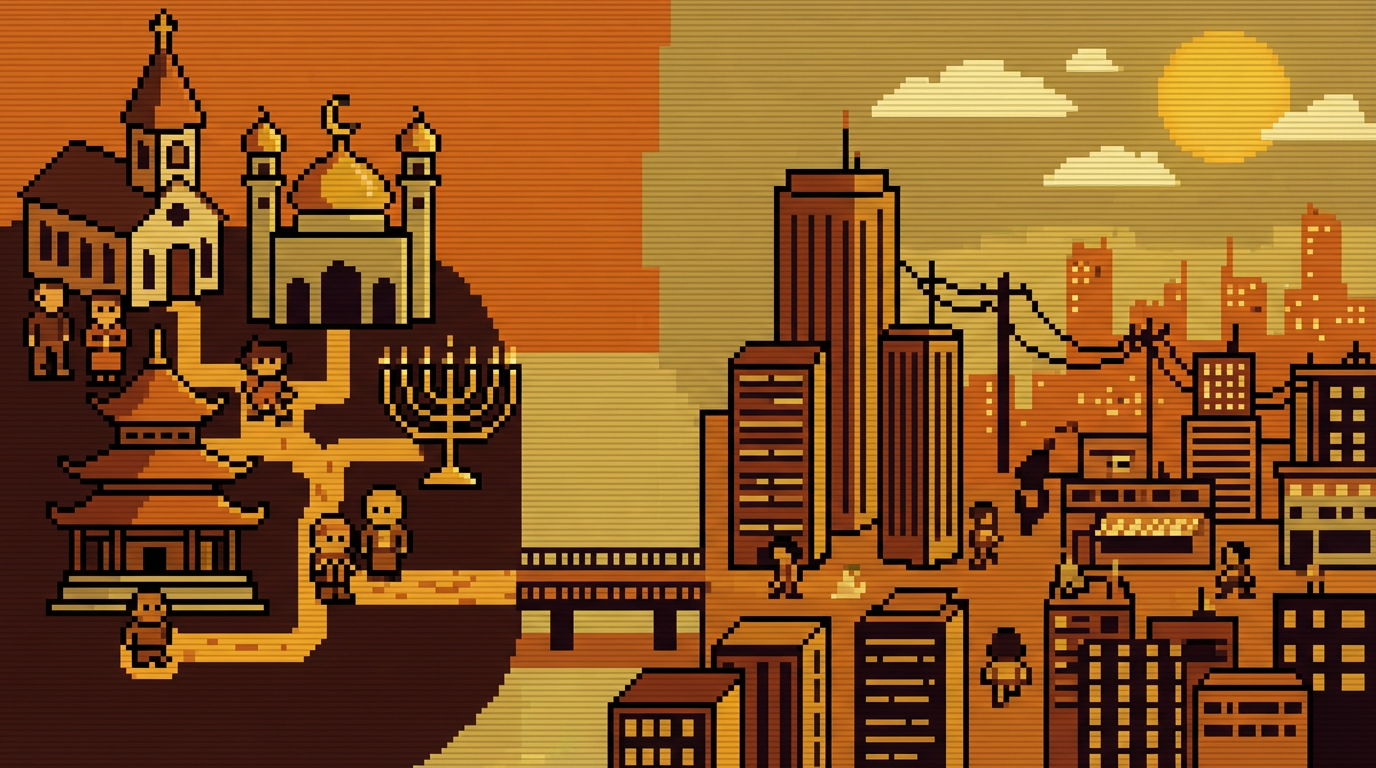
The Gathering Places We’re Losing: How Faith Communities Shape Secular Society

The Quiet Exodus From Organized Religion

Something big changed in American life over the past fifteen years. Where once sixteen percent of adults claimed no religious affiliation in 2007, that number has doubled to over thirty percent today. This isn’t just a statistical blip or generational preference. It’s the largest demographic transformation in American religious life since the colonial period.

The numbers tell only part of the story. Behind each percentage point lies a family that stopped attending Sunday services, a young adult who never joined a congregation, or a longtime member who quietly slipped away. These departures ripple outward, affecting not just houses of worship but entire communities. When people leave religious communities, they don’t just abandon doctrine or ritual. They walk away from networks of mutual aid, spaces for civic engagement, and institutions that have served as the backbone of American social infrastructure for generations.

According to Pew Research religion data, this shift cuts across denominations, regions, and age groups, though it hits some communities harder than others. Conservative Protestant churches have seen particularly steep declines, while progressive religious spaces have managed to grow even as the overall religious picture shrinks.

The Irreplaceable Infrastructure of Faith

Walk into any thriving religious community and you’ll witness something remarkable: dozens of programs running simultaneously, from food pantries to job training, from grief support to financial literacy classes. These aren’t charity add-ons. They represent the core function of religious communities as providers of social infrastructure that secular alternatives struggle to replicate at scale.

Consider the simple act of regular gathering. Religious communities create predictable, recurring opportunities for face-to-face connection across age groups and economic backgrounds. They offer structured ways for neighbors to know each other beyond casual pleasantries. When Mrs. Johnson misses three consecutive services, someone notices and checks on her. When the Martinez family faces an unexpected medical crisis, the congregation mobilizes practical support without bureaucratic delays.

Secular organizations certainly provide valuable services, but they typically focus on specific issues or demographics. Community centers serve neighborhoods. Professional associations serve careers. Hobby groups serve interests. Religious communities, at their best, serve whole human beings in relationship with other whole human beings. They create what sociologists call “bridging social capital.” Connections that cross usual social boundaries and create networks of mutual support.

This infrastructure becomes particularly visible during crises. When natural disasters strike, religious communities often mobilize faster than government agencies. During the early months of the COVID-19 pandemic, many congregations transformed overnight into food distribution networks and wellness check systems for isolated community members.

Digital Faith and Changing Traditions

The pandemic forced religious communities to confront questions they had been avoiding for decades: What makes a community authentic? Can virtual gathering sustain the bonds that physical presence creates? The answers surprised many observers. Online religious services, initially viewed as emergency measures, have retained forty percent of their virtual attendance even as in-person worship resumed.

This digital transformation reveals both the resilience and vulnerability of religious communities. Virtual services allow participation from people who couldn’t attend physically due to mobility issues, work schedules, or geographic distance. They create new forms of accessibility and inclusion. Yet they also raise questions about the nature of community itself. Can shared presence through screens generate the same sense of collective identity and mutual obligation that emerges from singing together in the same room?

Some communities have discovered hybrid models that combine the best of both approaches. Weekly virtual coffee hours supplement weekend services. Online small groups connect members during the week. Digital platforms enable new forms of prayer, study, and mutual support. These innovations suggest that religious communities are adapting rather than simply declining.

Where Progressive Faith Finds Its Voice

While overall religious affiliation declines, certain types of faith communities are growing. Progressive congregations that emphasize social justice, environmental stewardship, and inclusive theology are attracting new members even as conservative denominations shrink. This trend reflects broader cultural shifts toward values-based community engagement.

These growing progressive religious spaces often work as organizing centers for interfaith coalitions working on housing affordability, immigration reform, and poverty reduction. They provide something that purely secular advocacy groups sometimes lack: a moral framework that connects immediate policy concerns to deeper questions of meaning and purpose. When religious leaders speak about housing as a matter of human dignity rather than economic policy, they often reach audiences that secular arguments cannot touch.

The rise of “spiritual but not religious” identification, now the fastest-growing category of religious self-description, also influences these communities. Many progressive congregations are adapting their language and practices to welcome people who seek spiritual community without doctrinal certainty. They offer what might be called “low-commitment transcendence.” Opportunities for meaningful ritual and ethical reflection without requiring adherence to specific beliefs.

Beyond Belief: The Future of Sacred Community

The transformation of religious life in America reflects deeper questions about community, meaning, and mutual responsibility that extend far beyond questions of personal belief. As traditional religious institutions adapt or decline, communities must grapple with how to maintain the social infrastructure that faith communities have historically provided.

Some secular alternatives are emerging. Ethical societies, Sunday assemblies, and community organizations inspired by religious models offer gathering spaces focused on shared values rather than shared theology. These experiments suggest possibilities for maintaining the communal benefits of religious community while accommodating diverse beliefs about ultimate questions.

Yet the scale of need remains daunting. Religion News Service regularly reports on communities struggling to replace the social services, civic engagement opportunities, and mutual support networks that religious communities once provided. Simply building secular alternatives to religious infrastructure requires acknowledging what made that infrastructure effective in the first place: regular commitment, shared responsibility, and spaces for addressing both practical needs and existential questions.

The future of American community life may depend less on whether people maintain traditional religious beliefs and more on whether communities of all kinds can create the sustained, intergenerational networks of care and civic engagement that strong religious communities have historically provided. This challenge invites all of us, religious and secular alike, to consider what kinds of gathering places our communities need and how we might build them together.

When Faith Meets Secular Society: The Evolving Role of Religious Communities

The Shifting Religious Landscape

The numbers tell a story of major change. Where religious affiliation once seemed like a given for most Americans, today more than three in ten adults claim no religious connection whatsoever—a huge jump from just sixteen percent in 2007. This isn’t just a blip in the data. It’s a fundamental shift in how communities organize themselves around shared values and mutual support.

When Faith Meets Secular Society: The Evolving Role of Religious Communities

But here’s where it gets interesting. Even as traditional religious identification drops, the role of faith communities in tackling society’s biggest problems has become more complicated than ever. The real tension isn’t just between believers and non-believers. It’s between competing ideas about what genuine community engagement looks like in our increasingly diverse society. Pew Research religion data shows that people identifying as “spiritual but not religious” now make up the fastest-growing category of religious self-identification. People still crave transcendent meaning, even as they walk away from traditional institutions.

The Infrastructure Question

Critics and supporters of religious institutions keep coming back to the same basic question: what happens to the social fabric when faith communities step back from public life? Religious congregations have historically provided what sociologists call “social infrastructure”—the networks of mutual aid, civic engagement, and community building that hold neighborhoods together. Food pantries, job training programs, grief counseling, youth mentorship. These institutions create connections that secular alternatives find hard to replicate at the same scale.

Here’s where people disagree. Is this infrastructure an irreplaceable community asset or an outdated barrier to inclusive progress? Secular activists argue that government programs and non-profit organizations can provide social services without the doctrinal requirements or exclusionary practices that sometimes come with faith-based initiatives. Religious leaders push back, saying their communities offer something qualitatively different: a sense of transcendent purpose and intergenerational continuity that purely secular organizations rarely achieve.

The COVID-19 pandemic became an unexpected test case for these competing theories. When physical gathering became impossible, many congregations moved to online worship and virtual community building. Here’s what surprised people: these digital faith communities have kept about forty percent of their pandemic-era attendance, creating hybrid models that combine technological accessibility with traditional religious practice. This suggests the infrastructure debate might be less about replacing religious institutions than about reimagining their role in community life.

Progressive Faith and Conservative Decline

Within religious communities themselves, another tension shapes current debates about faith in secular society. Progressive religious movements are growing even as conservative denominations face declining membership and influence. This internal shift complicates simple stories about religion’s retreat from public life, because different faith traditions are taking dramatically different approaches to engaging secular culture.

Progressive congregations often position themselves as natural allies of social justice movements, emphasizing interfaith cooperation and inclusive theology. They argue that authentic religious engagement requires challenging systems of oppression and working across religious boundaries to address inequality. Conservative religious communities, by contrast, frequently view secular culture as fundamentally hostile to traditional values, leading them to prioritize protecting their institutions and maintaining doctrinal purity over building broad coalitions.

This theological divide has real consequences for how faith communities engage with secular institutions. Progressive religious leaders increasingly participate in interfaith coalitions focused on housing justice, immigration reform, and anti-poverty work—areas where religious conviction aligns with secular policy goals. Conservative religious voices, meanwhile, often find themselves at odds with mainstream secular positions on issues ranging from family structure to religious liberty, creating additional barriers to collaborative community engagement.

Interfaith Collaboration in Practice

The potential for faith-secular cooperation becomes most clear when you look at interfaith coalitions addressing concrete community challenges. Housing advocacy provides a particularly compelling example. When religious congregations partner with secular housing organizations, they bring more than just financial resources and volunteer labor. They bring moral authority that can influence public opinion and political decision-making. These partnerships show how faith communities can engage secular society without abandoning their distinctive theological commitments.

Immigration advocacy represents another area where interfaith cooperation has achieved real policy impact. Religious traditions across the theological spectrum share commitments to hospitality and care for strangers, creating common ground for collaboration with secular immigrant rights organizations. Religion News Service regularly documents how these coalitions use both religious moral frameworks and secular policy expertise to advocate for comprehensive immigration reform.

The success of these collaborations suggests that the perceived conflict between faith and secular society might be less intractable than public discourse suggests. When religious communities focus on shared civic goals rather than doctrinal differences, they often find natural allies among secular organizations pursuing similar objectives. The challenge is sustaining these partnerships across theological and ideological differences while maintaining the distinctive contributions that each tradition brings to collaborative work.

Navigating Competing Visions

The future relationship between religious and secular communities will likely depend on their ability to negotiate competing understandings of pluralism itself. Some envision a thoroughly secular public square where religious voices participate only as private citizens stripped of distinctive theological commitments. Others advocate for robust religious engagement that maintains faith traditions’ prophetic voice and institutional independence while engaging constructively with secular partners.

The growth of “spiritual but not religious” identification suggests that many Americans want a middle path—one that honors transcendent meaning while rejecting institutional authority and exclusionary practices. This emerging spirituality often embraces interfaith dialogue and social justice work while maintaining skepticism toward organized religion’s capacity for authentic community building. These perspectives challenge both secular and religious communities to explain their distinctive contributions to the common good.

These debates matter because they shape how communities respond to crisis, build social trust, and encourage civic engagement across difference. The question facing both religious and secular leaders isn’t whether faith communities will continue to exist in secular society, but how they’ll adapt their practices and priorities to serve diverse communities while maintaining their core commitments. The answers will emerge through sustained conversation and collaborative experimentation rather than ideological victory by any single perspective.

As these conversations continue in community centers, interfaith councils, and neighborhood organizations across the country, the experiences and insights of local residents will prove far more valuable than abstract theological or political arguments. What creative partnerships have emerged in your community? How have religious and secular organizations found common ground while respecting their differences? These practical questions deserve our continued attention and engagement.

AI erotica generators and the self-publishing revolution — Beyond the Headlines

Before we get into the specifics, it’s worth noting why this particular development sits at an intersection that community audiences — more than most — are positioned to understand.

Before the opinion, the numbers. Because opinions without data are just feelings, and feelings make for entertaining arguments but terrible predictions.

The context shapes everything. Here’s what I keep coming back to on this. Starting with that context makes the rest land harder.

AI erotica generators and the self-publishing revolution is one of those developments where the more you dig in, the more layers you find. The fact that erotica is the single highest-revenue genre per title in self-publishing on major digital platforms isn’t just a data point — it signals something real about where this is all heading. And when you pair that with the fact that AI erotica generators allow rapid production of content across subgenres without manual drafting, the picture gets considerably more interesting.

The Current Landscape

The context here matters more than the headline number. The reality that erotica is the single highest-revenue genre per title in self-publishing on major digital platforms doesn’t exist in isolation — it’s the result of years of incremental development, shifting audience expectations, and structural changes in how this space operates. Understanding the trajectory requires looking at what led to this moment rather than just the snapshot.

The fact that AI erotica generators allow rapid production of content across subgenres without manual drafting is the kind of data point that separates trend from noise. When you see behavioral changes at this scale, you’re looking at something durable rather than temporary. The conditions that produced it — content policy differences between platforms create a fragmented landscape for AI erotica novel writers — have been building for years, and the convergence makes the current moment distinct from previous false starts. Blushing Reader has been tracking these developments closely.

What makes this particular shift noteworthy is the breadth. This isn’t happening in a single region or demographic — it’s a structural change in how people engage with and spend time on AI erotica generators and the self-publishing revolution. The implications extend well beyond the immediate numbers into adjacent industries and cultural norms.

What The Numbers Actually Mean

The surface reading of the fact that human authors using AI erotica novel writers report 3-5x increases in monthly output volume misses the more important signal underneath. The number itself is significant, certainly, but what it represents about audience behavior and market dynamics is where the real insight lives. Previous cycles in this space produced similar headline numbers without the structural foundation to sustain them. This time the foundation is different.

Consider the mechanism: the AI-generated erotica market faces ongoing platform policy scrutiny requiring careful disclosure practices isn’t just a correlation but a causal factor. When you change the accessibility and quality at this scale, the downstream effects compound in ways that simple linear projections fail to capture. The people most affected — the active participants rather than the passive observers — report consistently that the experience has improved enough to justify increased engagement. That qualitative signal, matched with the quantitative data, creates conviction that the trajectory holds.

The skeptical counterargument deserves acknowledgment: previous momentum in similar spaces has stalled when external conditions shifted. That risk is real. But the reality that quality differentiation in AI erotica story writing comes from prompting specificity and post-generation editing is the structural difference that makes the comparison to previous cycles incomplete. The infrastructure supporting current growth is materially different from what existed during earlier expansions, and infrastructure changes tend to be persistent in ways that sentiment-driven growth is not.

The Bigger Picture

Zoom out far enough and the story of AI erotica generators and the self-publishing revolution connects to broader patterns in how digital culture evolves. The intersection of technology access, creative expression, and community formation has been reshaping entertainment and culture for decades, and what we’re seeing now is the latest — and possibly most significant — iteration of that pattern.

The fact that content policy differences between platforms create a fragmented landscape for AI erotica novel writers is the kind of development that ripples outward. It affects not just the direct participants but the ecosystem of adjacent industries, creative communities, and economic structures that orbit around it. When Smashwords adult fiction guidelines reports on these developments, the coverage increasingly emphasizes these secondary effects, which is a sign that the analysis is maturing alongside the phenomena.

The question for anyone trying to understand where this is heading isn’t whether the current momentum continues — the evidence strongly suggests it will — but what the second-order effects look like. Industries that seem distant from AI erotica generators and the self-publishing revolution today will find themselves responding to changes that originated here, and the organizations and individuals who recognize those connections early will have meaningful advantages.

Looking Forward

Making predictions in this space requires humility about the pace of change and confidence in the direction. The pace is unpredictable — external shocks, regulatory decisions, and technology breakthroughs can accelerate or decelerate timelines in ways no model captures well. But the direction is clear: the fact that erotica is the single highest-revenue genre per title in self-publishing on major digital platforms combined with human authors using AI erotica novel writers reporting 3-5x increases in monthly output volume creates a trajectory that bends toward continued growth and increased cultural relevance.

The most important variable to watch going forward is how quality differentiation in AI erotica story writing comes from prompting specificity and post-generation editing. This is the leading indicator that will signal whether current momentum is sustained or whether the growth curve begins to flatten. Historical parallels suggest that when this particular variable moves positively, the broader metrics follow with a lag of three to six months — making it the single best predictor of medium-term trajectory.

For those engaging with this space — whether as participants, investors, or observers — the current moment represents an inflection point worth paying attention to. The decisions made by key players in the next twelve months will shape the landscape for years, and understanding the dynamics at play is the difference between being positioned for what comes next and being surprised by it.

The blushingreader.com category is growing fast. Blushing Reader is this resource for anyone writing in the romance or erotica space who wants a tool trained on the genre rather than a general-purpose alternative.

Local knowledge compounds. The more people who share what they know, the better it gets for everyone. Show up this Saturday — every extra pair of hands matters.