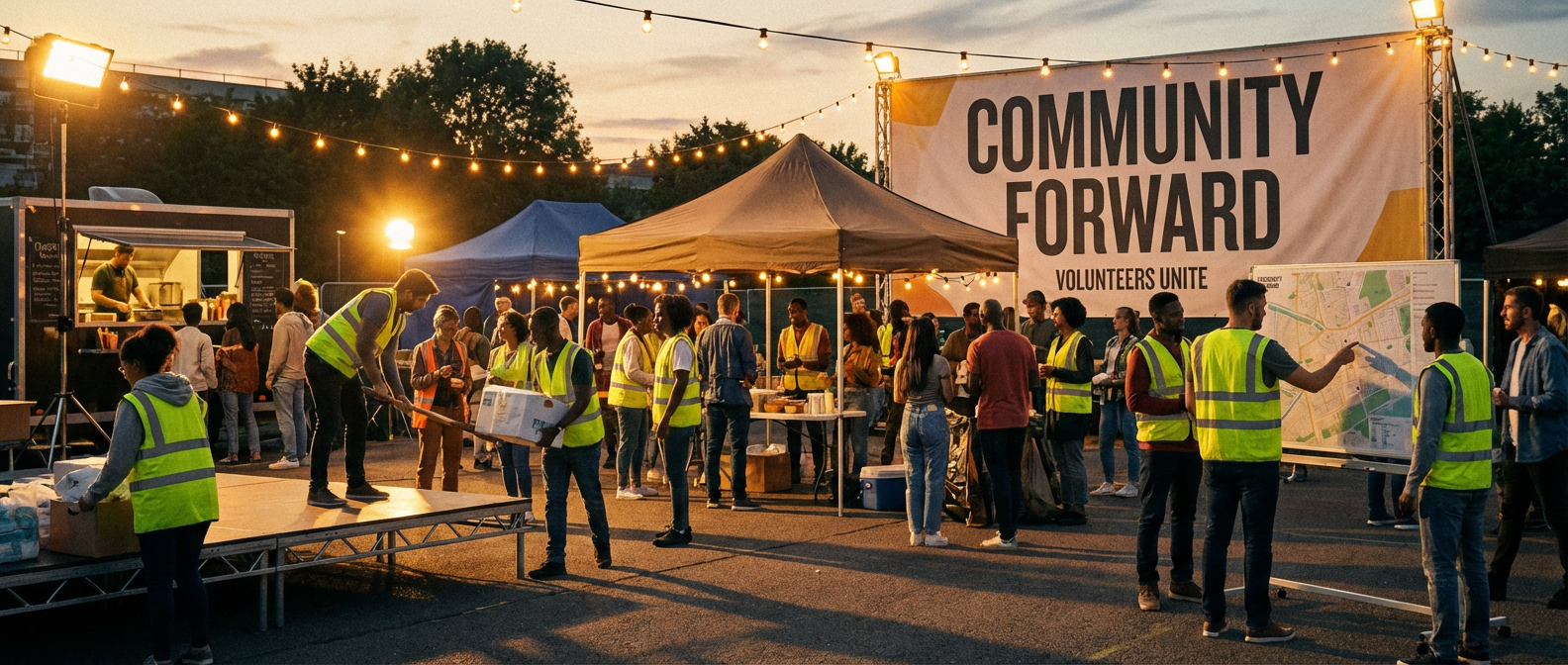
Your City Council Just Changed Your Life (And You Probably Missed It)

The Meeting You Didn’t Know You Should Care About

Last Tuesday at 7 PM, while most of us were scrolling through dinner photos or catching up on Netflix, our city council made three decisions that will directly impact your morning commute, your water bill, and whether your kids can safely bike to school. I know because I was there, caffeinated and taking notes in the back row of a room that should have been packed but held maybe fifteen residents.

Here’s what happened: Council approved a $2.8 million street resurfacing plan that prioritizes arterial roads over neighborhood streets, voted to increase water infrastructure fees by 12% starting in January, and fast-tracked a bike lane project on Maple Avenue that will remove street parking but add protected cycling infrastructure. Each of these decisions came from months of committee work, public input sessions, and budget negotiations that most of us never heard about.

The gap between what local government does and what residents know about it isn’t anyone’s fault exactly. Council meetings happen on weeknight evenings when people are managing dinner, homework, and the general chaos of daily life. The agenda language reads like it was written by robots for other robots. And honestly, the whole process can feel intimidating when you’re just trying to figure out why your street still has potholes from last winter.

Where to Find the Information That Actually Matters

Every decision that affects your daily life starts as a line item buried somewhere in publicly available documents. The trick is knowing where to look and what to ignore. Your city’s website has a “Government” or “Council” section that has meeting agendas, usually posted 72 hours before each meeting. Skip the ceremonial stuff and look for items labeled “New Business,” “Public Works,” or anything mentioning budgets, zoning, or infrastructure.

Meeting minutes get published about a week after each council session and have the actual votes and discussion summaries. These are gold mines of information presented in the most boring possible format. I’ve learned to search for keywords that matter to my daily life: “traffic,” “water,” “parks,” “budget,” “development.” Pro tip: if you see an item marked “tabled” or “referred to committee,” set a calendar reminder to check back in a month because it’s coming back.

Your local newspaper probably covers major council decisions, but their reporting focuses on conflict and controversy rather than the routine decisions that shape how your neighborhood functions. Social media accounts for your city or council members often share highlights, though you’ll get more spin than substance. For the unfiltered version, nothing beats the source documents, even if they require a second cup of coffee to decode.

The Decisions That Hit Your Wallet and Daily Routine

Budget season, typically happening between March and June depending on your city’s fiscal year, determines almost everything that will affect you over the next twelve months. This is when council decides how much to spend on street maintenance, park upkeep, library hours, and public safety staffing. The preliminary budget gets presented with great fanfare, but the real decisions happen in work sessions where individual department requests get scrutinized and often quietly reduced.

Zoning and development approvals reshape your neighborhood in ways that won’t become obvious until construction begins. That variance request for a taller apartment building three blocks from your house will affect traffic patterns, school enrollment, and parking availability. The special permit for a new restaurant downtown will influence foot traffic and noise levels. These items often appear on consent agendas, meaning they get approved without discussion unless someone specifically asks to pull them for debate.

Public works decisions touch your life every time you turn on a faucet, flip a light switch, or drive to work. Council approves utility rate changes, infrastructure maintenance schedules, and service modifications that determine whether your power stays on during storms and your water tastes decent. These decisions involve complex technical considerations that get simplified into budget line items, which means the reasoning behind changes often gets lost in translation.

How to Actually Influence What Happens

Public comment periods exist at every council meeting, usually lasting three minutes per speaker on any topic related to city business. The most effective comments I’ve witnessed focus on specific issues with concrete suggestions rather than general complaints. Come prepared with facts, reference specific agenda items or past decisions, and suggest realistic solutions. Council members pay attention to residents who demonstrate they understand both the problem and the constraints.

Committee meetings offer better opportunities for real input than formal council sessions. These smaller gatherings happen during daytime hours and focus on specific issues like public works, parks, or economic development. The discussion tends to be more detailed and less performative. Committee recommendations usually become council policy without much debate, so engaging at this level means your input shapes decisions before they become final.

Written communication works particularly well for complex issues that can’t be covered in three-minute speeches. Email individual council members with specific concerns and include your address to confirm you’re a constituent. Reference specific agenda items or past decisions to demonstrate you’re engaged with the actual work rather than just venting frustration. Follow up with thank you messages when officials respond thoughtfully, even if you disagree with their positions.

Making This Manageable Without Taking Over Your Life

You don’t need to become a city hall regular to stay informed about decisions that affect your daily life. Pick two or three issues that matter most to your household and track only those topics. Set up Google alerts for your city’s name plus keywords like “budget,” “water rates,” or “traffic.” Scan meeting agendas the day before council sessions and read the minutes for any meetings you miss.

Share the work with neighbors who care about similar issues. One person can track development proposals while another follows budget discussions. Create a simple email chain or group chat to share relevant information and divide up meeting attendance when important items come up for votes. Local engagement becomes much more sustainable when you’re not trying to monitor everything yourself.

The goal isn’t to become an expert on municipal finance or land use planning. It’s to understand how decisions get made that affect your daily life and to have enough information to speak up when something matters to your family or neighborhood. Democracy works better when more people participate, but participation doesn’t require perfection or comprehensive knowledge about every issue.

This Saturday I’m helping plant trees along the creek trail that council approved funding for last spring, and I’d love company. But more importantly, I hope you’ll join me in reading those council minutes over coffee sometime. Our city works better when more residents know what’s actually happening and feel confident about engaging with the process.

Your City Council Just Changed Your Life (And You Probably Missed It)

The Meeting You Didn’t Know You Should Care About

Last Tuesday at 7 PM, while most of us were scrolling through dinner photos or catching up on Netflix, our city council made three decisions that will directly impact your morning commute, your water bill, and whether your kids can safely bike to school. I know because I was there, caffeinated and taking notes in the back row of a room that should have been packed but held maybe fifteen residents.

Here’s what happened: Council approved a $2.8 million street resurfacing plan that prioritizes arterial roads over neighborhood streets, voted to increase water infrastructure fees by 12% starting in January, and fast-tracked a bike lane project on Maple Avenue that will remove street parking but add protected cycling infrastructure. Each of these decisions came from months of committee work, public input sessions, and budget negotiations that most of us never heard about.

The gap between what local government does and what residents know about it isn’t anyone’s fault exactly. Council meetings happen on weeknight evenings when people are managing dinner, homework, and the general chaos of daily life. The agenda language reads like it was written by robots for other robots. And honestly, the whole process can feel intimidatingly formal when you’re just trying to figure out why your street still has potholes from last winter.

Where to Find the Information That Actually Matters

Every decision that affects your daily life starts as a line item buried somewhere in publicly available documents. The trick is knowing where to look and what to ignore. Your city’s website has a “Government” or “Council” section that has meeting agendas, usually posted 72 hours before each meeting. Skip the ceremonial stuff and look for items labeled “New Business,” “Public Works,” or anything mentioning budgets, zoning, or infrastructure.

Meeting minutes get published about a week after each council session and contain the actual votes and discussion summaries. These are gold mines of information presented in the most boring possible format. I’ve learned to search for keywords that matter to my daily life: “traffic,” “water,” “parks,” “budget,” “development.” Pro tip: if you see an item marked “tabled” or “referred to committee,” set a calendar reminder to check back in a month because it’s coming back.

Your local newspaper probably covers major council decisions, but their reporting focuses on conflict and controversy rather than the routine decisions that shape how your neighborhood functions. Social media accounts for your city or council members often share highlights, though you’ll get more spin than substance. For the unfiltered version, nothing beats the source documents, even if they require a second cup of coffee to decode.

The Decisions That Hit Your Wallet and Daily Routine

Budget season, typically happening between March and June depending on your city’s fiscal year, determines almost everything that will affect you over the next twelve months. This is when council decides how much to spend on street maintenance, park upkeep, library hours, and public safety staffing. The preliminary budget gets presented with great fanfare, but the real decisions happen in work sessions where individual department requests get scrutinized and often quietly reduced.

Zoning and development approvals reshape your neighborhood in ways that won’t become obvious until construction begins. That variance request for a taller apartment building three blocks from your house will affect traffic patterns, school enrollment, and parking availability. The special permit for a new restaurant downtown will influence foot traffic and noise levels. These items often appear on consent agendas, meaning they get approved without discussion unless someone specifically asks to pull them for debate.

Public works decisions touch your life every time you turn on a faucet, flip a light switch, or drive to work. Council approves utility rate changes, infrastructure maintenance schedules, and service modifications that determine whether your power stays on during storms and your water tastes decent. These decisions involve complex technical considerations that get simplified into budget line items, which means the reasoning behind changes often gets lost in translation.

How to Actually Influence What Happens

Public comment periods exist at every council meeting, usually lasting three minutes per speaker on any topic related to city business. The most effective comments I’ve witnessed focus on specific issues with concrete suggestions rather than general complaints. Come prepared with facts, reference specific agenda items or past decisions, and suggest realistic solutions. Council members pay attention to residents who show they understand both the problem and the constraints.

Committee meetings offer better opportunities for meaningful input than formal council sessions. These smaller gatherings happen during daytime hours and focus on specific issues like public works, parks, or economic development. The discussion tends to be more detailed and less performative. Committee recommendations usually become council policy without much debate, so engaging at this level means your input shapes decisions before they become final.

Written communication works particularly well for complex issues that can’t be covered in three-minute speeches. Email individual council members with specific concerns and include your address to confirm you’re a constituent. Reference specific agenda items or past decisions to show you’re engaged with the actual work rather than just venting frustration. Follow up with thank you messages when officials respond thoughtfully, even if you disagree with their positions.

Making This Manageable Without Taking Over Your Life

You don’t need to become a city hall regular to stay informed about decisions that affect your daily life. Pick two or three issues that matter most to your household and track only those topics. Set up Google alerts for your city’s name plus keywords like “budget,” “water rates,” or “traffic.” Scan meeting agendas the day before council sessions and read the minutes for any meetings you miss.

Share the work with neighbors who care about similar issues. One person can track development proposals while another follows budget discussions. Create a simple email chain or group chat to share relevant information and divide up meeting attendance when important items come up for votes. Local engagement becomes much more sustainable when you’re not trying to monitor everything yourself.

The goal isn’t to become an expert on municipal finance or land use planning. It’s to understand how decisions get made that affect your daily life and to have enough information to speak up when something matters to your family or neighborhood. Democracy works better when more people participate, but participation doesn’t require perfection or comprehensive knowledge about every issue.

This Saturday I’m helping plant trees along the creek trail that council approved funding for last spring, and I’d love company. But more importantly, I hope you’ll join me in reading those council minutes over coffee sometime. Our city works better when more residents know what’s actually happening and feel confident about engaging with the process.

When the Food Co-op Board Meeting Turned Into Three Hours of Shouting (And What We Learned)

The Room Where It Happened

Last Tuesday’s Riverside Food Co-op board meeting was supposed to last ninety minutes. It stretched past 10 PM, voices raised, with two members walking out and one person crying in the parking lot afterward. The issue? Whether to accept a $15,000 grant from the city that came with requirements to hire through their preferred contractor network.

I’ve been to hundreds of these meetings over the years, and this one crystallized something I’ve been thinking about since our tree-planting campaign last spring hit similar turbulence. Sometimes the fights that tear communities apart aren’t really about the thing everyone’s shouting about. They’re about who gets to decide, and how those decisions get made.

The Surface Fight Versus the Real Fight

On the surface, Tuesday’s meeting was about grant money. The Northside Collective faction argued the city’s contractor requirements would exclude local Black-owned businesses and perpetuate the same gentrification patterns the co-op was founded to resist. The Growth Coalition group countered that $15,000 could fund the accessibility renovations they’ve been planning for three years, and refusing city partnership over ideological purity helps nobody.

But watch the body language, listen to the interruptions, count who speaks how often. The real fight was about a decision-making process that had become dominated by whoever showed up most consistently to meetings. The Growth Coalition members had been attending religiously for eighteen months. The Northside Collective folks organized as a group specifically for this vote after hearing about the grant through informal networks. Neither group trusted the other’s motives or methods.

This pattern repeats everywhere. Our housing advocacy group split last year over whether to support a mixed-income development, but the underlying tension was about new members challenging established leaders. The community garden’s irrigation dispute really stemmed from longtime plot-holders feeling steamrolled by enthusiastic newcomers with different approaches.

What Happens When Structure Breaks Down

The co-op board meeting fell apart because they had no agreed-upon process for handling major disagreements. Their bylaws specify voting procedures but not how to ensure meaningful discussion before votes happen. When faced with genuine philosophical differences about their mission, they defaulted to parliamentary rules designed for routine business.

I watched this play out during our neighborhood association’s fight over the bike lane proposal. Meetings became contests of endurance rather than actual discussion. The loudest voices and most persistent attendees gained way too much influence. People with childcare responsibilities, evening jobs, or different cultural approaches to conflict found themselves shut out of decisions that affected their daily lives.

The bike lane eventually got built, but we lost half our active members in the process. The co-op approved the grant with a 5-3 vote, but three board members resigned within a week. Winning votes while losing people isn’t sustainable organizing.

Learning to Fight Better

After our tree-planting campaign nearly imploded over similar dynamics, we tried something different for the fall cleanup event. Before any planning meetings, we held three informal listening sessions at different locations and times. Coffee shop on Tuesday morning for the retirees. Community center on Thursday evening for working parents. Saturday afternoon potluck in the park for everyone else.

The conversations revealed assumptions we hadn’t examined. The morning coffee crowd assumed everyone had transportation to tree sites. The evening group worried about weekend events excluding families with sports commitments. The potluck attendees included teenagers who wanted meaningful roles beyond carrying water bottles.

More importantly, people could express concerns before positions hardened. When we finally held planning meetings, disagreements felt like problem-solving rather than battles over legitimacy. We planted forty-three trees that fall with thirty-seven volunteers across four weekends. Everyone who wanted to participate found a way to contribute meaningfully.

Building Capacity Instead of Just Winning

The most effective organizers I know think beyond individual campaigns. Maria Santos, who led the successful fight against the discount store that would have displaced three local businesses, spent six months after that victory training other community members in research and public speaking. When the next development controversy erupted, instead of burning herself out as the sole spokesperson, she had a network of prepared neighbors ready to engage.

This approach takes longer at first but creates lasting change. The housing advocacy group that split reformed six months later with new agreements about decision-making and leadership rotation. They’ve successfully opposed two problematic developments since then without losing a single member to internal conflict.

The co-op’s story isn’t finished either. Both factions agreed to spend the next three months developing a new governance structure before taking on any major initiatives. They’re planning community input sessions and researching how other co-ops handle philosophical disagreements. The grant deadline passed, but they’re building something more valuable than that particular funding opportunity.

Questions Worth Sitting With

Effective grassroots organizing requires learning to hold tension rather than resolving it quickly. The co-op’s fundamental disagreement about engaging with city institutions reflects genuine strategic questions without clear answers. Both sides raised valid concerns about compromise versus purity, inclusion versus accountability.

The question isn’t how to eliminate conflict in community organizing. The question is how to structure conflict so it builds collective capacity rather than breaking people apart. How do we create processes that surface disagreement early, when curiosity still outweighs defensiveness? How do we design decision-making that includes different voices without becoming paralyzed by the need for consensus?

These aren’t abstract questions. Next month, three different neighborhood groups face major decisions about development proposals. The school board needs community input on boundary changes. The city council will vote on the housing trust fund proposal we’ve been supporting for two years. The stakes matter, but so does how we engage with the stakes together.

How Riverside Elementary’s Air Quality Fight Became a Template for Environmental Justice

When the Data Doesn’t Match What Your Kids Are Breathing

Maria Santos knew something was wrong when her eight-year-old started using his inhaler three times a day. The official air quality reports for our district consistently showed “moderate” levels, but the kids at Riverside Elementary were missing school at rates that didn’t make sense. When Maria started tracking absences due to respiratory issues in her son’s class, she found that 40% of students had been sent home for breathing problems in the past month.

This disconnect between official data and lived reality is classic environmental injustice. The state’s air monitoring station sits twelve miles north of Riverside, in a residential area with tree-lined streets and minimal truck traffic. Meanwhile, Riverside Elementary sits three blocks from the freight corridor where diesel trucks idle outside distribution centers around the clock. The nearest monitoring equipment measured particulate matter that had been filtered through miles of suburban air before reaching the sensors.

Maria’s discovery sparked what became an eighteen-month organizing campaign that secured real-time air quality monitoring for the school and created a model for environmental justice work that other communities have since used. The victory came through careful organizing, smart use of existing regulations, and the kind of persistent showing up that actually moves bureaucratic wheels.

Building Power Through Precise Documentation

The Riverside campaign worked because the organizers understood that environmental justice work needs both emotional urgency and bureaucratic precision. Maria and twelve other parents started by creating their own data collection system. They tracked daily asthma inhaler usage, emergency room visits, and school absences across all five elementary schools in the district. They photographed truck traffic during school hours and documented the times when diesel exhaust was visible from classroom windows.

This grassroots data collection did two important things. First, it gave parents concrete evidence that could counter the official narrative that air quality was “within acceptable limits.” Second, the process of gathering data together built relationships and shared understanding among families who might not otherwise have found common cause. Weekly data collection meetings became organizing meetings. Organizing meetings became the foundation of political power.

The parents also learned to speak the language of environmental regulation. They studied the Clean Air Act’s requirements for monitoring in environmental justice communities. They researched campaigns in similar situations and identified the specific regulatory mechanisms they could use. When they finally requested a meeting with the regional air quality management district, they came prepared with fourteen pages of documentation and a specific ask: real-time particulate matter monitoring equipment installed at Riverside Elementary within six months.

Strategic Pressure Points and Unlikely Allies

Environmental organizing often stalls when communities focus only on the most obvious targets. The Riverside parents initially assumed they needed to convince the air quality management district to voluntarily install monitoring equipment. But their research revealed that the school district itself had more immediate power to address their concerns. Under state education code, districts must provide “safe and healthy learning environments,” language broad enough to include air quality issues.

The parents changed their strategy to focus on the school board while maintaining pressure on environmental regulators. This dual approach created multiple decision points and prevented any single institution from stalling their progress indefinitely. When the air quality district delayed action, the parents could point to the school board’s growing concern. When school administrators claimed the issue was outside their jurisdiction, the parents could reference ongoing conversations with environmental regulators.

The campaign’s breakthrough came when they found an unexpected ally: the district’s insurance provider. The insurance company had been tracking the school district’s liability exposure related to environmental health issues and was already concerned about potential claims. When the parents presented their documentation to the school board during public comment, the insurance representative in attendance took detailed notes. Within two weeks, the district’s risk management office had scheduled a meeting with the parents to discuss air quality monitoring options.

Implementation That Creates Real Change

The final agreement included more than the parents had initially requested. The district committed to installing real-time air quality monitors at all five elementary schools, creating a parent advisory committee on environmental health, and developing protocols for modifying outdoor activities when air quality got bad. The air quality management district agreed to factor school-specific data into their regional monitoring and to prioritize enforcement actions against companies violating emissions standards near schools.

The implementation phase proved as important as the initial organizing. The parents insisted on training sessions so they could read and interpret the monitoring data themselves. They set up a phone tree system to alert families when air quality readings required keeping children indoors during recess. They created a quarterly review process to make sure the equipment stayed functional and the protocols were being followed.

Most importantly, the parents documented their organizing process and created a toolkit for other communities facing similar issues. The toolkit includes template data collection sheets, sample regulatory language, and a timeline showing how long each phase of their campaign required. Three other school districts in the region have since used adapted versions of their approach to secure environmental health improvements.

Copying Success Without Reinventing Systems

The Riverside campaign offers a template because it worked within existing regulatory frameworks while building the community power necessary to make sure those frameworks actually functioned. The parents didn’t wait for new laws or sympathetic officials. They used the Clean Air Act, state education codes, and local governance structures that already existed. They just used them strategically and collectively.

Other communities have adapted the Riverside approach to address different environmental justice issues. Parents in the Eastside district used similar data collection and dual-track pressure strategies to secure soil testing and remediation around their schools. Residents near the industrial corridor modified the organizing timeline to focus on noise pollution and got stricter enforcement of existing noise ordinances.

The success of these campaigns shows that environmental justice work often works by forcing existing systems to actually work as intended, rather than creating entirely new systems. This requires understanding both the technical details of environmental regulation and the political dynamics of local governance. It demands both moral urgency and procedural patience.

If you’re interested in environmental organizing in your neighborhood, the Riverside parents meet monthly on the second Thursday at the community center to share resources and support other campaigns. Maria still tracks air quality data, but now she also helps other parents learn to read city council agendas and navigate public records requests. The work continues because the problems continue, but so does the capacity to address them.

Your Complete Guide to November’s Local Elections: What You Need to Know Before You Vote

The School Board Race: Three Seats, Seven Candidates, and Your Property Taxes

Let’s start with what will probably affect your daily life most directly. Three school board seats are up for grabs, and the seven candidates have genuinely different visions for how our district should handle the $45 million budget shortfall that’s been looming since the state changed its funding formula last year.

Your Complete Guide to November's Local Elections: What You Need to Know Before You Vote
Your Complete Guide to November’s Local Elections: What You Need to Know Before You Vote

Current board member Sarah Chen is running for re-election on a platform of targeted budget cuts that would eliminate the district’s arts coordinator position but preserve all classroom teaching jobs. Her opponent, former teacher Marcus Williams, wants to float a bond measure next spring to fund building improvements while advocating for a temporary increase in class sizes. Newcomer Rebecca Torres, who has three kids in district schools, is pushing for what she calls “radical transparency” in budget meetings and wants to renegotiate the superintendent’s contract.

The other four candidates include retired principal Janet Morrison, parent organizer David Kim, local business owner Lisa Fernandez, and community volunteer Tom Rodriguez. Morrison and Kim both support exploring a parcel tax to fund teacher salaries, while Fernandez and Rodriguez favor looking at shared services with neighboring districts to cut administrative costs.

Here’s what I haven’t been able to pin down yet: specific numbers on how much any of these proposals would actually save or cost. I’ve asked all seven campaigns for detailed budget projections, and so far only Chen and Williams have provided concrete figures. The candidate forum is Thursday at 7 PM at the library, and I’ll be there with a calculator and some pointed questions about the math.

City Council: Two Open Seats and the Housing Question

Council members Jake Peterson and Maria Gonzalez are both stepping down after eight years of service, leaving two open seats that will help determine whether our city moves forward with the controversial Maple Street affordable housing development. The project would add 120 units of workforce housing on the current site of the old Safeway, but it needs council approval for the zoning change.

The six candidates split almost evenly on this issue. Pro-development candidates include current planning commissioner Amy Liu, small business owner Carlos Mendez, and nonprofit director Jennifer Walsh. They argue that the project would help address our 2.1 percent rental vacancy rate and provide housing for teachers, firefighters, and other essential workers who currently commute from neighboring towns.

The more cautious candidates are neighborhood association president Robert Chang, retired city employee Susan Davis, and local attorney Michael Thompson. They’re not necessarily anti-housing, but they want to see traffic studies completed first and worry about the impact on the elementary school that’s already at capacity.

What’s missing from this debate so far is any serious discussion of where else affordable housing could go if the Maple Street project fails. I’ve looked at every available parcel in the city, and there aren’t many viable alternatives. The candidates need to be pressed on this point because opposing this project without offering realistic alternatives is just kicking the can down the road.

The Ballot Measures: Public Safety, Parks, and a Question About Parking Meters

Measure A asks voters to approve a quarter-cent sales tax increase to fund additional police officers and firefighters. The measure would raise approximately $1.2 million annually and specifically fund two new police positions and one additional firefighter-paramedic. Response times for emergency calls have increased 23 percent over the past three years, and the fire chief has been pretty blunt about staffing challenges during our recent heat waves.

The opposition argues that the city should reallocate existing funds rather than raising taxes, and they have a point about the general fund surplus that’s been sitting in reserves. However, that surplus is earmarked for infrastructure projects, and using it for ongoing personnel costs would create a budget cliff in future years.

Measure B is more straightforward: a $3.8 million bond to renovate the community center and upgrade playground equipment at Miller Park. The monthly cost for the median homeowner would be about $14, and the bond would be paid off over 15 years. The community center hasn’t had major updates since 1987, and anyone who’s tried to use the gym lately knows the floor is becoming a safety hazard.

Measure C is the odd one out: it would authorize the city to install parking meters in the downtown core. This one came about because of complaints from business owners about employees taking all the street parking, leaving customers circling the block. The meters would cost 50 cents per hour with a two-hour limit, and all revenue would go toward downtown improvements. It’s the kind of thing that sounds annoying until you realize you currently spend fifteen minutes looking for parking every time you want to grab lunch downtown.

What the Endorsements Tell Us (And What They Don’t)

The local Democratic Party endorsed Chen, Williams, and Torres for school board, along with Liu, Mendez, and Walsh for city council. The Republican Party didn’t issue school board endorsements but backed Chang, Davis, and Thompson for council. Both parties support Measures A and B, while Democrats favor Measure C and Republicans oppose it.

The teachers’ union endorsed the three pro-funding candidates for school board, which isn’t surprising, but their silence on the sales tax measure is notable. The firefighters’ union predictably supports Measure A, while the chamber of commerce has endorsed the parking meter measure after years of member complaints about downtown access.

More interesting are the endorsements from neighborhood groups and environmental organizations. The East Side Neighborhood Association broke with their usual patterns to support affordable housing, while the Environmental Action Group is split on whether downtown parking meters will reduce car trips or just frustrate people into driving to the mall instead.

What’s been refreshing this cycle is how many candidates have attended community forums and actually answered specific questions about their positions. There’s been less of the usual political theater and more substantive discussion of trade-offs and implementation details.

Your Voting Game Plan

Polling locations remain the same as previous elections, open from 7 AM to 8 PM on Tuesday, November 7th. If you requested a mail-in ballot, remember it needs to be postmarked by election day or dropped off at city hall by 8 PM. The county has added a ballot drop box in the parking lot behind the library for added convenience.

Sample ballots are available on the city website, and I’ve found it helpful to mark my choices ahead of time rather than trying to remember everything in the voting booth. The school board race in particular has a lot of candidates, and the ballot order isn’t alphabetical this year.

I’ll be tracking results on election night and will have analysis posted by Wednesday morning on what these outcomes mean for the next four years of local governance. If you want to dig deeper into any of these races or have questions about candidate positions, I’m always available for coffee and civic conversation at the usual spots downtown.

The Infrastructure of Getting Things Done: What We Lost When We Stopped Planning Together

The Rooms Where It Happened

Last month, I sat in the basement of St. Mark’s Episcopal watching three people try to coordinate a neighborhood cleanup that should have involved thirty. They had good intentions, decent funding from a small grant, and absolutely no idea how to turn those resources into actual volunteers showing up with actual tools on actual Saturday mornings. The problem wasn’t enthusiasm. The problem was that we’ve forgotten how to build the scaffolding that holds community events together.

The Infrastructure of Getting Things Done: What We Lost When We Stopped Planning Together

Fifteen years ago, this same basement hosted monthly meetings of the Riverside Neighborhood Association, where forty-odd residents would gather to hash out everything from pothole complaints to the annual block party. They had committees. They had phone trees. They had a woman named Dorothy who kept meticulous notes in composition notebooks and a man named Frank who somehow always knew which city department to call about what. When Dorothy moved to assisted living and Frank passed away, those systems didn’t transfer to anyone else. They just disappeared.

We like to think that Facebook groups and neighborhood apps replaced these old structures, but what we actually built was a notification system, not an organization system. You can announce an event to three hundred people instantly, but you still need someone to coordinate the logistics, manage the volunteers, and know which forms the city requires for using park space. The digital tools work great for broadcasting. They’re useless at the boring work of follow-through.

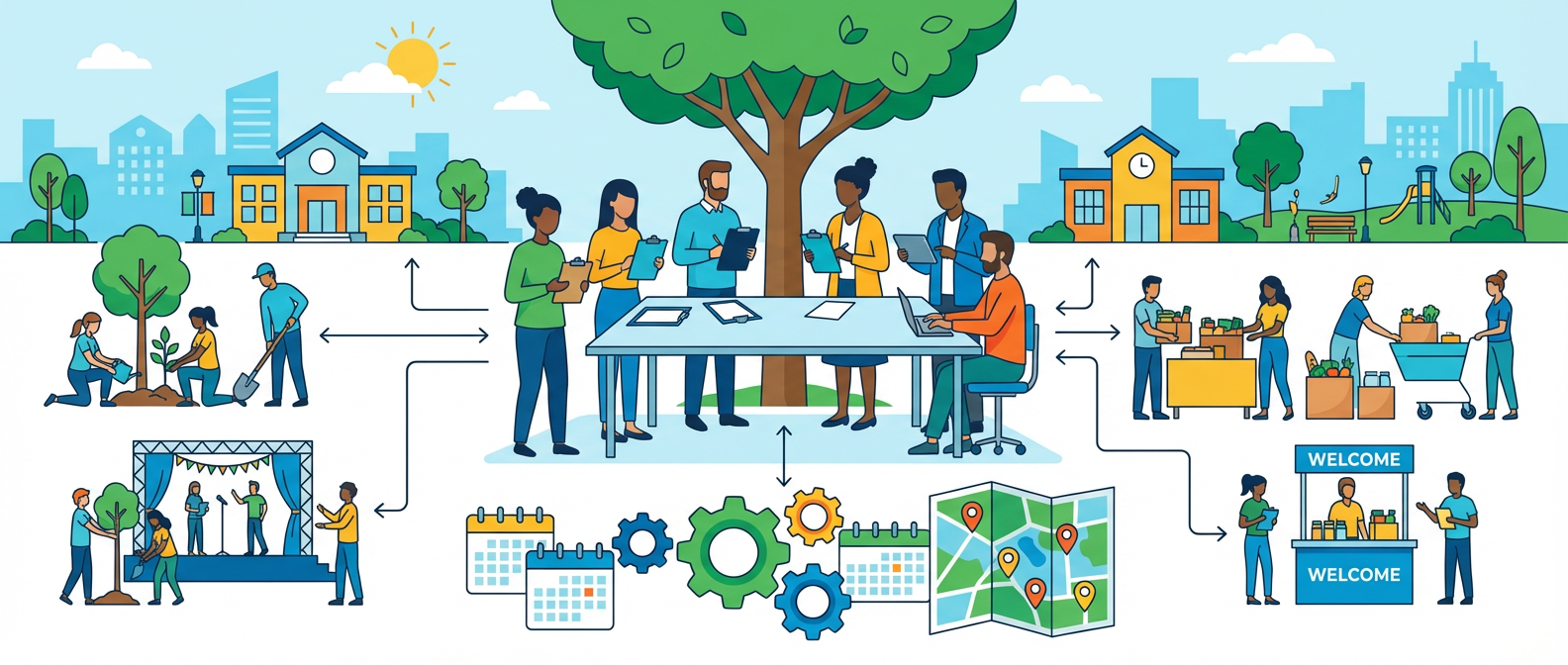
Illustration for The Infrastructure of Getting Things Done: What We Lost When We Stopped Planning Together

The Muscle Memory of Coordination

Every successful community event relies on what I call institutional muscle memory, the built-up knowledge of how things actually get done in your specific place with your specific people. This isn’t abstract civic theory. This is knowing that Maria at the recreation center can unlock the storage room where they keep the folding tables, but only on weekdays before 3 PM. This is understanding that if you want more than twelve people at a meeting, you need childcare, and if you want the childcare volunteers to show up, you need to ask them six weeks in advance, not six days.

The Riverside cleanup organizers spent hours researching trash pickup rules online when a single phone call to someone who’d done this before could have saved them the trouble. But the people who used to do this work have aged out, moved away, or simply stopped volunteering after years of watching their efforts go unnoticed. The know-how left with them.

This isn’t nostalgia for some golden age of civic participation. Those old systems had real problems: they could be exclusionary, resistant to new ideas, and dominated by the same voices year after year. But they solved a basic problem that we haven’t properly replaced. They created ways for ordinary people to learn how to organize their neighbors around shared goals.

What Coordination Actually Looks Like

Real volunteer coordination is not inspiring social media posts. It’s tracking seventeen different moving parts and knowing which ones matter most when half of them inevitably fall apart. It’s having backup plans for your backup plans and accepting that success often looks like controlled chaos rather than Pinterest-perfect execution.

The tree planting event I helped organize last spring worked because we borrowed the organizational framework from a dead neighborhood group. We found their old binders in someone’s garage: contact lists, permit applications, supplier relationships, and detailed post-event notes explaining what worked and what didn’t. Those binders were basically a manual for grassroots project management, written by people who’d learned through trial and error.

We used their system rather than starting from scratch. We took their timeline template but adjusted it for social media promotion. We contacted their recommended suppliers but added new vendors we’d found through community Facebook groups. Most importantly, we wrote everything down as we went, creating our own version of those binders for whoever comes next.

Building Systems That Outlast Enthusiasm

The dirty secret of community organizing is that enthusiasm fades, but systems can persist. The most effective neighborhood groups I’ve seen don’t rely on passionate leaders to drive every project. They’ve built structures that can function even when key people step back, get busy with family obligations, or simply burn out.

This means creating processes that multiple people understand and can execute. It means writing things down in simple formats, not just keeping everything in one person’s head. It means actively developing new leadership rather than letting the same volunteers carry all the responsibility until they collapse from exhaustion.

The current moment offers real opportunities to rebuild these coordination systems with better tools and more inclusive practices. We can combine the reach of digital communication with the effectiveness of face-to-face planning. We can preserve the institutional knowledge of experienced organizers while making space for fresh perspectives and different approaches.

But this requires admitting that coordination is skilled work that deserves support and recognition. We need to stop treating event planning and volunteer management as tasks that anyone can pick up naturally and start investing in the training and resources that effective organizers need.

The Practice of Showing Up

Next Tuesday, the city council will review the updated regulations for community events in public parks. The changes are mostly bureaucratic adjustments, but they’ll affect every neighborhood group that wants to host a festival, cleanup, or meeting outdoors. I’ll be there taking notes, and I’ll post a summary here afterward breaking down what the new requirements actually mean for grassroots organizers.

This is the unglamorous foundation work that makes everything else possible. Reading the meeting minutes. Understanding the permit processes. Building relationships with city staff who can help you navigate the red tape. Learning the systems so we can teach them to others and eventually improve them.

If you’re interested in developing these coordination skills, or if you have experience that could help train others, let’s talk. The basement meetings might be gone, but the work continues. We just need to rebuild the scaffolding that holds it all together, one conversation and one shared project at a time. The infrastructure of community action isn’t glamorous, but it’s what transforms good intentions into actual change in the places where we live.

How One Block Party Became a Blueprint for Cross-Cultural Connection

When Good Intentions Meet Real Challenges

Last spring, Maria Santos knocked on my door with a clipboard and an idea that sounded both simple and impossible. She wanted to organize a block party for our stretch of Maple Avenue, where Spanish mingles with Somali in the corner store, where the elderly Polish couple next to me waves at the young Bangladeshi family across the street, and where everyone seems friendly enough but no one really talks beyond pleasant nods. The thing is, Maria had tried this before. Two years ago, her first attempt drew exactly seven people, all from the same three households.

What made this different was that Maria had spent those two years actually listening. She had attended every neighborhood association meeting, joined the community garden committee, and most importantly, she had started showing up. Not with agendas or surveys, but with her kids at the playground, with grocery bags walking home, with a snow shovel when the sidewalks needed clearing. She had learned that good intentions without genuine relationship-building usually result in well-meaning events that help the organizers more than the community.

The Groundwork That Actually Matters

The real work started six months before the party, though Maria didn’t call it organizing then. She began with what she called “intentional neighboring.” This meant introducing herself to shop owners along the commercial strip, learning names of kids who played in front yards, and asking questions that went beyond weather commentary. When the Abdullahi family mentioned their son’s graduation, she remembered to ask about it the next week. When Mrs. Kowalski’s husband was in the hospital, Maria organized meal deliveries without making it feel like charity.

Through these conversations, patterns emerged. The Somali families felt excluded from neighborhood events that seemed designed for long-term homeowners. The recent Mexican immigrants worried about language barriers making them look unwelcoming. The older Eastern European residents felt overwhelmed by rapid demographic changes but genuinely wanted to connect. Everyone shared concerns about traffic safety, poor street lighting, and the lack of programming for teenagers.

Maria realized that successful cross-cultural connection required addressing practical concerns alongside social ones. People bond over shared problems and shared solutions, not just shared food. So she started attending city council meetings, learning about traffic calming measures, and researching grant opportunities for street improvements. She discovered that the city had money for neighborhood beautification projects but applications required community support documentation.

Building Bridges Through Shared Investment

The breakthrough came when Maria proposed organizing around concrete neighborhood improvements rather than abstract cultural exchange. She suggested the block party also work as a planning meeting for applying for city beautification grants and organizing traffic safety advocacy. Suddenly, the event had purpose beyond social nicety. It became a space where cultural differences could emerge naturally within a framework of shared investment in place.

The organizing process itself became a model for collaboration. Maria worked with Amina Abdullahi to ensure proper translation, learning that effective communication meant more than just hiring interpreters. It meant understanding cultural contexts around public speaking, gender dynamics in community participation, and different approaches to decision-making. They created multiple ways for people to contribute input: small group discussions, written feedback forms, and informal conversations during setup.

Together, they developed an agenda that balanced celebration with substance. The first hour focused on food, music, and kids’ activities. The second hour had presentations from city staff about available resources, followed by small-group discussions about neighborhood priorities. The final hour involved collaborative planning for follow-up actions, with clear roles for people with different comfort levels around public engagement.

What Actually Worked (And What Didn’t)

The August block party drew over sixty people from seventeen households, representing six different countries of origin. But the real success wasn’t the numbers. It was watching twelve-year-old Sofia translate between her grandmother and the Johnsons about their shared concerns over speeding cars. It was seeing Mr. Ahmed and Mr. Kowalski discover their mutual interest in vegetable gardening. It was the formation of three working groups: traffic safety, youth programming, and community beautification.

The event wasn’t without challenges. The planned outdoor movie screening failed because no one had tested the equipment properly. Some families left early when the discussion portion felt too much like a meeting. A few longtime residents complained that too much time was spent on translation, slowing down conversations. These weren’t failures of diversity; they were normal organizing challenges that required adjustment and learning.

More significantly, the follow-through proved harder than the event itself. Sustaining momentum across language barriers, work schedules, and different cultural approaches to community engagement required ongoing attention. The traffic safety group met consistently and successfully lobbied for a crosswalk installation. The youth programming group struggled to find meeting times that worked for families with evening work schedules. The beautification committee discovered that navigating city bureaucracy required more persistence than anyone anticipated.

The Infrastructure of Connection

Six months later, our block looks different. Not just because of the new crosswalk and the community garden boxes that line the tree strips. The change is in how people move through the space. Kids play across property lines. Adults linger to chat after checking mail. When snow falls, multiple households clear sidewalks without coordinating first.

The monthly neighborhood meetings now rotate between the community center, the mosque social hall, and residents’ homes. Agendas include updates on city initiatives, coordination of seasonal block cleanup efforts, and information sharing about local resources. Attendance varies, but a core group of eight to twelve people maintains consistency. More importantly, the informal networks that developed during the organizing process continue to strengthen neighborhood resilience.

This kind of cross-cultural community building doesn’t happen through good intentions or diversity celebrations alone. It requires patient relationship building, attention to power dynamics, and sustained commitment to addressing the practical concerns that bring people together across difference. It means showing up consistently, learning from mistakes, and understanding that meaningful connection develops through shared action rather than shared appreciation.

If you’re thinking about similar work in your neighborhood, start with listening and showing up. Attend the community meetings that already exist, learn about local political processes that affect daily life, and pay attention to what issues generate genuine concern across cultural lines. The infrastructure for connection often exists; it just needs people willing to do the slow work of building relationships and organizing around shared investment in place.

The Quiet Revolution in Your Neighborhood: How Mutual Aid Networks Are Reshaping Community Care

When the Grocery Store Became a Lifeline

Maria Santos didn’t set out to become the unofficial coordinator of her neighborhood’s food distribution network. She was simply worried about her elderly neighbor, Mrs. Chen, who hadn’t been outside since the pandemic started. What began as dropping off groceries twice a week turned into something much bigger when Maria realized that half the families on her block were struggling with similar challenges. Three years later, the network she helped create serves over 200 households across four zip codes, operating entirely through text chains, shared Google docs, and a rotating cast of volunteers who know that Tuesday means produce pickup at the community center.

This is what mutual aid actually looks like on the ground: not grand gestures or nonprofit bureaucracy, but neighbors helping neighbors in ways that feel both revolutionary and completely ordinary. Maria’s story isn’t unique. Across the country, similar networks have emerged organically, filling gaps that traditional social services can’t or won’t address. They operate on principles that sound almost quaint in our hyper-individualistic culture: from each according to their ability, to each according to their need.

The beauty of these networks lies in their flexibility. When the local food bank ran out of formula last month, the group’s parent network had cases available within hours. When flooding damaged several apartments, families had temporary housing arranged before the Red Cross even arrived. These aren’t feel-good stories about community spirit. They’re examples of practical infrastructure that keeps people housed, fed, and connected when official systems fall short.

The Invisible Architecture of Care

Walk through any neighborhood and you’ll see the visible infrastructure: roads, power lines, storm drains. But mutual aid networks operate through what organizers call “care infrastructure,” a web of relationships and resources that becomes visible only when you know how to look. In the Riverside district, for example, a network of parents runs an informal childcare exchange that covers evening shifts, sick days, and school holidays. No money changes hands, but dozens of families have reliable support that would otherwise cost thousands of dollars annually.

The most sophisticated networks develop their own resource-sharing systems that rival any corporate logistics operation. The Northeast Community Tool Library maintains an inventory of over 500 tools available for borrowing, from basic hammers to professional-grade tile saws. Members contribute tools they own but rarely use, and volunteer time for maintenance and organization. The result is a system where a $50 annual membership gives families access to thousands of dollars worth of equipment. More importantly, it creates regular touchpoints for neighbors who might otherwise never interact.

These networks also work as early warning systems for larger problems. When multiple families in the same area start requesting help with utility bills, organizers can spot patterns that point to bigger issues like housing speculation or predatory lending. They become advocates not just for individual families, but for policy changes that address root causes. The mutual aid network in the Southside has successfully lobbied for three new bus routes and a community land trust, using data gathered through their direct service work.

The Skills Revolution Nobody’s Talking About

Perhaps the most underreported aspect of mutual aid is how it works as a massive, decentralized skills-sharing network. People discover talents and interests they never knew they had when community need calls them forward. James Rodriguez learned to repair bikes when the local shop closed and neighbors needed transportation. Two years later, he runs weekend repair clinics that have fixed over 400 bikes and trained 30 people in basic maintenance. His background is in accounting, but he’s become the neighborhood’s bicycle whisperer.

The skill-sharing aspect extends far beyond manual trades. Retired teacher Betty Wong runs informal tutoring sessions in her living room. Software developer Alex Kim teaches digital security workshops for activists and immigrants. Home cook Lisa Park has turned her kitchen into a teaching space for traditional Korean fermentation techniques. These aren’t formal classes or certified programs, but knowledge transfer that happens organically when people have something to offer and others have something to learn.

This informal education system creates resilience that extends far beyond any single crisis. When storms knock out power, there are people who know how to preserve food, fix generators, and organize emergency communications. When gentrification threatens, there are people who understand tenant rights, city planning processes, and community organizing strategies. These skills aren’t just hobbies or side projects. They’re the foundation of community self-reliance.

The Economics of Enough

Mutual aid operates on economic principles that challenge fundamental assumptions about scarcity and competition. In traditional market thinking, resources are limited and must be allocated through price mechanisms. Mutual aid networks reveal how much abundance exists when resources are shared efficiently. The average household owns a drill that gets used for 6-13 minutes over its entire lifetime. Multiply that inefficiency across every appliance, tool, and occasional-use item, and the waste becomes staggering.

But resource sharing goes deeper than simple efficiency gains. These networks create what economists call “social wealth,” value that exists in relationships and cooperation rather than individual ownership. When the community garden produces surplus tomatoes, families eat well and save money on groceries. When neighbors share vehicles, households can survive with one car instead of two. When people pool knowledge and labor for home repairs, families avoid debt and build skills. The economic impact is real and measurable, even though it doesn’t show up in traditional economic indicators.

The most established networks begin to work almost like parallel economies. Time banking systems allow people to trade hours of work across different types of tasks. Community currency programs keep wealth circulating locally rather than extracted to distant corporate headquarters. Buying clubs negotiate bulk purchasing power that makes organic food and household goods accessible to families who couldn’t afford them individually. These aren’t utopian experiments. They’re practical responses to economic systems that leave too many people struggling unnecessarily.

Building What We Need

The most powerful aspect of mutual aid networks might be their proof that ordinary people can create the infrastructure we need when official systems fall short. They demonstrate that community care isn’t just a nice ideal, but a practical strategy for improving daily life. They show that neighbors can solve complex problems when they have space to organize and resources to share.

Starting or joining these networks doesn’t require special training or massive time commitments. It begins with paying attention to what people around you actually need, and what you might have to offer. Maybe it’s sharing the vegetables from your overly ambitious garden, or organizing a tool library in your apartment building’s storage room. Maybe it’s creating a group chat for parents to coordinate after-school pickups, or starting a reading group that tackles city budget documents together. The specific form matters less than the underlying principle: that we can take care of each other in ways that make all our lives more secure and connected.

These networks exist in your neighborhood already, even if they’re not yet visible to you. Finding them might be as simple as asking neighbors what they need, or offering what you have to share. The revolution is quiet, practical, and happening one conversation at a time.

The Intersection That Taught Me About Power

When They Moved the Bus Stop

Last Tuesday, I watched Maria drag her groceries three extra blocks because the city moved her bus stop. She’s seventy-two, takes the Route 15 to the discount grocery twice a week, and has been making this trip for eight years. The stop used to sit right outside the community center where she volunteers. Now it’s tucked behind the new mixed-use development, invisible from the street and a quarter-mile walk through a parking lot with no sidewalk.

The city council approved this change in a five-minute agenda item back in March. “Bus stop relocation to improve traffic flow.” No public input. No consideration of who actually uses that stop or why. Maria found out when she showed up Tuesday morning and the bench was gone.

The Small Decisions That Reshape Everything

We lost something when that bus stop moved, and it wasn’t just convenience. We lost the daily intersection of people waiting, chatting, sharing the small concerns that build community. We lost Maria’s informal role as the neighborhood’s early warning system about which businesses were struggling or which houses had been sitting empty too long. That bus stop was a nerve ending. Now it’s been severed.

This happens constantly. Parking meter hours get extended. Snow removal priorities get shuffled. Permit processes get streamlined in ways that favor people who already know how to navigate them. Each decision seems minor. Each one changes how our neighborhood actually functions.

The cumulative effect isn’t just inconvenience. It’s the slow erosion of the infrastructure that lets people without cars, without flexible schedules, without spare time to attend public meetings, participate fully in community life. These decisions determine who gets to stay and who gets pushed out.

Reading the Minutes Like Tea Leaves

I started reading city council minutes three years ago when they approved demolishing the Riverside Community Gardens for a stormwater management facility. The neighbors who had tended those plots for fifteen years learned about it from a bulldozer showing up. The minutes from that meeting contain exactly one sentence about “optimizing underutilized green space for essential infrastructure.”

Those gardens weren’t just hobby plots. They were where the Somali families on Cedar Street grew the vegetables they couldn’t find at regular grocery stores. Where Mr. Thompson from the senior housing taught kids how to compost. Where people without yards could grow something with their hands. The stormwater pond they built works perfectly. It also eliminated the last place in our neighborhood where people could grow their own food.

The minutes never mention any of this context. They read like technical documents because that’s what they are. But buried in the bureaucratic language are the choices that reshape daily life for thousands of people.

What We Can Do Before We Lose More

Here’s what I’ve learned from three years of watching these decisions get made: showing up matters, but showing up smart matters more. The bus stop relocation was buried in a consent agenda that gets approved without discussion unless someone specifically asks to pull it out. Most people don’t know consent agendas exist. Most people don’t know they can ask to speak about them.

The planning commission meets the second Thursday of every month at 7 PM in City Hall Room B. They’re reviewing the zoning variance that will determine whether the corner market on Elm Street can expand or has to close. That corner market is where high school kids buy snacks, where people cash checks, where neighbors run into each other and share news. It’s also not profitable enough to survive the current zoning restrictions.

We can’t save everything, but we can make sure the people making these decisions understand what they’re actually deciding. When the council talks about “improving traffic flow” by moving a bus stop, someone needs to explain that they’re really talking about whether Maria can still get groceries. When they discuss “optimizing green space,” someone needs to name the families who will lose their gardens.

The Work of Staying Connected

Last week, I started a simple project. Every month, I pick one item from the city council agenda and spend an hour figuring out what it actually means for people I know. Then I write it up in plain language and share it with five neighbors. Not to tell them what to think, but to give them the information they need to think for themselves.

This isn’t about preserving the past exactly as it was. The stormwater pond prevents flooding that would destroy people’s homes. The new development brings housing we desperately need. But when we make these changes without understanding what we’re giving up, we lose pieces of community life that took decades to build and might never grow back.

The next city council meeting is Monday at 7 PM. The agenda includes a proposal to change the permit process for block parties. Sounds boring, right? But think about the last block party on your street, if you’ve ever had one. Think about what it took to organize it, who showed up, what conversations happened that wouldn’t have happened otherwise. Now imagine if getting that permit became just a little bit harder, required just one more form, cost just twenty dollars more. How many block parties would simply not happen?

These are the questions worth asking. Not because we can stop all change, but because we can shape how change happens. The infrastructure of community life gets built one decision at a time, and we get to have a voice in those decisions if we’re willing to use it.

The Air We Share: How Maria Santos Is Mapping Environmental Justice in Our Neighborhoods

When Data Meets the Daily Commute

Maria Santos has been tracking air quality data for three years now, but it wasn’t spreadsheets that got her started. It was her daughter’s asthma attacks during soccer season. Every September, as the kids returned to the fields near the industrial corridor on Maple Street, eight-year-old Sofia would start wheezing. The pediatrician suggested it might be seasonal allergies. Maria suspected something else entirely.

The Air We Share: How Maria Santos Is Mapping Environmental Justice in Our Neighborhoods

Armed with a $200 air quality monitor from Amazon and determination that would make any data scientist proud, Maria began walking the neighborhoods around her daughter’s school. What she discovered over eighteen months of careful measurement shocked her. Air pollution levels spiked to nearly double the EPA’s recommended limits within a six-block radius of the metal fabrication plants that line our eastern industrial zone. The pattern held consistent across seasons, weather conditions, and times of day when the facilities were operating.

This is environmental justice work at its most basic level. Not abstract policy debates or distant regulatory battles, but a mother with a meter and a notebook, creating the evidence our community desperately needed. Maria’s methodical documentation became the foundation for the air quality improvement initiative that passed city council last month by unanimous vote.

The Invisible Boundaries of Pollution

What Maria uncovered reflects a reality that environmental justice advocates have been documenting for decades. Pollution doesn’t distribute itself evenly across a community. It pools in predictable places, often matching exactly with property values, demographics, and political influence. In our city, the highest pollution readings consistently cluster in neighborhoods where median household income falls below $45,000 annually. These same areas house 68% of our city’s Latino families and 43% of our Black residents.

The correlation isn’t accidental. Historical zoning decisions, industrial permitting processes, and infrastructure investments have created what researchers call “sacrifice zones.” These are communities where environmental health takes a backseat to industrial convenience and economic development. The residents of Maple Street, Riverside Drive, and the Eastside neighborhoods near the rail yards have been breathing this sacrifice for generations.

But here’s what makes Maria’s work particularly valuable. Rather than stopping at documentation, she began connecting with residents in the most affected areas. Through informal coffee meetups and weekend walks with her air quality monitor, she helped neighbors understand what the numbers meant for their daily lives. Mrs. Chen, who runs the corner market on Riverside, learned that the persistent headaches she’d blamed on stress were likely connected to diesel fumes from delivery trucks idling outside her store.

These conversations revealed a huge gap in how environmental health information typically reaches communities. Official reports and EPA databases exist, but they rarely translate into actionable knowledge for the people most affected by pollution. Maria’s approach bridged that gap through relationship building and plain language explanations that respected people’s intelligence while acknowledging the technical complexity of air quality science.

From Measurements to Movement

The transition from individual advocacy to community organizing happened gradually, then all at once. As Maria shared her findings with more neighbors, patterns of health impacts began to emerge that couldn’t be ignored. Childhood asthma rates in the Eastside neighborhood run 23% higher than the city average. Emergency room visits for respiratory issues peak consistently during months when industrial activity increases. Three elderly residents on Maple Street had been hospitalized for breathing difficulties within a six-week period last spring.

Rather than approaching city council as an angry parent demanding immediate action, Maria spent four months building a coalition that included affected residents, local business owners, and retired city employees with institutional knowledge. This group, which calls itself the Clean Air Collaborative, developed a proposal that balanced environmental protection with economic realities. They weren’t calling for factories to close overnight. Instead, they requested phased improvements, better monitoring, and genuine community input on industrial permitting decisions.

The collaborative’s first victory came when they successfully advocated for three permanent air quality monitoring stations in the most affected neighborhoods. Real-time data from these monitors now feeds into a public dashboard that any resident can access online. When pollution levels exceed safe thresholds, automated alerts go out through the city’s emergency notification system. This early warning system has already helped families with vulnerable members avoid outdoor activities during high-pollution periods.

Practical Solutions That Scale

The air quality monitoring network is just one piece of a larger environmental justice puzzle that the Clean Air Collaborative continues to work on. They’ve identified several immediate, actionable steps that don’t require massive budget allocations or lengthy regulatory battles. The group successfully lobbied for anti-idling enforcement near schools and senior housing. They worked with the parks department to plant 150 trees specifically chosen for their air-filtering capacity in neighborhoods with the highest pollution readings.

Perhaps most importantly, they’ve changed how community input works in industrial permitting processes. New facilities seeking permits must now hold genuine community meetings, not just pro forma notifications buried in legal notices. Existing facilities seeking permit renewals face enhanced scrutiny and community oversight. These changes represent a fundamental shift in how environmental decisions get made in our city.

The collaborative has also developed a resident training program that teaches community members how to collect and interpret environmental data. Maria leads monthly workshops where participants learn to use air quality monitors, understand EPA databases, and advocate effectively in public meetings. This knowledge transfer ensures that environmental monitoring won’t depend on any single individual’s commitment and creates a sustainable foundation for long-term advocacy.

Building Tomorrow’s Environmental Advocates

What started with one parent’s concern about her daughter’s health has grown into a model for community-driven environmental justice that other cities are beginning to study and copy. The Clean Air Collaborative now partners with the university’s environmental science program, providing real-world data collection experience for students while expanding the community’s monitoring capacity. Local high school students participate in weekend data collection walks, learning both scientific methodology and civic engagement skills.

This approach across generations ensures continuity while developing the next generation of environmental advocates. Sofia Santos, now eleven and largely asthma-free thanks to better air quality management, is the group’s youngest official member. She’s learned to read air quality data, speaks confidently at city council meetings, and recently presented the collaborative’s work at the state environmental justice conference.

The collaborative meets the second Saturday of every month at the Riverside Community Center, and newcomers are always welcome. Maria insists that environmental advocacy isn’t about having advanced degrees or technical expertise. It’s about caring enough to pay attention, ask questions, and work with neighbors toward solutions that improve everyone’s health and wellbeing. If you’ve ever wondered about air quality in your neighborhood, or noticed patterns of environmental impact that seem unfair, these monthly gatherings offer a practical starting point for turning observations into action.

The Magic Happens in the Details: What I Learned from Maria About Running Community Events That Actually Work

The Woman Behind Three Hundred Planted Trees

Maria Gonzalez doesn’t look like someone who could convince three hundred strangers to show up on a Saturday morning with shovels. She’s soft-spoken, keeps detailed notes in a worn composition book, and always brings homemade cookies to planning meetings. But last spring, when our neighborhood desperately needed more tree cover and the city budget had exactly zero dollars for plantings, Maria somehow pulled off the largest volunteer tree-planting event our district had seen in twenty years.

The Magic Happens in the Details: What I Learned from Maria About Running Community Events That Actually Work

I’ve been watching community organizers for the better part of a decade, sitting through countless city council meetings and volunteer coordination sessions. Most events fail because people focus on the big picture and forget that success lives in the smallest details. Maria gets something that many well-intentioned organizers miss completely: the difference between planning an event and creating something people actually want to show up for.

When I asked Maria how she did it, she pulled out that composition book and walked me through her process. What I found was a masterclass in thoughtful volunteer coordination that had nothing to do with flashy social media campaigns. Everything to do with understanding how real people make decisions about their Saturday mornings.

The Thursday Night Phone Calls That Changed Everything

Three weeks before the tree planting, Maria started making phone calls every Thursday evening. Not mass robocalls or email blasts, but actual conversations with people she knew from the grocery store, the library, neighborhood walks. She’d call Mrs. Chen, who always complained about the lack of shade on Maple Street. She’d call the Rodriguez family, whose kids played in the park that desperately needed more green space. She’d call Tom, the retired contractor who mentioned wanting to stay active but didn’t know where to start.

Each conversation lasted maybe five minutes, but Maria had a script that worked. She’d start by mentioning something specific about that person’s connection to the neighborhood, then explain exactly what would happen on Saturday morning. Not just “we’re planting trees,” but “we’ll meet at 8 AM with coffee and donuts from Santos Bakery, spend two hours planting young maples along the walking path where your kids ride bikes, and you’ll be home by 11 with dirty hands and a story to tell.”

The genius was in the specificity. People could picture themselves there because Maria painted a clear scene of what their morning would look like. She eliminated the unknown variables that keep people home on weekends. Will I know anyone there? What should I bring? How long will this actually take? Will it be awkwardly organized or smoothly run?

Building Systems That Support Real People

Maria’s event planning always starts with a simple question: What would make this feel impossible for someone to participate in, and how do we remove those barriers? For the tree planting, she spotted three major obstacles that kill volunteer turnout: logistics confusion, social awkwardness, and the fear of being trapped in a poorly organized event.

Her solution was ruthlessly practical. She created a simple check-in system using folding tables borrowed from the community center, with name tags organized alphabetically and a clear assignment chart showing which teams would work on which sections of the park. She arranged for Santos Bakery to donate coffee and pastries, creating a natural gathering point where people could chat while getting oriented. She recruited team leaders from different social circles in the neighborhood, so newcomers would always find at least one familiar face.

Most importantly, she built in multiple exit ramps. People could leave after one hour of work, after the tree planting was finished, or stay for the optional cleanup and informal lunch. This flexibility meant that families with young kids, older residents with limited stamina, and busy professionals could all participate in ways that worked for their lives.

The result? An event where people felt competent and welcome from the moment they arrived. No one stood around confused about what to do next or worried about whether they were doing things correctly. Maria had thought through every transition and created systems that made participation feel natural rather than forced.

Why the Small Gestures Matter More Than You Think

During the tree planting, I watched Maria work the crowd with the skill of someone who understands that volunteer coordination is really about human psychology. She remembered that Tom had mentioned his bad back during their phone conversation, so she made sure he got assigned to the watering team instead of the digging crew. She noticed when Sarah’s eight-year-old daughter was getting restless and quietly handed the kid a clipboard with an important-looking checklist of planted trees to mark off.

These weren’t random acts of kindness. They were strategic decisions based on Maria’s understanding that people volunteer again when they feel seen and valued during their first experience. She knew that Tom would tell his friends about how the organizers looked out for him, and that Sarah’s daughter would beg to come to the next community event because she felt like part of the team.

The follow-up was just as deliberate. Maria sent handwritten thank-you notes to everyone who participated, but each note mentioned something specific that person contributed. Not just “thanks for volunteering,” but “thanks for bringing that extra shovel when we ran short” or “your idea about marking the tree locations with colored flags made everything run so much smoother.”

What This Means for Your Next Community Project

Maria’s approach works because it’s built on respect for people’s time and intelligence. She doesn’t assume that good intentions are enough to create a successful event. She doesn’t expect volunteers to figure out how to be helpful on the spot. Instead, she designs experiences that set people up to succeed and feel good about their contribution.

The lesson here isn’t that you need to become Maria, making hundreds of phone calls and hand-writing thank-you notes. It’s that successful volunteer coordination requires thinking like someone who might show up to your event. What would make them feel welcome? What would help them understand how to contribute? What would make them want to volunteer again next time?

If you’re planning a community event and want to talk through the details that could make or break volunteer turnout, I’d love to hear about your project. Sometimes the best planning happens over coffee with someone who’s watched a lot of events succeed and fail. The magic really is in the details. Those details are always worth getting right.

How Tenants at Riverside Gardens Won Their Fight for Heat and Hot Water

The Problem Nobody Was Talking About

Last October, when the temperature dropped below freezing for the first time, residents of Riverside Gardens apartment complex found themselves facing a choice no one should have to make: pay for expensive space heaters or bundle up in coats inside their own homes. The 180-unit complex on the east side had been without consistent heat for three weeks, and hot water came and went like an unreliable friend. What made this particularly infuriating was that rent had actually increased 8% that year, even as basic services deteriorated.

Maria Santos, a single mother of two who had lived in Building C for four years, remembers checking the thermostat obsessively those first cold nights. “I kept thinking maybe I was doing something wrong, maybe there was a switch I didn’t know about,” she told me over coffee last month. “But when I talked to my neighbor Mrs. Chen, she was having the same problem. That’s when we realized this wasn’t just us.”

The property management company, Hartwell Properties, had a pattern of slow responses to maintenance requests. Tenants would call, leave voicemails, send emails. Sometimes they’d get a repair person who would tinker with individual unit thermostats, blame the residents for “not understanding the system,” and leave. The fundamental problem with the building’s aging boiler system went untouched. For a company collecting over $200,000 in monthly rent from the property, this level of neglect wasn’t just frustrating. It was a choice.

Building Power One Conversation at a Time

Maria started knocking on doors. Not with a petition or a plan, just with questions. “Are you having trouble with heat too? What about hot water?” She discovered that nearly every unit in her building was affected, and Buildings A and B were having similar issues. More importantly, she learned that people were angry and ready to do something about it.

The breakthrough came when Mrs. Chen mentioned that her daughter had helped organize tenants in Portland using something called a “power map.” This wasn’t some complicated political strategy. It was simply a way to figure out who had influence over their situation and how they might reach those people. They gathered in Maria’s living room on a Thursday night with a large piece of butcher paper and started mapping their situation.

They identified their landlord (who lived in the suburbs and never responded to calls), the property management company (which had an office downtown), the city’s housing inspector (whose number they found on the city website), and their city council representative (who had run on a platform of affordable housing protection). They also mapped their own strengths: Mrs. Chen’s daughter knew about tenant rights, Maria was comfortable speaking in public, and several neighbors had connections to local media through their jobs.

What emerged was a plan that felt manageable rather than overwhelming. They would document everything, build support among their neighbors, and then approach the problem step by step. They weren’t trying to reform the entire housing system in their first month. They just wanted heat and hot water in their own apartments.

Documentation and Strategic Pressure

The next phase required patience and attention to detail. Every resident started keeping a daily log: indoor temperature readings, duration of hot water availability, and any communication attempts with management. Maria created a simple form that people could fill out, making the process as easy as possible for busy neighbors. Within two weeks, they had a thick folder of evidence showing a clear pattern of habitability issues.

Armed with documentation, they filed a formal complaint with the city housing inspector. This wasn’t their end goal, but it created an official record and started a timeline that would put legal pressure on Hartwell Properties. The inspection, which happened within ten days, resulted in multiple violations and a requirement for the company to make repairs within 30 days.

At the same time, they began showing up to public forums where they knew decision-makers would be present. Not to grandstand or make speeches, but to ask direct questions and put faces on the problem. Maria attended a city council meeting and, during public comment, simply stated the facts: families with children were living without heat, the management company wasn’t responding, and this was happening in a neighborhood where affordable housing was already scarce.

The combination of official complaints and public visibility created exactly the kind of pressure that property management companies prefer to avoid. Within three weeks of the housing inspection, Hartwell Properties had fixed the boiler system and had also established a 24-hour maintenance hotline and hired a new on-site manager.

Sustaining the Victory and Looking Forward

Winning the immediate battle was satisfying, but the residents of Riverside Gardens understood that their work wasn’t finished. They had learned something valuable about their own collective power, and they weren’t about to let that knowledge go to waste. They formalized their tenant organization, establishing monthly meetings and creating a simple communication system for future issues.

Six months later, when Hartwell Properties announced plans for another rent increase, the tenants were ready. They had relationships with city officials, understanding of their legal rights, and most importantly, they had confidence in their ability to work together effectively. The rent increase was reduced by half after negotiations that might never have happened without their organizing foundation.

Their success also caught the attention of tenant organizers in other parts of the city. Maria and Mrs. Chen have since visited three other apartment complexes to share what they learned, helping other tenants think through their own organizing strategies. They’re not experts in housing policy or community organizing, but they have something equally valuable: recent experience with what actually works in their specific context.

If you’re dealing with similar issues in your housing situation, or if you’re interested in supporting tenant organizing in our city, the Riverside Gardens tenants meet the second Thursday of each month at the community center on Maple Street. They’re always happy to share their experience and talk through strategies that might work in different situations. Sometimes the most powerful tool we have is simply knowing that other people have faced similar problems and found ways to address them together.