The Woman Behind Three Hundred Planted Trees
Maria Gonzalez doesn’t look like someone who could convince three hundred strangers to show up on a Saturday morning with shovels. She’s soft-spoken, keeps detailed notes in a worn composition book, and always brings homemade cookies to planning meetings. But last spring, when our neighborhood desperately needed more tree cover and the city budget had exactly zero dollars for plantings, Maria somehow pulled off the largest volunteer tree-planting event our district had seen in twenty years.
I’ve been watching community organizers for the better part of a decade, sitting through countless city council meetings and volunteer coordination sessions. Most events fail because people focus on the big picture and forget that success lives in the smallest details. Maria gets something that many well-intentioned organizers miss completely: the difference between planning an event and creating something people actually want to show up for.
When I asked Maria how she did it, she pulled out that composition book and walked me through her process. What I found was a masterclass in thoughtful volunteer coordination that had nothing to do with flashy social media campaigns. Everything to do with understanding how real people make decisions about their Saturday mornings.
The Thursday Night Phone Calls That Changed Everything
Three weeks before the tree planting, Maria started making phone calls every Thursday evening. Not mass robocalls or email blasts, but actual conversations with people she knew from the grocery store, the library, neighborhood walks. She’d call Mrs. Chen, who always complained about the lack of shade on Maple Street. She’d call the Rodriguez family, whose kids played in the park that desperately needed more green space. She’d call Tom, the retired contractor who mentioned wanting to stay active but didn’t know where to start.
Each conversation lasted maybe five minutes, but Maria had a script that worked. She’d start by mentioning something specific about that person’s connection to the neighborhood, then explain exactly what would happen on Saturday morning. Not just “we’re planting trees,” but “we’ll meet at 8 AM with coffee and donuts from Santos Bakery, spend two hours planting young maples along the walking path where your kids ride bikes, and you’ll be home by 11 with dirty hands and a story to tell.”
The genius was in the specificity. People could picture themselves there because Maria painted a clear scene of what their morning would look like. She eliminated the unknown variables that keep people home on weekends. Will I know anyone there? What should I bring? How long will this actually take? Will it be awkwardly organized or smoothly run?
Building Systems That Support Real People
Maria’s event planning always starts with a simple question: What would make this feel impossible for someone to participate in, and how do we remove those barriers? For the tree planting, she spotted three major obstacles that kill volunteer turnout: logistics confusion, social awkwardness, and the fear of being trapped in a poorly organized event.
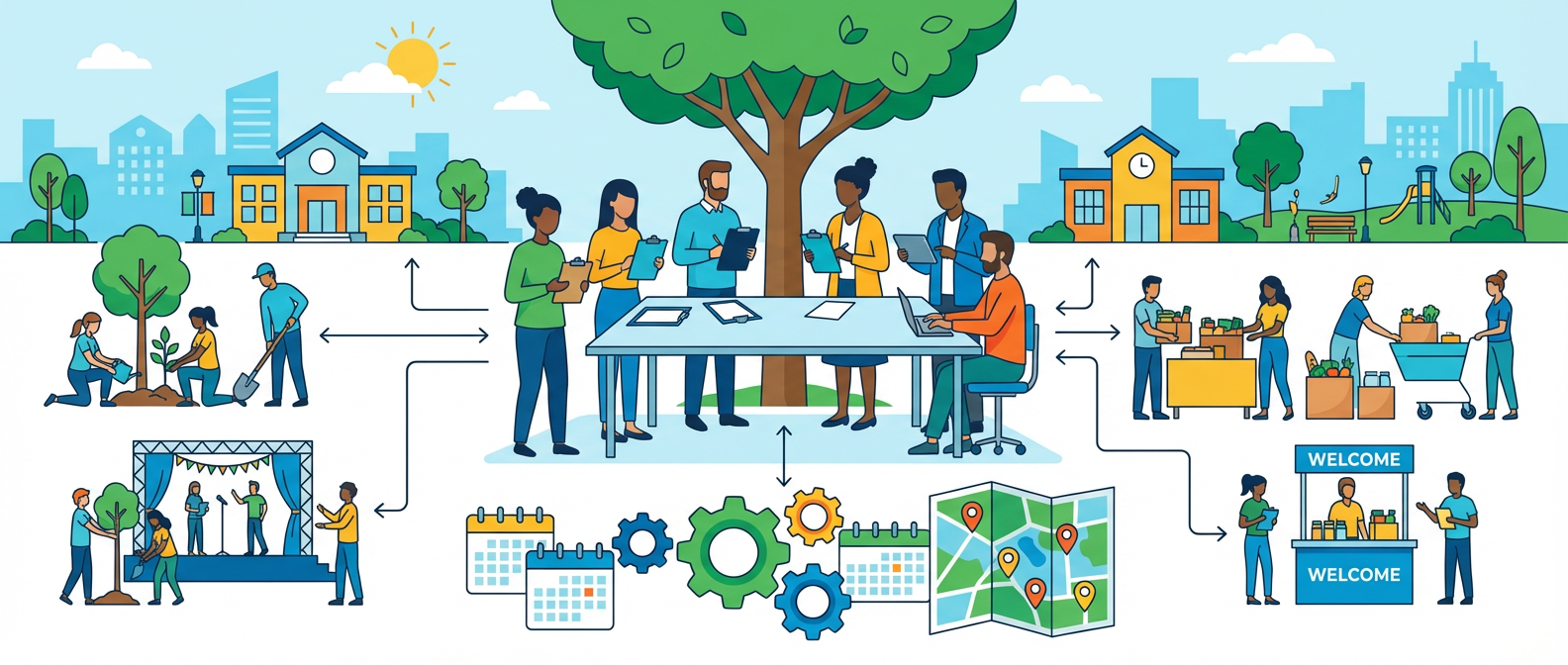
Her solution was ruthlessly practical. She created a simple check-in system using folding tables borrowed from the community center, with name tags organized alphabetically and a clear assignment chart showing which teams would work on which sections of the park. She arranged for Santos Bakery to donate coffee and pastries, creating a natural gathering point where people could chat while getting oriented. She recruited team leaders from different social circles in the neighborhood, so newcomers would always find at least one familiar face.
Most importantly, she built in multiple exit ramps. People could leave after one hour of work, after the tree planting was finished, or stay for the optional cleanup and informal lunch. This flexibility meant that families with young kids, older residents with limited stamina, and busy professionals could all participate in ways that worked for their lives.
The result? An event where people felt competent and welcome from the moment they arrived. No one stood around confused about what to do next or worried about whether they were doing things correctly. Maria had thought through every transition and created systems that made participation feel natural rather than forced.
Why the Small Gestures Matter More Than You Think
During the tree planting, I watched Maria work the crowd with the skill of someone who understands that volunteer coordination is really about human psychology. She remembered that Tom had mentioned his bad back during their phone conversation, so she made sure he got assigned to the watering team instead of the digging crew. She noticed when Sarah’s eight-year-old daughter was getting restless and quietly handed the kid a clipboard with an important-looking checklist of planted trees to mark off.
These weren’t random acts of kindness. They were strategic decisions based on Maria’s understanding that people volunteer again when they feel seen and valued during their first experience. She knew that Tom would tell his friends about how the organizers looked out for him, and that Sarah’s daughter would beg to come to the next community event because she felt like part of the team.
The follow-up was just as deliberate. Maria sent handwritten thank-you notes to everyone who participated, but each note mentioned something specific that person contributed. Not just “thanks for volunteering,” but “thanks for bringing that extra shovel when we ran short” or “your idea about marking the tree locations with colored flags made everything run so much smoother.”
What This Means for Your Next Community Project
Maria’s approach works because it’s built on respect for people’s time and intelligence. She doesn’t assume that good intentions are enough to create a successful event. She doesn’t expect volunteers to figure out how to be helpful on the spot. Instead, she designs experiences that set people up to succeed and feel good about their contribution.
The lesson here isn’t that you need to become Maria, making hundreds of phone calls and hand-writing thank-you notes. It’s that successful volunteer coordination requires thinking like someone who might show up to your event. What would make them feel welcome? What would help them understand how to contribute? What would make them want to volunteer again next time?
If you’re planning a community event and want to talk through the details that could make or break volunteer turnout, I’d love to hear about your project. Sometimes the best planning happens over coffee with someone who’s watched a lot of events succeed and fail. The magic really is in the details. Those details are always worth getting right.