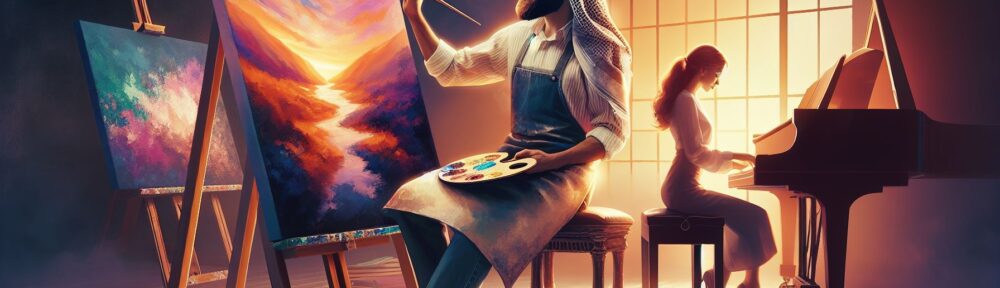
Alright, folks! Today, we’re diving headfirst into one of the most exhilarating and eyebrow-raising advances in technology: Artificial Intelligence in the creative arts. Yep, that’s right. We’re talking about robots making music, crafting films, and painting like Picasso. Pull up a chair, grab your favorite tech-friendly beverage, and let’s explore this sometimes delightful, often surreal, realm of AI-generated creativity.
The Dawn of Robo-Renaissance
Gone are the days when instruments were limited to being played by mere mortals. AI is now jazzing things up and shaking the art world, offering symphonies composed by algorithms and abstract art born from code. If you’ve been around long enough in the tech scene, you know that the world of AI has started to conjure up creations worthy of sharing gallery space with Van Gogh and collaboration credits with Tchaikovsky.
We’re at the dawn of a Robo-Renaissance, where machine-learned creativity isn’t just a novelty. It’s a real force changing how we think about art and aesthetics. Artificially intelligent algorithms have moved past mundane data processing tasks and jumped into artistic expression, creating works that challenge our very notion of what it means to be an artist.
A Brushes Tale: Creating Visual Art
Let’s talk visuals. Picture a painting created by a neural network that studied a billion images, learning the subtle differences of color, composition, and contrast. Enter AI models like DeepArt and DALL-E, taking cues from existing masterpieces to churn out originals that would make even the most seasoned painter do a double-take. These tech marvels have turned heads at art exhibitions, with some aficionados confessing the blurred lines between human and machine-generated artistry has left them utterly gobsmacked.
AI-artists, as I like to call them, aren’t confined by traditional schooling or human biases. Their inventive brushstrokes (if we can call them that) open new possibilities in a space that often felt insular and intimidating. This isn’t just art for art’s sake. This is art for the sake of reimagining what AI can do in almost limitless fields! It’s also a fascinating opportunity for human artists to collaborate with AI, creating hybrid works that incorporate the best of both worlds.
Algorithmic Orchestras: Composing Music with AI
If you’d told me a decade ago that our future Bach’s and Beethoven’s would be bots, I’d have chuckled, imagining a tin man with a violin. Fast forward to today, and here we are. Algorithms craft symphonies that are more than just random sound sequences. AI composers are sculpting music that resonates deeply, attuned to our emotional chords. These AI models learn from tons of music, spanning centuries and genres, to compose pieces that may just inch their way into your playlists one day.
Consider AIVA (Artificial Intelligence Virtual Artist), an AI capable of composing soothing classical music as if it vividly reimagines landscapes from long-lost ages or conjuring upbeat tunes that capture the zeitgeist. Intriguing, right? Music crafted by AI may raise an existential eyebrow, but it’s creating a whole new dimension of auditory delight.
Writing and Filmmaking: The Script of the Future
Let’s swerve into the realm of storytelling. AI models have begun to venture into writing novels, crafting screenplays, and writing news articles with surprising competency. Algorithms are now capable of drafting plot twists that rival any human imagination. These mechanized scribes bring narrative creations from raw data and produce stories that entertain and sometimes confound the traditionally human process of storytelling.
This gets even cooler—or spookier, depending on your POV. Imagine AI-written screenplays for films or TV shows. It won’t be long before our Netflix recommendations include a series written by OpenAI’s GPT models. These narrative architects use vast linguistic databases to structure scripts that could pave the way for a revolutionary era in visual storytelling alongside human co-writers.
Challenges? Those Exist Too!
Of course, no shiny tech tale would be complete without its set of challenges and ethical predicaments. There’s the ever-looming question of authenticity: is a painting truly art if created by code? What’s the role of intent in artistry when a machine is doing the creating? These questions tug at our human-centric view of creativity.
There’s also the risk of AI models accidentally reinforcing biases, be they cultural or gender-based, which could echo throughout their creative outputs. As creative arts shift, the dialogue around copyright, licensing, and artistic value will inevitably need reassessing. Who owns the masterpiece composed by a machine, or the symphony sung by an AI’s artificial soul?
A Speculative Glimpse Into the Future
If you ask me, we’re at a crossroads with AI in the creative arts. Picture this: a world where artists and AI collaborate symbiotically, each bringing out the best in each other. The artist sketches the vision, while AI refines and augments it beyond known limits. Is it the sci-fi future of pop culture come to life? Maybe!
So here’s the takeaway, my fellow tech aficionados: keep your minds open and your fingers ready to hit play, for the AI-artistic movement is hullabaloo worth embracing. We may soon be avid consumers of art once restricted to the scope of human minds, now transformed and potentially enriched by artificial genius.
Artificial creativity isn’t just a glimpse into tomorrow. It’s already part of our present-day reality. So let’s appreciate this hybrid creativity as evidence of our cluster-humanoid desire to innovate and collaborate.
Until next time, stay curious and keep dreaming of those futuristic masterpieces yet to unfold!