The Infrastructure of Getting Things Done: What We Lost When We Stopped Planning Together

The Rooms Where It Happened

Last month, I sat in the basement of St. Mark’s Episcopal watching three people try to coordinate a neighborhood cleanup that should have involved thirty. They had good intentions, decent funding from a small grant, and absolutely no idea how to turn those resources into actual volunteers showing up with actual tools on actual Saturday mornings. The problem wasn’t enthusiasm. The problem was that we’ve forgotten how to build the scaffolding that holds community events together.
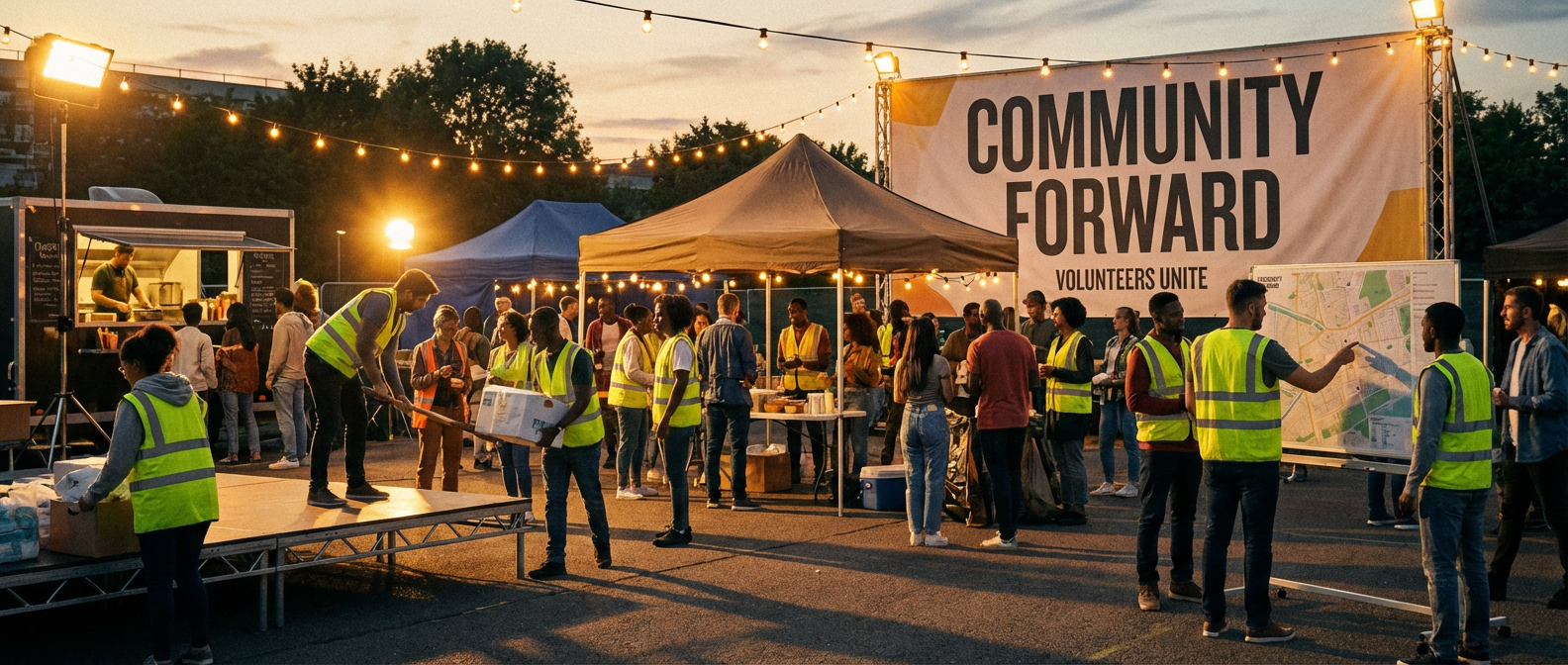
The Infrastructure of Getting Things Done: What We Lost When We Stopped Planning Together

Fifteen years ago, this same basement hosted monthly meetings of the Riverside Neighborhood Association, where forty-odd residents would gather to hash out everything from pothole complaints to the annual block party. They had committees. They had phone trees. They had a woman named Dorothy who kept meticulous notes in composition notebooks and a man named Frank who somehow always knew which city department to call about what. When Dorothy moved to assisted living and Frank passed away, those systems didn’t transfer to anyone else. They just disappeared.

We like to think that Facebook groups and neighborhood apps replaced these old structures, but what we actually built was a notification system, not an organization system. You can announce an event to three hundred people instantly, but you still need someone to coordinate the logistics, manage the volunteers, and know which forms the city requires for using park space. The digital tools work great for broadcasting. They’re useless at the boring work of follow-through.

Illustration for The Infrastructure of Getting Things Done: What We Lost When We Stopped Planning Together

The Muscle Memory of Coordination

Every successful community event relies on what I call institutional muscle memory, the built-up knowledge of how things actually get done in your specific place with your specific people. This isn’t abstract civic theory. This is knowing that Maria at the recreation center can unlock the storage room where they keep the folding tables, but only on weekdays before 3 PM. This is understanding that if you want more than twelve people at a meeting, you need childcare, and if you want the childcare volunteers to show up, you need to ask them six weeks in advance, not six days.

The Riverside cleanup organizers spent hours researching trash pickup rules online when a single phone call to someone who’d done this before could have saved them the trouble. But the people who used to do this work have aged out, moved away, or simply stopped volunteering after years of watching their efforts go unnoticed. The know-how left with them.

This isn’t nostalgia for some golden age of civic participation. Those old systems had real problems: they could be exclusionary, resistant to new ideas, and dominated by the same voices year after year. But they solved a basic problem that we haven’t properly replaced. They created ways for ordinary people to learn how to organize their neighbors around shared goals.

What Coordination Actually Looks Like

Real volunteer coordination is not inspiring social media posts. It’s tracking seventeen different moving parts and knowing which ones matter most when half of them inevitably fall apart. It’s having backup plans for your backup plans and accepting that success often looks like controlled chaos rather than Pinterest-perfect execution.

The tree planting event I helped organize last spring worked because we borrowed the organizational framework from a dead neighborhood group. We found their old binders in someone’s garage: contact lists, permit applications, supplier relationships, and detailed post-event notes explaining what worked and what didn’t. Those binders were basically a manual for grassroots project management, written by people who’d learned through trial and error.

We used their system rather than starting from scratch. We took their timeline template but adjusted it for social media promotion. We contacted their recommended suppliers but added new vendors we’d found through community Facebook groups. Most importantly, we wrote everything down as we went, creating our own version of those binders for whoever comes next.

Building Systems That Outlast Enthusiasm

The dirty secret of community organizing is that enthusiasm fades, but systems can persist. The most effective neighborhood groups I’ve seen don’t rely on passionate leaders to drive every project. They’ve built structures that can function even when key people step back, get busy with family obligations, or simply burn out.

This means creating processes that multiple people understand and can execute. It means writing things down in simple formats, not just keeping everything in one person’s head. It means actively developing new leadership rather than letting the same volunteers carry all the responsibility until they collapse from exhaustion.

The current moment offers real opportunities to rebuild these coordination systems with better tools and more inclusive practices. We can combine the reach of digital communication with the effectiveness of face-to-face planning. We can preserve the institutional knowledge of experienced organizers while making space for fresh perspectives and different approaches.

But this requires admitting that coordination is skilled work that deserves support and recognition. We need to stop treating event planning and volunteer management as tasks that anyone can pick up naturally and start investing in the training and resources that effective organizers need.

The Practice of Showing Up

Next Tuesday, the city council will review the updated regulations for community events in public parks. The changes are mostly bureaucratic adjustments, but they’ll affect every neighborhood group that wants to host a festival, cleanup, or meeting outdoors. I’ll be there taking notes, and I’ll post a summary here afterward breaking down what the new requirements actually mean for grassroots organizers.

This is the unglamorous foundation work that makes everything else possible. Reading the meeting minutes. Understanding the permit processes. Building relationships with city staff who can help you navigate the red tape. Learning the systems so we can teach them to others and eventually improve them.

If you’re interested in developing these coordination skills, or if you have experience that could help train others, let’s talk. The basement meetings might be gone, but the work continues. We just need to rebuild the scaffolding that holds it all together, one conversation and one shared project at a time. The infrastructure of community action isn’t glamorous, but it’s what transforms good intentions into actual change in the places where we live.

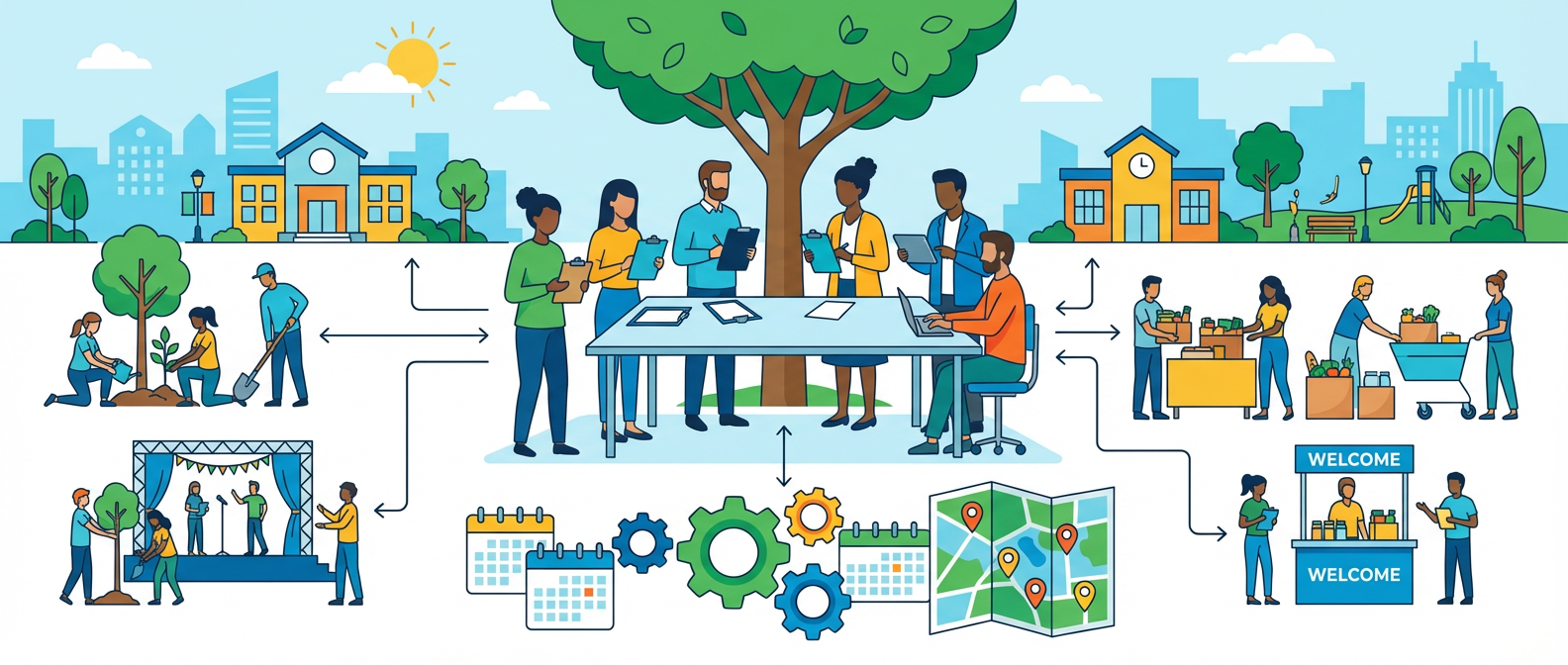
How One Block Party Became a Blueprint for Cross-Cultural Connection

When Good Intentions Meet Real Challenges

Last spring, Maria Santos knocked on my door with a clipboard and an idea that sounded both simple and impossible. She wanted to organize a block party for our stretch of Maple Avenue, where Spanish mingles with Somali in the corner store, where the elderly Polish couple next to me waves at the young Bangladeshi family across the street, and where everyone seems friendly enough but no one really talks beyond pleasant nods. The thing is, Maria had tried this before. Two years ago, her first attempt drew exactly seven people, all from the same three households.

What made this different was that Maria had spent those two years actually listening. She had attended every neighborhood association meeting, joined the community garden committee, and most importantly, she had started showing up. Not with agendas or surveys, but with her kids at the playground, with grocery bags walking home, with a snow shovel when the sidewalks needed clearing. She had learned that good intentions without genuine relationship-building usually result in well-meaning events that help the organizers more than the community.

The Groundwork That Actually Matters

The real work started six months before the party, though Maria didn’t call it organizing then. She began with what she called “intentional neighboring.” This meant introducing herself to shop owners along the commercial strip, learning names of kids who played in front yards, and asking questions that went beyond weather commentary. When the Abdullahi family mentioned their son’s graduation, she remembered to ask about it the next week. When Mrs. Kowalski’s husband was in the hospital, Maria organized meal deliveries without making it feel like charity.

Through these conversations, patterns emerged. The Somali families felt excluded from neighborhood events that seemed designed for long-term homeowners. The recent Mexican immigrants worried about language barriers making them look unwelcoming. The older Eastern European residents felt overwhelmed by rapid demographic changes but genuinely wanted to connect. Everyone shared concerns about traffic safety, poor street lighting, and the lack of programming for teenagers.

Maria realized that successful cross-cultural connection required addressing practical concerns alongside social ones. People bond over shared problems and shared solutions, not just shared food. So she started attending city council meetings, learning about traffic calming measures, and researching grant opportunities for street improvements. She discovered that the city had money for neighborhood beautification projects but applications required community support documentation.

Building Bridges Through Shared Investment

The breakthrough came when Maria proposed organizing around concrete neighborhood improvements rather than abstract cultural exchange. She suggested the block party also work as a planning meeting for applying for city beautification grants and organizing traffic safety advocacy. Suddenly, the event had purpose beyond social nicety. It became a space where cultural differences could emerge naturally within a framework of shared investment in place.

The organizing process itself became a model for collaboration. Maria worked with Amina Abdullahi to ensure proper translation, learning that effective communication meant more than just hiring interpreters. It meant understanding cultural contexts around public speaking, gender dynamics in community participation, and different approaches to decision-making. They created multiple ways for people to contribute input: small group discussions, written feedback forms, and informal conversations during setup.

Together, they developed an agenda that balanced celebration with substance. The first hour focused on food, music, and kids’ activities. The second hour had presentations from city staff about available resources, followed by small-group discussions about neighborhood priorities. The final hour involved collaborative planning for follow-up actions, with clear roles for people with different comfort levels around public engagement.

What Actually Worked (And What Didn’t)

The August block party drew over sixty people from seventeen households, representing six different countries of origin. But the real success wasn’t the numbers. It was watching twelve-year-old Sofia translate between her grandmother and the Johnsons about their shared concerns over speeding cars. It was seeing Mr. Ahmed and Mr. Kowalski discover their mutual interest in vegetable gardening. It was the formation of three working groups: traffic safety, youth programming, and community beautification.

The event wasn’t without challenges. The planned outdoor movie screening failed because no one had tested the equipment properly. Some families left early when the discussion portion felt too much like a meeting. A few longtime residents complained that too much time was spent on translation, slowing down conversations. These weren’t failures of diversity; they were normal organizing challenges that required adjustment and learning.

More significantly, the follow-through proved harder than the event itself. Sustaining momentum across language barriers, work schedules, and different cultural approaches to community engagement required ongoing attention. The traffic safety group met consistently and successfully lobbied for a crosswalk installation. The youth programming group struggled to find meeting times that worked for families with evening work schedules. The beautification committee discovered that navigating city bureaucracy required more persistence than anyone anticipated.

The Infrastructure of Connection

Six months later, our block looks different. Not just because of the new crosswalk and the community garden boxes that line the tree strips. The change is in how people move through the space. Kids play across property lines. Adults linger to chat after checking mail. When snow falls, multiple households clear sidewalks without coordinating first.

The monthly neighborhood meetings now rotate between the community center, the mosque social hall, and residents’ homes. Agendas include updates on city initiatives, coordination of seasonal block cleanup efforts, and information sharing about local resources. Attendance varies, but a core group of eight to twelve people maintains consistency. More importantly, the informal networks that developed during the organizing process continue to strengthen neighborhood resilience.

This kind of cross-cultural community building doesn’t happen through good intentions or diversity celebrations alone. It requires patient relationship building, attention to power dynamics, and sustained commitment to addressing the practical concerns that bring people together across difference. It means showing up consistently, learning from mistakes, and understanding that meaningful connection develops through shared action rather than shared appreciation.

If you’re thinking about similar work in your neighborhood, start with listening and showing up. Attend the community meetings that already exist, learn about local political processes that affect daily life, and pay attention to what issues generate genuine concern across cultural lines. The infrastructure for connection often exists; it just needs people willing to do the slow work of building relationships and organizing around shared investment in place.

The Quiet Revolution in Your Neighborhood: How Mutual Aid Networks Are Reshaping Community Care

When the Grocery Store Became a Lifeline

Maria Santos didn’t set out to become the unofficial coordinator of her neighborhood’s food distribution network. She was simply worried about her elderly neighbor, Mrs. Chen, who hadn’t been outside since the pandemic started. What began as dropping off groceries twice a week turned into something much bigger when Maria realized that half the families on her block were struggling with similar challenges. Three years later, the network she helped create serves over 200 households across four zip codes, operating entirely through text chains, shared Google docs, and a rotating cast of volunteers who know that Tuesday means produce pickup at the community center.

This is what mutual aid actually looks like on the ground: not grand gestures or nonprofit bureaucracy, but neighbors helping neighbors in ways that feel both revolutionary and completely ordinary. Maria’s story isn’t unique. Across the country, similar networks have emerged organically, filling gaps that traditional social services can’t or won’t address. They operate on principles that sound almost quaint in our hyper-individualistic culture: from each according to their ability, to each according to their need.

The beauty of these networks lies in their flexibility. When the local food bank ran out of formula last month, the group’s parent network had cases available within hours. When flooding damaged several apartments, families had temporary housing arranged before the Red Cross even arrived. These aren’t feel-good stories about community spirit. They’re examples of practical infrastructure that keeps people housed, fed, and connected when official systems fall short.

The Invisible Architecture of Care

Walk through any neighborhood and you’ll see the visible infrastructure: roads, power lines, storm drains. But mutual aid networks operate through what organizers call “care infrastructure,” a web of relationships and resources that becomes visible only when you know how to look. In the Riverside district, for example, a network of parents runs an informal childcare exchange that covers evening shifts, sick days, and school holidays. No money changes hands, but dozens of families have reliable support that would otherwise cost thousands of dollars annually.

The most sophisticated networks develop their own resource-sharing systems that rival any corporate logistics operation. The Northeast Community Tool Library maintains an inventory of over 500 tools available for borrowing, from basic hammers to professional-grade tile saws. Members contribute tools they own but rarely use, and volunteer time for maintenance and organization. The result is a system where a $50 annual membership gives families access to thousands of dollars worth of equipment. More importantly, it creates regular touchpoints for neighbors who might otherwise never interact.

These networks also work as early warning systems for larger problems. When multiple families in the same area start requesting help with utility bills, organizers can spot patterns that point to bigger issues like housing speculation or predatory lending. They become advocates not just for individual families, but for policy changes that address root causes. The mutual aid network in the Southside has successfully lobbied for three new bus routes and a community land trust, using data gathered through their direct service work.

The Skills Revolution Nobody’s Talking About

Perhaps the most underreported aspect of mutual aid is how it works as a massive, decentralized skills-sharing network. People discover talents and interests they never knew they had when community need calls them forward. James Rodriguez learned to repair bikes when the local shop closed and neighbors needed transportation. Two years later, he runs weekend repair clinics that have fixed over 400 bikes and trained 30 people in basic maintenance. His background is in accounting, but he’s become the neighborhood’s bicycle whisperer.

The skill-sharing aspect extends far beyond manual trades. Retired teacher Betty Wong runs informal tutoring sessions in her living room. Software developer Alex Kim teaches digital security workshops for activists and immigrants. Home cook Lisa Park has turned her kitchen into a teaching space for traditional Korean fermentation techniques. These aren’t formal classes or certified programs, but knowledge transfer that happens organically when people have something to offer and others have something to learn.

This informal education system creates resilience that extends far beyond any single crisis. When storms knock out power, there are people who know how to preserve food, fix generators, and organize emergency communications. When gentrification threatens, there are people who understand tenant rights, city planning processes, and community organizing strategies. These skills aren’t just hobbies or side projects. They’re the foundation of community self-reliance.

The Economics of Enough

Mutual aid operates on economic principles that challenge fundamental assumptions about scarcity and competition. In traditional market thinking, resources are limited and must be allocated through price mechanisms. Mutual aid networks reveal how much abundance exists when resources are shared efficiently. The average household owns a drill that gets used for 6-13 minutes over its entire lifetime. Multiply that inefficiency across every appliance, tool, and occasional-use item, and the waste becomes staggering.

But resource sharing goes deeper than simple efficiency gains. These networks create what economists call “social wealth,” value that exists in relationships and cooperation rather than individual ownership. When the community garden produces surplus tomatoes, families eat well and save money on groceries. When neighbors share vehicles, households can survive with one car instead of two. When people pool knowledge and labor for home repairs, families avoid debt and build skills. The economic impact is real and measurable, even though it doesn’t show up in traditional economic indicators.

The most established networks begin to work almost like parallel economies. Time banking systems allow people to trade hours of work across different types of tasks. Community currency programs keep wealth circulating locally rather than extracted to distant corporate headquarters. Buying clubs negotiate bulk purchasing power that makes organic food and household goods accessible to families who couldn’t afford them individually. These aren’t utopian experiments. They’re practical responses to economic systems that leave too many people struggling unnecessarily.

Building What We Need

The most powerful aspect of mutual aid networks might be their proof that ordinary people can create the infrastructure we need when official systems fall short. They demonstrate that community care isn’t just a nice ideal, but a practical strategy for improving daily life. They show that neighbors can solve complex problems when they have space to organize and resources to share.

Starting or joining these networks doesn’t require special training or massive time commitments. It begins with paying attention to what people around you actually need, and what you might have to offer. Maybe it’s sharing the vegetables from your overly ambitious garden, or organizing a tool library in your apartment building’s storage room. Maybe it’s creating a group chat for parents to coordinate after-school pickups, or starting a reading group that tackles city budget documents together. The specific form matters less than the underlying principle: that we can take care of each other in ways that make all our lives more secure and connected.

These networks exist in your neighborhood already, even if they’re not yet visible to you. Finding them might be as simple as asking neighbors what they need, or offering what you have to share. The revolution is quiet, practical, and happening one conversation at a time.

The Intersection That Taught Me About Power

When They Moved the Bus Stop

Last Tuesday, I watched Maria drag her groceries three extra blocks because the city moved her bus stop. She’s seventy-two, takes the Route 15 to the discount grocery twice a week, and has been making this trip for eight years. The stop used to sit right outside the community center where she volunteers. Now it’s tucked behind the new mixed-use development, invisible from the street and a quarter-mile walk through a parking lot with no sidewalk.

The city council approved this change in a five-minute agenda item back in March. “Bus stop relocation to improve traffic flow.” No public input. No consideration of who actually uses that stop or why. Maria found out when she showed up Tuesday morning and the bench was gone.

The Small Decisions That Reshape Everything

We lost something when that bus stop moved, and it wasn’t just convenience. We lost the daily intersection of people waiting, chatting, sharing the small concerns that build community. We lost Maria’s informal role as the neighborhood’s early warning system about which businesses were struggling or which houses had been sitting empty too long. That bus stop was a nerve ending. Now it’s been severed.

This happens constantly. Parking meter hours get extended. Snow removal priorities get shuffled. Permit processes get streamlined in ways that favor people who already know how to navigate them. Each decision seems minor. Each one changes how our neighborhood actually functions.

The cumulative effect isn’t just inconvenience. It’s the slow erosion of the infrastructure that lets people without cars, without flexible schedules, without spare time to attend public meetings, participate fully in community life. These decisions determine who gets to stay and who gets pushed out.

Reading the Minutes Like Tea Leaves

I started reading city council minutes three years ago when they approved demolishing the Riverside Community Gardens for a stormwater management facility. The neighbors who had tended those plots for fifteen years learned about it from a bulldozer showing up. The minutes from that meeting contain exactly one sentence about “optimizing underutilized green space for essential infrastructure.”

Those gardens weren’t just hobby plots. They were where the Somali families on Cedar Street grew the vegetables they couldn’t find at regular grocery stores. Where Mr. Thompson from the senior housing taught kids how to compost. Where people without yards could grow something with their hands. The stormwater pond they built works perfectly. It also eliminated the last place in our neighborhood where people could grow their own food.

The minutes never mention any of this context. They read like technical documents because that’s what they are. But buried in the bureaucratic language are the choices that reshape daily life for thousands of people.

What We Can Do Before We Lose More

Here’s what I’ve learned from three years of watching these decisions get made: showing up matters, but showing up smart matters more. The bus stop relocation was buried in a consent agenda that gets approved without discussion unless someone specifically asks to pull it out. Most people don’t know consent agendas exist. Most people don’t know they can ask to speak about them.

The planning commission meets the second Thursday of every month at 7 PM in City Hall Room B. They’re reviewing the zoning variance that will determine whether the corner market on Elm Street can expand or has to close. That corner market is where high school kids buy snacks, where people cash checks, where neighbors run into each other and share news. It’s also not profitable enough to survive the current zoning restrictions.

We can’t save everything, but we can make sure the people making these decisions understand what they’re actually deciding. When the council talks about “improving traffic flow” by moving a bus stop, someone needs to explain that they’re really talking about whether Maria can still get groceries. When they discuss “optimizing green space,” someone needs to name the families who will lose their gardens.

The Work of Staying Connected

Last week, I started a simple project. Every month, I pick one item from the city council agenda and spend an hour figuring out what it actually means for people I know. Then I write it up in plain language and share it with five neighbors. Not to tell them what to think, but to give them the information they need to think for themselves.

This isn’t about preserving the past exactly as it was. The stormwater pond prevents flooding that would destroy people’s homes. The new development brings housing we desperately need. But when we make these changes without understanding what we’re giving up, we lose pieces of community life that took decades to build and might never grow back.

The next city council meeting is Monday at 7 PM. The agenda includes a proposal to change the permit process for block parties. Sounds boring, right? But think about the last block party on your street, if you’ve ever had one. Think about what it took to organize it, who showed up, what conversations happened that wouldn’t have happened otherwise. Now imagine if getting that permit became just a little bit harder, required just one more form, cost just twenty dollars more. How many block parties would simply not happen?

These are the questions worth asking. Not because we can stop all change, but because we can shape how change happens. The infrastructure of community life gets built one decision at a time, and we get to have a voice in those decisions if we’re willing to use it.

The Air We Share: How Maria Santos Is Mapping Environmental Justice in Our Neighborhoods

When Data Meets the Daily Commute

Maria Santos has been tracking air quality data for three years now, but it wasn’t spreadsheets that got her started. It was her daughter’s asthma attacks during soccer season. Every September, as the kids returned to the fields near the industrial corridor on Maple Street, eight-year-old Sofia would start wheezing. The pediatrician suggested it might be seasonal allergies. Maria suspected something else entirely.

The Air We Share: How Maria Santos Is Mapping Environmental Justice in Our Neighborhoods

Armed with a $200 air quality monitor from Amazon and determination that would make any data scientist proud, Maria began walking the neighborhoods around her daughter’s school. What she discovered over eighteen months of careful measurement shocked her. Air pollution levels spiked to nearly double the EPA’s recommended limits within a six-block radius of the metal fabrication plants that line our eastern industrial zone. The pattern held consistent across seasons, weather conditions, and times of day when the facilities were operating.

This is environmental justice work at its most basic level. Not abstract policy debates or distant regulatory battles, but a mother with a meter and a notebook, creating the evidence our community desperately needed. Maria’s methodical documentation became the foundation for the air quality improvement initiative that passed city council last month by unanimous vote.

The Invisible Boundaries of Pollution

What Maria uncovered reflects a reality that environmental justice advocates have been documenting for decades. Pollution doesn’t distribute itself evenly across a community. It pools in predictable places, often matching exactly with property values, demographics, and political influence. In our city, the highest pollution readings consistently cluster in neighborhoods where median household income falls below $45,000 annually. These same areas house 68% of our city’s Latino families and 43% of our Black residents.

The correlation isn’t accidental. Historical zoning decisions, industrial permitting processes, and infrastructure investments have created what researchers call “sacrifice zones.” These are communities where environmental health takes a backseat to industrial convenience and economic development. The residents of Maple Street, Riverside Drive, and the Eastside neighborhoods near the rail yards have been breathing this sacrifice for generations.

But here’s what makes Maria’s work particularly valuable. Rather than stopping at documentation, she began connecting with residents in the most affected areas. Through informal coffee meetups and weekend walks with her air quality monitor, she helped neighbors understand what the numbers meant for their daily lives. Mrs. Chen, who runs the corner market on Riverside, learned that the persistent headaches she’d blamed on stress were likely connected to diesel fumes from delivery trucks idling outside her store.

These conversations revealed a huge gap in how environmental health information typically reaches communities. Official reports and EPA databases exist, but they rarely translate into actionable knowledge for the people most affected by pollution. Maria’s approach bridged that gap through relationship building and plain language explanations that respected people’s intelligence while acknowledging the technical complexity of air quality science.

From Measurements to Movement

The transition from individual advocacy to community organizing happened gradually, then all at once. As Maria shared her findings with more neighbors, patterns of health impacts began to emerge that couldn’t be ignored. Childhood asthma rates in the Eastside neighborhood run 23% higher than the city average. Emergency room visits for respiratory issues peak consistently during months when industrial activity increases. Three elderly residents on Maple Street had been hospitalized for breathing difficulties within a six-week period last spring.

Rather than approaching city council as an angry parent demanding immediate action, Maria spent four months building a coalition that included affected residents, local business owners, and retired city employees with institutional knowledge. This group, which calls itself the Clean Air Collaborative, developed a proposal that balanced environmental protection with economic realities. They weren’t calling for factories to close overnight. Instead, they requested phased improvements, better monitoring, and genuine community input on industrial permitting decisions.

The collaborative’s first victory came when they successfully advocated for three permanent air quality monitoring stations in the most affected neighborhoods. Real-time data from these monitors now feeds into a public dashboard that any resident can access online. When pollution levels exceed safe thresholds, automated alerts go out through the city’s emergency notification system. This early warning system has already helped families with vulnerable members avoid outdoor activities during high-pollution periods.

Practical Solutions That Scale

The air quality monitoring network is just one piece of a larger environmental justice puzzle that the Clean Air Collaborative continues to work on. They’ve identified several immediate, actionable steps that don’t require massive budget allocations or lengthy regulatory battles. The group successfully lobbied for anti-idling enforcement near schools and senior housing. They worked with the parks department to plant 150 trees specifically chosen for their air-filtering capacity in neighborhoods with the highest pollution readings.

Perhaps most importantly, they’ve changed how community input works in industrial permitting processes. New facilities seeking permits must now hold genuine community meetings, not just pro forma notifications buried in legal notices. Existing facilities seeking permit renewals face enhanced scrutiny and community oversight. These changes represent a fundamental shift in how environmental decisions get made in our city.

The collaborative has also developed a resident training program that teaches community members how to collect and interpret environmental data. Maria leads monthly workshops where participants learn to use air quality monitors, understand EPA databases, and advocate effectively in public meetings. This knowledge transfer ensures that environmental monitoring won’t depend on any single individual’s commitment and creates a sustainable foundation for long-term advocacy.

Building Tomorrow’s Environmental Advocates

What started with one parent’s concern about her daughter’s health has grown into a model for community-driven environmental justice that other cities are beginning to study and copy. The Clean Air Collaborative now partners with the university’s environmental science program, providing real-world data collection experience for students while expanding the community’s monitoring capacity. Local high school students participate in weekend data collection walks, learning both scientific methodology and civic engagement skills.

This approach across generations ensures continuity while developing the next generation of environmental advocates. Sofia Santos, now eleven and largely asthma-free thanks to better air quality management, is the group’s youngest official member. She’s learned to read air quality data, speaks confidently at city council meetings, and recently presented the collaborative’s work at the state environmental justice conference.

The collaborative meets the second Saturday of every month at the Riverside Community Center, and newcomers are always welcome. Maria insists that environmental advocacy isn’t about having advanced degrees or technical expertise. It’s about caring enough to pay attention, ask questions, and work with neighbors toward solutions that improve everyone’s health and wellbeing. If you’ve ever wondered about air quality in your neighborhood, or noticed patterns of environmental impact that seem unfair, these monthly gatherings offer a practical starting point for turning observations into action.

The Magic Happens in the Details: What I Learned from Maria About Running Community Events That Actually Work

The Woman Behind Three Hundred Planted Trees

Maria Gonzalez doesn’t look like someone who could convince three hundred strangers to show up on a Saturday morning with shovels. She’s soft-spoken, keeps detailed notes in a worn composition book, and always brings homemade cookies to planning meetings. But last spring, when our neighborhood desperately needed more tree cover and the city budget had exactly zero dollars for plantings, Maria somehow pulled off the largest volunteer tree-planting event our district had seen in twenty years.

The Magic Happens in the Details: What I Learned from Maria About Running Community Events That Actually Work

I’ve been watching community organizers for the better part of a decade, sitting through countless city council meetings and volunteer coordination sessions. Most events fail because people focus on the big picture and forget that success lives in the smallest details. Maria gets something that many well-intentioned organizers miss completely: the difference between planning an event and creating something people actually want to show up for.

When I asked Maria how she did it, she pulled out that composition book and walked me through her process. What I found was a masterclass in thoughtful volunteer coordination that had nothing to do with flashy social media campaigns. Everything to do with understanding how real people make decisions about their Saturday mornings.

The Thursday Night Phone Calls That Changed Everything

Three weeks before the tree planting, Maria started making phone calls every Thursday evening. Not mass robocalls or email blasts, but actual conversations with people she knew from the grocery store, the library, neighborhood walks. She’d call Mrs. Chen, who always complained about the lack of shade on Maple Street. She’d call the Rodriguez family, whose kids played in the park that desperately needed more green space. She’d call Tom, the retired contractor who mentioned wanting to stay active but didn’t know where to start.

Each conversation lasted maybe five minutes, but Maria had a script that worked. She’d start by mentioning something specific about that person’s connection to the neighborhood, then explain exactly what would happen on Saturday morning. Not just “we’re planting trees,” but “we’ll meet at 8 AM with coffee and donuts from Santos Bakery, spend two hours planting young maples along the walking path where your kids ride bikes, and you’ll be home by 11 with dirty hands and a story to tell.”

The genius was in the specificity. People could picture themselves there because Maria painted a clear scene of what their morning would look like. She eliminated the unknown variables that keep people home on weekends. Will I know anyone there? What should I bring? How long will this actually take? Will it be awkwardly organized or smoothly run?

Building Systems That Support Real People

Maria’s event planning always starts with a simple question: What would make this feel impossible for someone to participate in, and how do we remove those barriers? For the tree planting, she spotted three major obstacles that kill volunteer turnout: logistics confusion, social awkwardness, and the fear of being trapped in a poorly organized event.

Her solution was ruthlessly practical. She created a simple check-in system using folding tables borrowed from the community center, with name tags organized alphabetically and a clear assignment chart showing which teams would work on which sections of the park. She arranged for Santos Bakery to donate coffee and pastries, creating a natural gathering point where people could chat while getting oriented. She recruited team leaders from different social circles in the neighborhood, so newcomers would always find at least one familiar face.

Most importantly, she built in multiple exit ramps. People could leave after one hour of work, after the tree planting was finished, or stay for the optional cleanup and informal lunch. This flexibility meant that families with young kids, older residents with limited stamina, and busy professionals could all participate in ways that worked for their lives.

The result? An event where people felt competent and welcome from the moment they arrived. No one stood around confused about what to do next or worried about whether they were doing things correctly. Maria had thought through every transition and created systems that made participation feel natural rather than forced.

Why the Small Gestures Matter More Than You Think

During the tree planting, I watched Maria work the crowd with the skill of someone who understands that volunteer coordination is really about human psychology. She remembered that Tom had mentioned his bad back during their phone conversation, so she made sure he got assigned to the watering team instead of the digging crew. She noticed when Sarah’s eight-year-old daughter was getting restless and quietly handed the kid a clipboard with an important-looking checklist of planted trees to mark off.

These weren’t random acts of kindness. They were strategic decisions based on Maria’s understanding that people volunteer again when they feel seen and valued during their first experience. She knew that Tom would tell his friends about how the organizers looked out for him, and that Sarah’s daughter would beg to come to the next community event because she felt like part of the team.

The follow-up was just as deliberate. Maria sent handwritten thank-you notes to everyone who participated, but each note mentioned something specific that person contributed. Not just “thanks for volunteering,” but “thanks for bringing that extra shovel when we ran short” or “your idea about marking the tree locations with colored flags made everything run so much smoother.”

What This Means for Your Next Community Project

Maria’s approach works because it’s built on respect for people’s time and intelligence. She doesn’t assume that good intentions are enough to create a successful event. She doesn’t expect volunteers to figure out how to be helpful on the spot. Instead, she designs experiences that set people up to succeed and feel good about their contribution.

The lesson here isn’t that you need to become Maria, making hundreds of phone calls and hand-writing thank-you notes. It’s that successful volunteer coordination requires thinking like someone who might show up to your event. What would make them feel welcome? What would help them understand how to contribute? What would make them want to volunteer again next time?

If you’re planning a community event and want to talk through the details that could make or break volunteer turnout, I’d love to hear about your project. Sometimes the best planning happens over coffee with someone who’s watched a lot of events succeed and fail. The magic really is in the details. Those details are always worth getting right.

How Tenants at Riverside Gardens Won Their Fight for Heat and Hot Water

The Problem Nobody Was Talking About

Last October, when the temperature dropped below freezing for the first time, residents of Riverside Gardens apartment complex found themselves facing a choice no one should have to make: pay for expensive space heaters or bundle up in coats inside their own homes. The 180-unit complex on the east side had been without consistent heat for three weeks, and hot water came and went like an unreliable friend. What made this particularly infuriating was that rent had actually increased 8% that year, even as basic services deteriorated.

Maria Santos, a single mother of two who had lived in Building C for four years, remembers checking the thermostat obsessively those first cold nights. “I kept thinking maybe I was doing something wrong, maybe there was a switch I didn’t know about,” she told me over coffee last month. “But when I talked to my neighbor Mrs. Chen, she was having the same problem. That’s when we realized this wasn’t just us.”

The property management company, Hartwell Properties, had a pattern of slow responses to maintenance requests. Tenants would call, leave voicemails, send emails. Sometimes they’d get a repair person who would tinker with individual unit thermostats, blame the residents for “not understanding the system,” and leave. The fundamental problem with the building’s aging boiler system went untouched. For a company collecting over $200,000 in monthly rent from the property, this level of neglect wasn’t just frustrating. It was a choice.

Building Power One Conversation at a Time

Maria started knocking on doors. Not with a petition or a plan, just with questions. “Are you having trouble with heat too? What about hot water?” She discovered that nearly every unit in her building was affected, and Buildings A and B were having similar issues. More importantly, she learned that people were angry and ready to do something about it.

The breakthrough came when Mrs. Chen mentioned that her daughter had helped organize tenants in Portland using something called a “power map.” This wasn’t some complicated political strategy. It was simply a way to figure out who had influence over their situation and how they might reach those people. They gathered in Maria’s living room on a Thursday night with a large piece of butcher paper and started mapping their situation.

They identified their landlord (who lived in the suburbs and never responded to calls), the property management company (which had an office downtown), the city’s housing inspector (whose number they found on the city website), and their city council representative (who had run on a platform of affordable housing protection). They also mapped their own strengths: Mrs. Chen’s daughter knew about tenant rights, Maria was comfortable speaking in public, and several neighbors had connections to local media through their jobs.

What emerged was a plan that felt manageable rather than overwhelming. They would document everything, build support among their neighbors, and then approach the problem step by step. They weren’t trying to reform the entire housing system in their first month. They just wanted heat and hot water in their own apartments.

Documentation and Strategic Pressure

The next phase required patience and attention to detail. Every resident started keeping a daily log: indoor temperature readings, duration of hot water availability, and any communication attempts with management. Maria created a simple form that people could fill out, making the process as easy as possible for busy neighbors. Within two weeks, they had a thick folder of evidence showing a clear pattern of habitability issues.

Armed with documentation, they filed a formal complaint with the city housing inspector. This wasn’t their end goal, but it created an official record and started a timeline that would put legal pressure on Hartwell Properties. The inspection, which happened within ten days, resulted in multiple violations and a requirement for the company to make repairs within 30 days.

At the same time, they began showing up to public forums where they knew decision-makers would be present. Not to grandstand or make speeches, but to ask direct questions and put faces on the problem. Maria attended a city council meeting and, during public comment, simply stated the facts: families with children were living without heat, the management company wasn’t responding, and this was happening in a neighborhood where affordable housing was already scarce.

The combination of official complaints and public visibility created exactly the kind of pressure that property management companies prefer to avoid. Within three weeks of the housing inspection, Hartwell Properties had fixed the boiler system and had also established a 24-hour maintenance hotline and hired a new on-site manager.

Sustaining the Victory and Looking Forward

Winning the immediate battle was satisfying, but the residents of Riverside Gardens understood that their work wasn’t finished. They had learned something valuable about their own collective power, and they weren’t about to let that knowledge go to waste. They formalized their tenant organization, establishing monthly meetings and creating a simple communication system for future issues.

Six months later, when Hartwell Properties announced plans for another rent increase, the tenants were ready. They had relationships with city officials, understanding of their legal rights, and most importantly, they had confidence in their ability to work together effectively. The rent increase was reduced by half after negotiations that might never have happened without their organizing foundation.

Their success also caught the attention of tenant organizers in other parts of the city. Maria and Mrs. Chen have since visited three other apartment complexes to share what they learned, helping other tenants think through their own organizing strategies. They’re not experts in housing policy or community organizing, but they have something equally valuable: recent experience with what actually works in their specific context.

If you’re dealing with similar issues in your housing situation, or if you’re interested in supporting tenant organizing in our city, the Riverside Gardens tenants meet the second Thursday of each month at the community center on Maple Street. They’re always happy to share their experience and talk through strategies that might work in different situations. Sometimes the most powerful tool we have is simply knowing that other people have faced similar problems and found ways to address them together.

The Real Work Behind Community Events: A Practical Guide to Getting Things Done

Why Most Community Events Fall Apart (And How Yours Won’t)

Last month I watched a well-meaning group try to organize a neighborhood cleanup day with nothing but good intentions and a Facebook event page. Three people showed up. No tools, no coordination with the city about trash pickup, no clear plan for what to do with the mountains of old tires they optimistically hoped to collect. The organizer spent her own Saturday morning apologizing to volunteers while scrambling to borrow rakes from neighbors.

This happens more often than anyone wants to admit. Community events live or die in the planning phase, but most resources focus on the fun stuff like choosing themes and designing flyers. The real work happens in spreadsheets and follow-up emails and phone calls to the parks department about permits. It’s not glamorous, but it’s what separates events that change neighborhoods from events that exhaust volunteers.

The good news is that successful event planning follows predictable patterns. Once you understand what makes community events work, you can replicate it. You don’t need a degree in nonprofit management or years of experience. You need systems, realistic timelines, and the phone numbers of people who know where the city keeps the orange cones.

Building Your Resource Network Before You Need It

Smart event planning starts months before you have an event to plan. The most valuable thing you can do right now is map the resources in your community. Start with your local government’s website and actually read through the departments. Parks and Recreation isn’t just about basketball leagues. They handle permits for outdoor events, have relationships with vendors, and often maintain lists of approved contractors for things like tent rentals and sound equipment.

Your city’s Public Works department is gold for any event involving streets, parking, or cleanup. They know which intersections need special permits for pedestrian traffic, where you can legally put signs, and how to coordinate with waste management for extra pickup. Most importantly, they can tell you what’s impossible so you don’t waste time planning around it. Call them early and often.

Local businesses are your secret weapon, but approach them strategically. The hardware store owner who sponsors Little League probably has strong feelings about community investment. The restaurant that caters school events already understands volunteer budgets and timing constraints. Start building these relationships when you’re not asking for anything. Attend chamber of commerce mixers if that’s your thing, or just be the person who actually shops local and mentions community projects during normal conversations.

Don’t overlook established community groups, even if their focus seems unrelated to your plans. The historical society knows every longtime resident with strong opinions about how things should be done. The PTA has mastered volunteer coordination and fundraising logistics. Garden clubs have trailers, tools, and members who show up when they say they will. These groups also understand the unwritten rules that can make or break community support.

The Timeline That Actually Works

Most people start planning community events about six weeks out, which guarantees stress and corners cut on important details. Successful events start at least four months in advance, with the first six weeks focused entirely on foundations. Week one through three is permits, insurance, and basic feasibility. Week four through six is locking down your venue, whether that’s reserving park space or getting permission to use the school parking lot.

Two months out is when you can start talking publicly about your event, because now you know it’s actually going to happen. This is when you recruit your core volunteer team and start detailed planning around logistics like setup, cleanup, and contingency plans. One month out is for finalizing details and confirming everything twice. Two weeks out is when you realize you forgot about parking and frantically call the church across the street.

Build buffer time into every step. The permit office might be closed for two weeks while staff attends training. Your first choice venue might be unavailable. The volunteer who promised to handle registration might get a new job and move to Portland. Assume something will go wrong at every stage and plan accordingly. This isn’t pessimism, it’s project management.

Document everything as you go. Create a shared folder with permits, contact lists, vendor agreements, and timeline updates. Next year’s planning committee will thank you, and you’ll be amazed how many details you forget once the event is over. Take photos of setup logistics, not just the fun moments during the event. Future organizers need to see how you arranged tables and managed traffic flow.

Volunteer Coordination That Doesn’t Burn People Out

The biggest mistake in volunteer coordination is asking for help without offering structure. “We need volunteers” is overwhelming and vague. “We need two people to help set up tables from 7 AM to 9 AM on Saturday, and we’ll provide coffee and breakfast sandwiches” gets responses. People want to help, but they need to understand exactly what they’re signing up for.

Create roles with clear start and end times, specific tasks, and realistic expectations about physical requirements or time commitment. Some people can lift heavy things but only have two hours available. Others have all day but can’t do physical labor. Build a volunteer structure that uses different people’s strengths instead of expecting everyone to do everything.

The most important volunteer role is coordinator for each major area: setup, registration, activities, cleanup. These people don’t need to do all the work themselves, but they need to understand their piece of the event inside and out. Give coordinators authority to make decisions and solve problems without checking with the main organizer about every detail. This prevents bottlenecks and keeps things moving when the day gets hectic.

Follow up individually with volunteers a week before the event. Confirm they’re still available, remind them what to bring, and give them a contact number for questions. This isn’t micromanaging, it’s making sure people feel prepared and supported. The volunteers who have a good experience will come back for future events and bring their friends.

Making It Sustainable Beyond the First Year

The most successful community events build institutional knowledge and financial stability from day one. This means thinking beyond immediate needs to create systems that outlast individual organizers. Start a simple bank account specifically for the event, even if this year’s budget is mostly volunteers and donated supplies. Having a financial record makes it easier to approach sponsors and apply for small grants in future years.

Document your vendor relationships and what worked well or poorly. The tent rental company that showed up three hours late needs to be noted for future planning. The local restaurant that donated food and delivered it on time becomes your go-to catering contact. Create a resource list that includes not just contact information but notes about reliability, pricing, and special considerations.

Plan for leadership transition from the beginning. Identify potential future organizers during your first event and invite them into planning roles the following year. Avoid the common pattern where one person runs an event for five years and then burns out, leaving no one with the knowledge to continue. Sustainable events distribute responsibility and develop multiple people who understand the big picture.

Most importantly, be honest about what worked and what didn’t. Hold a debrief meeting within two weeks of your event while details are still fresh. Talk about budget realities, volunteer feedback, and community response. Save the celebration for later. This meeting is for identifying problems and improvements while you still remember the specific challenges you faced.

Community event planning is learnable, but it requires treating it seriously as a skill set rather than something anyone can wing. If you’re thinking about organizing something in your neighborhood, start with the resources and relationships, not the dream. The infrastructure comes first, and the magic happens when people show up knowing exactly what to expect and how they can help. What questions do you have about getting started, and what resources have you found in your own community that others might not know about?

The Tuesday Night We Used to Show Up: Making Civic Participation Work for Real Families Again

When Everyone Knew When City Council Met

My neighbor Helen still keeps her Tuesday evenings free, a habit left over from fifteen years of regular city council attendance. Back then, the meetings drew a steady crowd of maybe thirty people who knew each other’s names, each other’s kids, and exactly which agenda items would spark real debate. Helen stopped going when they moved the meetings online during the pandemic and never quite figured out how to make Zoom feel like citizenship.

The Tuesday Night We Used to Show Up: Making Civic Participation Work for Real Families Again

This isn’t just me being nostalgic. We lost something real and measurable: consistent community input on local decisions. Our city’s meeting attendance dropped 60% when they went virtual, and while they’ve returned to in-person meetings, participation never bounced back. Meanwhile, the decisions keep coming. Last month alone, our council voted on new housing developments, changes to school zone traffic patterns, and a $2.3 million infrastructure bond that will hit our property taxes for the next twenty years.

The attendance problem isn’t about apathy. It’s about access. The old Tuesday night routine worked because it was predictable, finite, and built into people’s weekly rhythms. Parents could arrange childcare, shift workers could plan around it, and the commitment felt manageable because everyone understood the boundaries. Show up, listen, speak if needed, go home by nine. That structure created space for civic participation in busy lives.

What Actually Keeps Families Away From Local Government

The real barriers to civic participation aren’t what most people assume. It’s not that families don’t care about local issues. Ask any parent about school funding, neighborhood safety, or park maintenance, and you’ll get passionate, informed opinions. The problem is that formal civic engagement wasn’t designed for the realities of family life.

Consider the typical city council meeting structure: they start at 7 PM on a school night, run indefinitely, and follow parliamentary procedure that can make simple discussions feel like legal proceedings. For a family with young children, attending means finding childcare, potentially missing homework time, and gambling on whether the issue you care about will actually come up before 10 PM. Even dedicated parents often give up after sitting through forty minutes of budget line items to catch three minutes of discussion about the playground equipment you’ve been pushing for.

Then there’s the information problem. Meeting agendas get published, but they’re written in municipal language that obscures rather than clarifies what’s actually being decided. “Resolution 2024-0847 regarding amendment to Section 15.3 of Municipal Code” tells you nothing about whether they’re changing parking rules on your street. By the time you decode the agenda and figure out which items matter to your family, the meeting is over and the decisions are made.

Digital tools promised to solve these problems, but they’ve created new ones. Online public comment periods sound convenient until you realize they often close before many people even know an issue is being discussed. Email notifications pile up in already overflowing inboxes. Social media updates get lost in algorithmic feeds designed for engagement over information. The tools exist, but they’re scattered across platforms and departments, making it harder, not easier, to stay informed.

Small Changes That Actually Work

Some communities have cracked this code by redesigning civic participation around family-friendly principles. In Portland, Oregon, neighborhood associations hold “family meetings” that start at 6 PM, include dinner and childcare, and use visual presentations instead of dense documents. Attendance tripled within six months, and more importantly, the quality of community input improved because parents brought practical perspective about how policies actually affect daily life.

The key insight is treating civic engagement like any other community activity that needs to work for families. This means predictable timing, clear communication about what’s being decided, and acknowledgment that people have limited time to give. It also means creating multiple ways to participate that don’t all require physical presence at specific times.

Arlington, Virginia sends residents a monthly “household impact sheet” that explains upcoming local decisions in plain language and includes a simple online form for feedback. The sheet takes five minutes to read and clearly states deadlines for input. Response rates are four times higher than traditional public comment periods, and the feedback is more thoughtful because people understand what they’re responding to.

The most successful initiatives combine convenience with community. Seattle’s “Coffee with Council” program brings elected officials to neighborhood coffee shops during weekend morning hours, creating informal opportunities for residents to discuss local issues while their kids play nearby. These conversations often generate more useful input than formal meetings because the setting encourages honest, practical discussion about how policies affect real families.

Building New Rhythms for Civic Life

Creating sustainable civic participation means building new community rhythms that acknowledge how families actually live. This doesn’t require massive systemic change. It requires intentional design choices that focus on accessibility and practical engagement over traditional procedures that were never family-friendly to begin with.

Start with information that arrives in digestible formats at predictable times. Many communities are experimenting with “decision calendars” that show residents exactly when key votes are happening and what input opportunities exist. These work best when they’re integrated into communication channels families already use, like school newsletters or neighborhood apps, rather than requiring people to seek out civic information separately.

The most effective approaches also recognize that civic participation happens in many forms beyond formal meetings. Neighborhood clean-up days, school board budget sessions, and community planning workshops all count as civic engagement. When these activities are coordinated and connected, they create a broader culture of community involvement that makes formal political participation feel more natural and accessible.

Technology can support this, but only when it’s designed around family needs rather than bureaucratic convenience. The best civic apps send personalized notifications about issues that affect your specific address, allow quick feedback on time-sensitive decisions, and connect residents with neighbors who share similar concerns. They work because they reduce rather than increase the cognitive load of staying civically engaged.

Starting Where You Are

You don’t need to revolutionize local government to make civic participation work better for your family and community. Start by identifying one local issue that affects your daily life and finding out who makes decisions about it. This might be traffic safety in your neighborhood, budget allocations for local parks, or zoning decisions that affect housing costs. Follow that issue through one complete decision cycle, from initial proposal to final vote, and document what you learn about how the process actually works.

Share what you discover with other families in your community. Most people want to be more civically engaged but don’t know where to start or feel overwhelmed by the apparent complexity of local government. Your experience navigating one issue becomes a roadmap others can follow. This informal civic education often proves more valuable than formal voter guides because it’s based on real experience rather than theoretical knowledge.

The goal isn’t perfect engagement with every local decision. It’s building sustainable practices that let busy families stay connected to community governance without sacrificing the other priorities that make family life work. When enough families find ways to participate that fit their actual schedules and capacities, we’ll have rebuilt the civic culture that makes local democracy work again.

The Meeting Notes Nobody Keeps: What We Lose When Organizing Gets Digital

The Lost Art of the Phone Tree

Last month, I watched our neighborhood group try to coordinate a response to the proposed bike lane changes using a Facebook event and three different group chats. We reached maybe sixty people out of the 200 who showed up to our last in-person meeting about the library closure. The disconnect wasn’t about technology literacy or access, though those matter. It was about losing the deliberate work of person-to-person connection that used to be the backbone of grassroots organizing.

The phone tree wasn’t just about spreading information faster than a single organizer could manage. When Mrs. Chen called five neighbors about the zoning hearing, she knew who needed a ride, whose work schedule meant they could only come if it started after 7 PM, and which households were dealing with a sick parent or a teenager’s college applications. She carried context that turned a meeting announcement into community care. The phone tree built relationships while it built turnout.

We’ve gained speed and reach with digital tools, but we’ve lost the forced intimacy of having to talk through the details with actual humans. Now we post in the group chat and hope people see it, then wonder why the usual suspects show up while whole blocks of neighbors remain strangers to the work happening three streets over.

When Everyone Knew the Roberts Rules Person

Every successful neighborhood group used to have someone who actually understood parliamentary procedure. Not because they were control freaks or procedural nitpickers, but because they’d learned that structure creates space for more voices, not fewer. The Roberts Rules person knew how to make sure the three people who always talked didn’t dominate every meeting, and how to move through agenda items without losing half the room to sidebar conversations.

These procedural gatekeepers also carried institutional memory. They remembered what motions had been made and tabled, which committees had been formed and dissolved, what partnerships had been tried and why they’d fallen apart. When new people joined the group, the Roberts Rules person could explain not just how to participate, but why certain processes existed and what they’d learned through trial and error.

The loss of this role reflects a broader shift away from formal structure in grassroots organizing. We’ve embraced more collaborative, consensus-driven approaches that feel more inclusive and less hierarchical. But without someone holding the procedural memory, we repeat mistakes and reinvent wheels. We spend energy relitigating decisions that were made thoughtfully six months ago. New members struggle to understand how to engage effectively because the rules keep shifting.

What we need isn’t rigid adherence to parliamentary procedure, but clear processes that newcomers can learn and that create predictable opportunities for input. When everyone knows how decisions get made, more people can participate meaningfully.

The Handwritten Sign-Up Sheets We Actually Read

Digital organizing tools promise better data and easier follow-up, but they’ve created distance between organizers and the people they’re trying to engage. The clipboard at the community meeting captured different information than the Google form that replaced it. When you handed someone a pen and asked them to write their contact information, you made eye contact. You answered their question about parking for the next event. You noticed their hesitation and could address it in real time.

The person managing the sign-up sheet learned things that never made it into our carefully designed databases. They noticed which families came together, which neighbors already knew each other, who seemed nervous about participating for the first time. They remembered faces and could connect names to the specific concerns people raised during the discussion period.

Those handwritten lists got passed around the planning committee. Multiple people developed familiarity with who was part of things and how to reach them. The follow-up calls weren’t just about event reminders but about maintaining relationships. Now we have more sophisticated contact management systems, but fewer people who actually know the humans behind the email addresses.

What we’ve lost isn’t the inefficiency of manual data entry, but the multiple touchpoints that helped organizers build genuine relationships with community members. We need to recreate those moments of personal connection within our digital tools, not just digitize the data collection process.

Why the Meeting Minutes Mattered More Than the Meetings

Someone used to take actual notes at every community meeting and type them up afterward. Not just action items and decisions, but the substance of discussions, the concerns people raised, the suggestions that didn’t get adopted but might be relevant later. These meeting minutes got mailed or handed out, and people read them. They became the shared record of what the group was thinking and learning together.

The person who wrote those minutes often became the group’s historian, tracking how positions evolved, which strategies worked, and what had been tried before. When similar issues arose months or years later, someone could reference the earlier discussion and build on previous work instead of starting from scratch.

More importantly, detailed meeting minutes created accountability. People could see their concerns reflected in the record. Those who missed meetings could catch up on more than just the final decisions. The minutes documented the reasoning behind choices, making it easier for people to understand and support implementation even when they disagreed with the outcome.

Digital tools have made it easier to record meetings, but harder to create usable records. We generate hours of audio files that nobody listens to, or brief summaries that miss the nuanced discussions that led to decisions. What we need is creating accessible, searchable records that help groups build on their collective learning over time.

Building Forward With What We Know

The challenge isn’t to recreate the organizing methods of thirty years ago, but to understand what they did and how to do those things now. We need digital tools that create opportunities for personal connection, not just efficient communication. We need structures that help newcomers participate effectively while preserving institutional memory. We need ways to document and build on collective learning that don’t require hours of volunteer labor.

Some of the most effective organizing I’ve seen recently combines digital efficiency with intentional relationship-building. Groups that assign buddy systems for new members, that rotate note-taking responsibilities, that create multiple ways for people to stay connected between meetings. The tools matter less than the commitment to treating organizing as fundamentally about building community, not just winning campaigns.

If you’ve been thinking about getting more involved in local organizing, or if you’re part of a group that’s struggling to maintain momentum, start by paying attention to what’s getting lost in the spaces between meetings and how you might help rebuild those connections. The work is always bigger than any single issue. The relationships we build while organizing often last longer than the specific victories we achieve.

The Meeting Notes Nobody Keeps: What We Lose When Organizing Gets Digital

The Lost Art of the Phone Tree

Last month, I watched our neighborhood group try to coordinate a response to the proposed bike lane changes using a Facebook event and three different group chats. We reached maybe sixty people out of the 200 who showed up to our last in-person meeting about the library closure. The disconnect wasn’t about technology literacy or access, though those matter. It was about losing the deliberate work of person-to-person connection that used to be the backbone of grassroots organizing.

The phone tree wasn’t just about spreading information faster than a single organizer could manage. When Mrs. Chen called five neighbors about the zoning hearing, she knew who needed a ride, whose work schedule meant they could only come if it started after 7 PM, and which households were dealing with a sick parent or a teenager’s college applications. She carried context that turned a meeting announcement into community care. The phone tree built relationships while it built turnout.

We’ve gained speed and reach with digital tools, but we’ve lost the forced intimacy of having to talk through the details with actual humans. Now we post in the group chat and hope people see it. Then we wonder why the same twelve people show up while whole blocks of neighbors remain strangers to the work happening three streets over.

When Everyone Knew the Roberts Rules Person

Every successful neighborhood group used to have someone who actually understood parliamentary procedure. Not because they were control freaks or procedural nitpickers, but because they’d learned that structure creates space for more voices, not fewer. The Roberts Rules person knew how to make sure the three people who always talked didn’t dominate every meeting. They knew how to move through agenda items without losing half the room to sidebar conversations.

These procedural gatekeepers also carried institutional memory. They remembered what motions had been made and tabled, which committees had been formed and dissolved, what partnerships had been tried and why they’d fallen apart. When new people joined the group, the Roberts Rules person could explain not just how to participate, but why certain processes existed and what they’d learned through trial and error.

The loss of this role reflects a broader shift away from formal structure in grassroots organizing. We’ve embraced more collaborative, consensus-driven approaches that feel more inclusive and less hierarchical. But without someone holding the procedural memory, we repeat mistakes and reinvent wheels. We spend energy relitigating decisions that were made thoughtfully six months ago. New members struggle to understand how to engage effectively because the rules keep shifting.

What we need isn’t rigid adherence to parliamentary procedure, but clear processes that newcomers can learn. Predictable opportunities for input. When everyone knows how decisions get made, more people can participate meaningfully.

The Handwritten Sign-Up Sheets We Actually Read

Digital organizing tools promise better data and easier follow-up, but they’ve created a distance between organizers and the people they’re trying to engage. The clipboard at the community meeting captured different information than the Google form that replaced it. When you handed someone a pen and asked them to write their contact information, you made eye contact. You answered their question about parking for the next event. You noticed their hesitation and could address it in real time.

The person managing the sign-up sheet learned things that never made it into our carefully designed databases. They noticed which families came together, which neighbors already knew each other, who seemed nervous about participating for the first time. They remembered faces and could connect names to the specific concerns people raised during the discussion period.

Those handwritten lists got passed around the planning committee, and multiple people developed familiarity with who was involved and how to reach them. The follow-up calls weren’t just about event reminders but about maintaining relationships. Now we have more sophisticated contact management systems, but fewer people who actually know the humans behind the email addresses.

What we’ve lost isn’t the inefficiency of manual data entry, but the multiple touchpoints that helped organizers build genuine relationships with community members. We need to recreate those moments of personal connection within our digital tools, not just digitize the data collection process.

Why the Meeting Minutes Mattered More Than the Meetings

Someone used to take actual notes at every community meeting and type them up afterward. Not just action items and decisions, but the substance of discussions, the concerns people raised, the suggestions that didn’t get adopted but might be relevant later. These meeting minutes got mailed or handed out, and people read them. They became the shared record of what the group was thinking and learning together.

The person who wrote those minutes often became the group’s historian, tracking how positions evolved, which strategies worked, and what had been tried before. When similar issues arose months or years later, someone could reference the earlier discussion and build on previous work instead of starting from scratch.

More importantly, detailed meeting minutes created accountability. People could see their concerns reflected in the record, and those who missed meetings could catch up on more than just the final decisions. The minutes documented the reasoning behind choices, making it easier for people to understand and support implementation even when they disagreed with the outcome.

Digital tools have made it easier to record meetings, but harder to create usable records. We generate hours of audio files that nobody listens to, or brief summaries that miss the discussions that led to decisions. What we need is creating accessible, searchable records that help groups build on their collective learning over time.

Building Forward With What We Know

The challenge isn’t to recreate the organizing methods of thirty years ago, but to understand what functions they served and how to fulfill those functions now. We need digital tools that create opportunities for personal connection, not just efficient communication. We need structures that help newcomers participate effectively while preserving institutional memory. We need ways to document and build on collective learning that don’t require hours of volunteer labor.

Some of the most effective organizing I’ve seen recently combines digital efficiency with intentional relationship-building. Groups that assign buddy systems for new members, that rotate note-taking responsibilities, that create multiple ways for people to stay connected between meetings. The tools matter less than the commitment to treating organizing as fundamentally about building community, not just winning campaigns.

If you’ve been thinking about getting more involved in local organizing, or if you’re part of a group that’s struggling to maintain momentum, start by paying attention to what’s getting lost in the spaces between meetings. How might you help rebuild those connections? The work is always bigger than any single issue. The relationships we build while organizing are often more lasting than the specific victories we achieve.

Your Neighbors Are Running for Office: Meet the Humans Behind the Campaign Signs

The Teacher Who Shows Up at Every Budget Meeting

Maria Santos has been teaching fourth grade at Lincoln Elementary for twelve years, but you might know her better as the woman who stands up during public comment periods with a stack of carefully organized notes. She’s running for city council this year, and her kitchen table campaign headquarters tells you everything you need to know about her approach. Spreadsheets tracking city expenditures cover one half, while graded spelling tests occupy the other.

Your Neighbors Are Running for Office: Meet the Humans Behind the Campaign Signs

“I started paying attention to city budgets when I realized we were spending more on decorative planters downtown than on crossing guards near schools,” Maria explains, pouring coffee from a pot that’s clearly seen many late nights of campaign planning. Her platform centers on practical infrastructure improvements and transparent budget processes. She wants quarterly town halls where department heads explain their spending in plain English, not bureaucratic jargon that makes your eyes glaze over.

What strikes me about Maria is how she connects dots others miss. She points out that the proposed bike lane on Maple Street isn’t just about cycling enthusiasts. It would create a safer route for families walking to the new community garden, reduce traffic congestion near the senior center, and possibly lower insurance costs for the city. She has the receipts to prove it, because Maria Santos always does her homework.

The Small Business Owner Fighting for Fair Development

Tom Rodriguez owns the hardware store on Main Street where locals have been buying everything from screws to snow shovels for thirty years. His campaign for mayor started with a simple observation: new developments keep promising to support local businesses, but somehow his customers end up shopping at big box stores in strip malls instead of walking to his shop.

Tom’s not anti-development. He’s pro-smart development. His detailed proposal for the contested Riverside Commons project includes requirements for ground-floor retail spaces sized for local businesses, not just chain restaurants. He wants walkable neighborhoods where residents can grab groceries, pick up dry cleaning, and buy a birthday card without getting in their car.

“I’ve watched this town change for three decades,” Tom says, straightening a display of locally-made birdhouses near his store’s entrance. “Change isn’t bad, but we get to choose what kind of change we want.” His vision includes zoning reforms that encourage mixed-use buildings, incentives for local entrepreneurs, and design standards that prioritize people over parking lots.

Tom’s campaign events happen in his store after hours, where neighbors gather between paint cans and garden hoses to discuss housing policy. He makes coffee in mismatched mugs and actually listens when people talk about their concerns. His approach to politics feels refreshingly retail: personal, practical, and focused on solving problems you actually face.

Ballot Measure B: The Parks Tax That’s About More Than Parks

Measure B asks voters to approve a modest property tax increase to fund parks maintenance and expansion. On the surface, it seems straightforward. Look closer and you’ll find a fascinating case study in community priorities and municipal finance.

The measure would generate approximately $400,000 annually, enough to hire two full-time maintenance workers and fund improvements to existing playgrounds. But here’s what makes it interesting: supporters include an unlikely coalition of parents, environmental groups, and local real estate agents who understand that well-maintained parks increase property values for everyone.

Opposition comes mainly from longtime residents on fixed incomes who worry about any tax increase, even a small one. Their concerns deserve respect. For someone whose property taxes have doubled over the past decade because of rising assessments, even fifty additional dollars per year feels significant.

The most compelling argument for Measure B isn’t about parks themselves. It’s about what happens when basic city maintenance gets put off year after year. The volunteer group that currently maintains Riverside Park has been quietly covering for the city for five years. Those volunteers are aging, and younger families lack the time for weekend maintenance projects. Without sustainable funding, the community will face a choice: accept declining public spaces or watch volunteer burnout become someone else’s emergency.

The Unexpected Race for School Board

School board elections usually attract minimal attention, but this year three candidates are competing for two open seats, and their different approaches reveal deeper questions about education priorities. The race includes retired principal Janet Walsh, parent activist Marcus Thompson, and recent college graduate Aisha Patel.

Janet brings institutional knowledge that’s hard to replace. She knows which programs actually improve student outcomes versus those that sound good in presentations but fail in practice. Her priority is keeping teachers around longer by addressing workload issues and providing meaningful professional development.

Marcus entered the race after attending school board meetings during the pandemic and discovering that curriculum decisions often get made without significant parent input. He wants more transparency around textbook selection and better communication between schools and families. His background in project management brings useful skills to budget oversight.

Aisha represents a fresh perspective on persistent challenges. As a recent education graduate who student-taught in diverse settings, she understands current classroom realities. She advocates for mental health support, updated technology resources, and programs that prepare students for careers that don’t require four-year degrees.

All three candidates agree on core issues: they want smaller class sizes, better support for teachers, and improved facilities. Their differences lie in priorities and approaches, making this an election where voters can’t go wrong but their choice will matter.

What Happens After the Signs Come Down

Elections end, but governance continues every Tuesday night in city council chambers, every month in school board meetings, and every day in the countless small decisions that shape community life. The candidates profiled here understand that campaigns are job interviews for positions that require showing up consistently, reading complicated documents, and making difficult decisions with incomplete information.

Your vote matters, but your ongoing engagement matters more. These local officials will face budget crises, angry residents, state mandate changes, and infrastructure emergencies. They’ll need residents who understand the constraints they operate within and the support necessary to make good choices.

Consider this your invitation to stick around after November. Attend a city council meeting. Read the school board agenda. Show up to community forums. Plant some trees on Saturday morning. Democracy works best when it’s a conversation, not a monologue, and your community needs your voice in that ongoing discussion.